The Best Affordable Pulse Oximeters in 2026
The best affordable pulse oximeters in 2026. What SpO2 readings mean, accuracy limits to know, how to choose one, and our budget-friendly picks.

Affiliate disclosure: This article contains affiliate links. As an Amazon Associate we earn from qualifying purchases, at no extra cost to you. Learn more.
◆ The verdict
4 reviewed- 1Our PickZacurate 500 Series Fingertip Pulse Oximeter with Silicon Cover, Batteries and Lanyard (Royal Black)Check price ▸
- 2Best ValueMibest OLED Fingertip Pulse Oximeter, O2 Meter (Dual Color White/Black)Check price ▸
- 3Premium PickInnovo Deluxe iP900AP Fingertip Pulse Oximeter with Plethysmograph and Perfusion Index (Off-White with Black)Check price ▸
- 4Budget PickZacurate 500BL Fingertip Pulse Oximeter Blood Oxygen Saturation Monitor with Batteries and Lanyard Included (Navy Blue)Check price ▸
A few years ago, most people had never heard of a pulse oximeter. Today, the little clip-on gadget that reads your blood oxygen is a familiar sight in bathroom drawers and gym bags. It is inexpensive, painless, and gives you a number in seconds, so it is easy to see why so many households now keep one on hand.
The appeal is obvious: with a single clip on your fingertip, you can glance at your blood oxygen saturation and your heart rate without a needle or a wire. For people managing a respiratory condition, for hikers heading to high altitude, or simply for the curious, that quick feedback feels reassuring. But a pulse oximeter is only as useful as your understanding of what it can and cannot tell you.
This guide covers what these devices measure, who tends to benefit from one, how to read the numbers responsibly, and what to look for when you shop. We compared several affordable fingertip models to inform it, but the goal is to make you a smarter buyer, not to push any single product. Keep one thing in mind throughout: a consumer pulse oximeter is a wellness tool, not a medical diagnostic device.
What a Pulse Oximeter Measures and How It Works
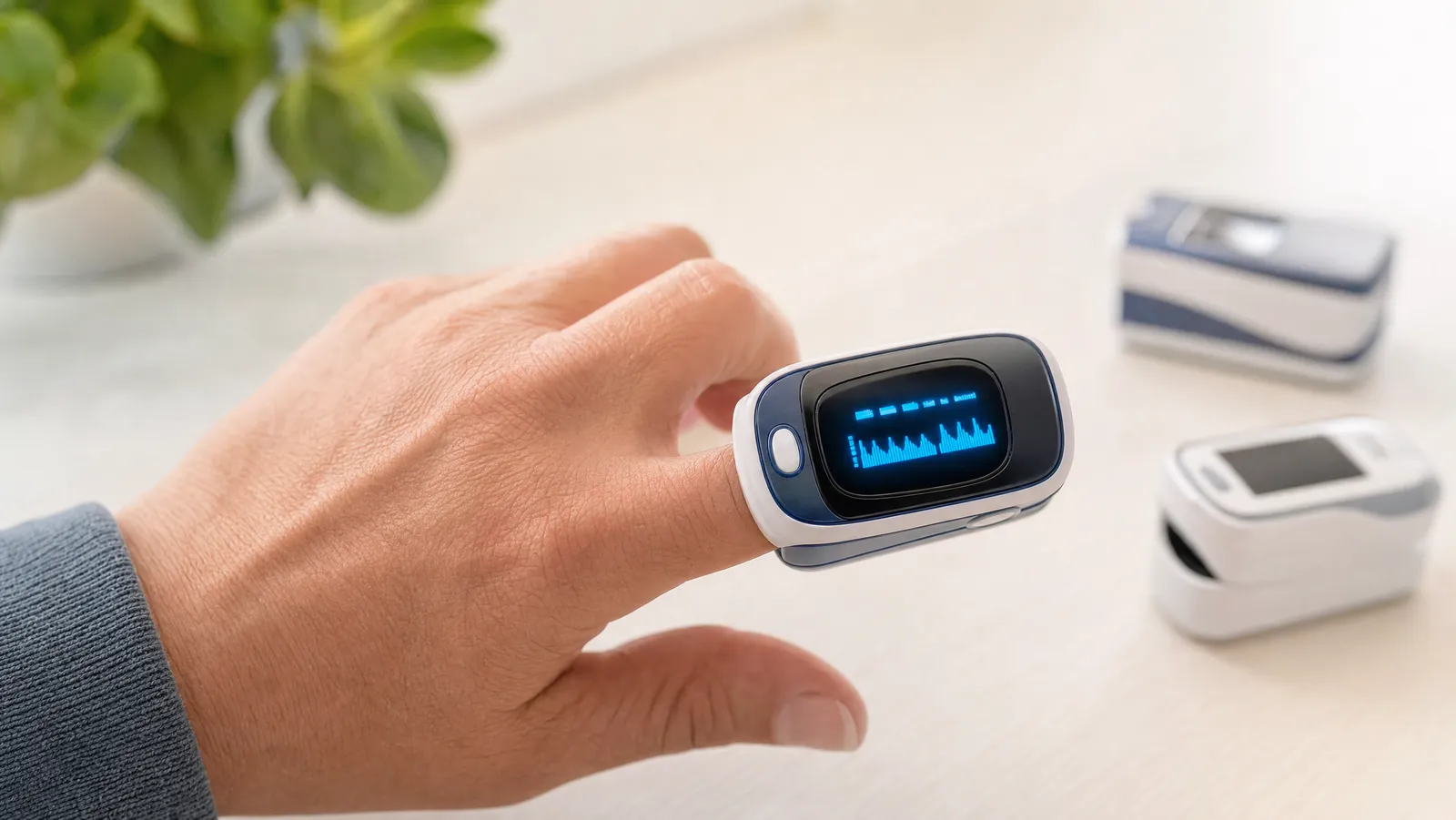
A fingertip pulse oximeter reports two things. The first is your oxygen saturation, written as SpO2 and shown as a percentage: an estimate of how much oxygen your red blood cells are carrying compared to the maximum they could. The second is your pulse rate, the number of times your heart beats per minute.
The technology is clever but simple. When you clip the device on, it shines two wavelengths of light, usually red and infrared, through your fingertip. Oxygen-rich and oxygen-poor blood absorb these wavelengths differently, so a sensor on the other side measures how much light passes through and uses that difference to estimate saturation. Because blood pulses with each heartbeat, the same sensor can also count your pulse.
Some models add extra readouts, such as a plethysmograph waveform or a perfusion index that shows how strong the blood flow is. These can help you judge whether a reading is trustworthy, but they are extras, and the core function is the same across nearly every fingertip unit.
Who Might Want One at Home
Plenty of people find a pulse oximeter genuinely useful. Those living with chronic lung or heart conditions, such as COPD or asthma, sometimes use one to track trends over time, often at a clinician's suggestion, and people recovering from respiratory illnesses may want a quick way to see how they are doing between check-ups. Athletes, pilots, and high-altitude hikers are another common group; as you climb to higher elevations there is less oxygen in the air, and many people like to see how their body is adapting.
And then there are people who simply want peace of mind, which is fine as long as you treat the device as informational. If you fall into a higher-risk group, talk with your doctor about whether home monitoring makes sense and what numbers should prompt a call. A pulse oximeter works best as a companion to professional care, never a replacement for it.
What the Numbers Mean
For most healthy people at sea level, a normal SpO2 reading sits around 95 to 100 percent, and readings in this range are generally reassuring. A resting pulse rate for most adults falls roughly between 60 and 100 beats per minute, though athletes often run lower and that can be perfectly normal for them.
When a reading drops below about 95 percent it is worth paying attention, and one in the low 90s or below may be a sign that something needs medical attention. But numbers are only part of the story. Here is the most important point in this article: seek medical care for any concerning reading or symptom, regardless of what the device shows. If you feel short of breath, confused, dizzy, or unwell, do not let a "normal" number talk you out of getting help, and do not panic over a single odd reading without considering how you actually feel.
Consumer pulse oximeters vary in accuracy from unit to unit and brand to brand. They are not the calibrated, regularly serviced equipment a hospital uses, and they are not diagnostic instruments. Treat the number as a rough indicator and a way to spot trends, not a verdict; when in doubt, your symptoms and your clinician's judgment matter far more than the display.
Accuracy Considerations You Should Know About
Even a well-made pulse oximeter can mislead you under the wrong conditions, and knowing them helps you get reliable results.
Cold hands are one of the most common culprits. When your fingers are chilly, blood flow drops and the sensor struggles to get a clean signal, so warming your hands first can make a noticeable difference. Movement is another problem; if your hand shakes, the device may have trouble locking on, so rest it on a flat surface and stay still for a moment.
Nail polish, especially dark shades, and artificial nails can block or distort the light the sensor relies on, so remove polish from at least one finger or clip the device sideways. Bright ambient light, low battery power, and poor circulation can throw readings off too.
One limitation deserves special mention. Recent research has documented that pulse oximeters can be less accurate on people with darker skin tones, sometimes overestimating oxygen saturation and masking low levels. This is a known limitation of the technology rather than user error, and one more reason to weigh how you feel alongside the number and to involve a healthcare professional when readings or symptoms concern you.
How to Choose a Pulse Oximeter
Once you understand the limits, choosing a good affordable model comes down to a handful of practical features.
Display. A clear, bright screen makes a real difference, especially if your eyesight is not what it used to be. LED and OLED displays both work well; the key is large, legible digits and good contrast. Some screens rotate so the numbers always read right-side-up, a nice touch.
Accuracy and certification. Look for devices that reference recognized standards or have been cleared by a regulatory body in your country. Certification is no guarantee of perfection, but it suggests the maker has met a baseline of testing. Be wary of unbranded bargain units with no documentation at all.
Fit and comfort. The clip should hold your finger snugly without pinching, with spring tension that feels secure but not painful. A model that fits a range of finger sizes is more useful in a shared household, and a silicone cover and lanyard help the device survive everyday handling.
Battery. Most fingertip units run on a couple of AAA batteries with an auto-off feature to preserve them. Long battery life and an easy-to-find battery type matter more than they sound, because a device that is dead when you need it helps no one.
You do not need the most expensive, feature-packed model for solid everyday readings. A comfortable fit, a readable display, dependable batteries, and a reputable maker serve most people well.
What Is a Normal Oxygen Level on a Pulse Oximeter?
For most healthy people at sea level, an SpO2 reading of about 95 to 100 percent is considered normal. Readings below 95 percent may warrant attention, and lower numbers can be a sign to seek medical advice. Your baseline can vary, so it helps to know what is typical for you and to discuss it with your doctor.
How Accurate Are Home Pulse Oximeters?
Home pulse oximeters can give useful estimates, but they are less precise than hospital equipment and accuracy varies between units. Cold hands, movement, nail polish, poor circulation, and darker skin tones can all reduce reliability. Use the device to watch trends rather than to decide on a single reading, and weigh how you feel alongside the number.
Can a Pulse Oximeter Diagnose a Medical Condition?
No. A consumer pulse oximeter is a wellness and monitoring tool, not a diagnostic device. It cannot tell you why a reading is low or rule a condition in or out. If your readings or symptoms concern you, contact a healthcare professional who can interpret them in context.
Should I Buy a Pulse Oximeter for COVID or Respiratory Illness?
Some people find a pulse oximeter reassuring when recovering from a respiratory illness, and a few clinicians recommend home monitoring in certain cases. If you use one, treat it as a supplement to medical guidance, not a substitute. Never delay care because a number looks acceptable; trust your symptoms and call your doctor or emergency services if you feel unwell.
The Bottom Line
An affordable pulse oximeter can offer quick insight into your oxygen and heart rate, and for many households it earns its place in the drawer. The models we looked at show you do not need to spend a fortune for a comfortable fit, a readable display, and dependable everyday performance.
What matters most is how you use it. Get your hands warm, sit still, remove dark nail polish, and read the number as a guide rather than a diagnosis. Remember that accuracy varies, that the technology has documented limitations on darker skin tones, and that no home device replaces professional care. If a reading or symptom worries you, reach out to a clinician. Used thoughtfully, a pulse oximeter is a small, smart addition to your wellness toolkit, and nothing more. This article is for general information and is not medical advice.
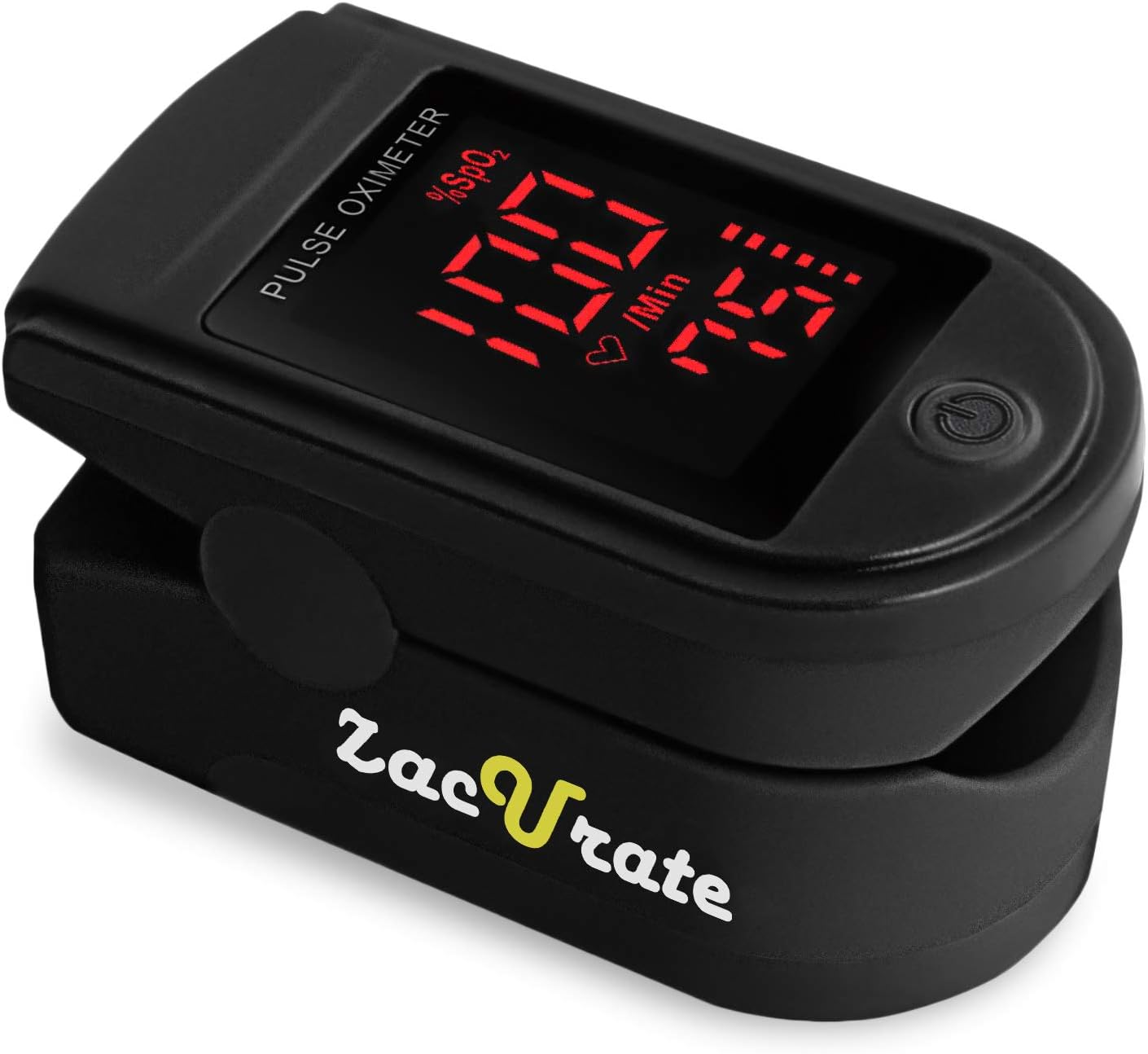
Zacurate 500 Series Fingertip Pulse Oximeter with Silicon Cover, Batteries and Lanyard (Royal Black)
The Zacurate 500 Series fingertip pulse oximeter reads blood oxygen saturation (SpO2), pulse rate, and pulse strength in about 10 seconds on a large, user-facing LED display, and it is the rare LED model that reads SpO2 all the way to 100%. A SMART Spring System fits a wide range of finger sizes for ages 12 and up. It ships with a silicone cover, 2 AAA batteries, a lanyard, and a 12-month warranty.

Mibest OLED Fingertip Pulse Oximeter, O2 Meter (Dual Color White/Black)
The Mibest steps up to a bright dual-color OLED display, showing SpO2, pulse rate, a pulse bar graph, and battery status with four display directions, six modes, and ten brightness levels. It is light and pocketable, fits a wide range of finger sizes, and reads in seconds. It comes with 2 AAA batteries, a carrying case, and a lanyard.

Innovo Deluxe iP900AP Fingertip Pulse Oximeter with Plethysmograph and Perfusion Index (Off-White with Black)
The Innovo Deluxe iP900AP fingertip pulse oximeter shows your SpO2 and pulse rate on a high-quality OLED screen. It adds Plethysmograph and Perfusion Index readouts, which improve the reliability of its measurements. It suits athletes, climbers, skiers, cyclists, pilots, and anyone wanting on-the-go readings.

Zacurate 500BL Fingertip Pulse Oximeter Blood Oxygen Saturation Monitor with Batteries and Lanyard Included (Navy Blue)
The Zacurate 500BL fingertip pulse oximeter measures SpO2 and pulse rate with a large, easy-to-read LED display. It is small and portable, and includes a lanyard and two AAA batteries for added convenience. It comes with a 12-month warranty.
Keep reading
Which Health Numbers Are Worth Tracking at Home After 50?
The health metrics to track at home after 50 — blood pressure, resting heart rate, weight trend, waist-to-height ratio — and which numbers to skip.
Are Home Health Devices Covered by Medicare, FSA, or HSA?
Are home health monitoring devices covered by Medicare? Usually not. But FSA and HSA dollars cover far more. Here is what each program actually pays for.
How to Choose a Home Health Monitoring Device
How to choose a home health monitoring device: start with the health question you need answered, then buy the validated, correctly sized, readable model.