The Best Products to Help You Quit Smoking for Good
The best products to help you quit smoking for good — nicotine patches, gum, lozenges, and behavioral tools, plus how to build a quit plan that works.

Affiliate disclosure: This article contains affiliate links. As an Amazon Associate we earn from qualifying purchases, at no extra cost to you. Learn more.
◆ The verdict
5 reviewed- 1Our PickNicorette 4 mg Nicotine Gum, White Ice Mint, 20 CountCheck price ▸
- 2Best PatchRugby Clear Nicotine Patch, Step 2, 14 mg, 14 CountCheck price ▸
- 3Best LozengeHabitrol Nicotine Lozenge, 2 mg, Mint, 72 CountCheck price ▸
- 4Best ValueAmazon Basic Care Nicotine Polacrilex Coated Gum, 2 mg, Fruit, 160 CountCheck price ▸
- 5Also GoodAmazon Basic Care Mini Nicotine Polacrilex Lozenge, 4 mg, Mint, 135 CountCheck price ▸
Deciding to quit smoking is one of the most powerful choices you can make for your health, and the benefits start almost immediately. Over the months and years that follow, your risk of heart disease, lung cancer, and other smoking-related illness drops steadily. The hard part is rarely the decision itself. It's getting through the cravings and the habits in the rough days that follow.
If you've tried to quit before and it didn't stick, you are in good company. Most people who successfully quit make several attempts before it lasts, and each try teaches you something useful about your own triggers and patterns. Quitting is a skill you build, not a test you pass or fail on the first go.
The good news is that you don't have to rely on willpower alone. A whole range of products and tools exists to take the edge off withdrawal, retrain your habits, and keep you supported along the way. In this article we look at the most reliable, evidence-informed options so you can build a plan that fits your real life. None of this replaces talking with your doctor, but it can help you walk into that conversation knowing what's out there.
Why Quitting Smoking Is So Hard
The reason quitting is difficult comes down to one word: nicotine. Nicotine is a powerful, fast-acting drug that reaches your brain within seconds and triggers the release of feel-good chemicals like dopamine. Over time, your brain adapts and comes to expect that regular hit, so when the nicotine drops off, you feel restless, irritable, anxious, or unable to concentrate. Those are withdrawal symptoms, and they're a sign of physical dependence, not weakness.
On top of the chemical pull, smoking weaves itself into your daily routines. The cigarette with your morning coffee, the break outside the office, the one after dinner, these become automatic rituals tied to specific times, places, and feelings. Even after the nicotine is out of your system, those cues can spark a strong urge to light up. Understanding both sides of the habit is the key to choosing the right tools: the most successful quit plans ease the physical craving and break the routine-based pull at the same time.
How Nicotine Replacement Therapy Works
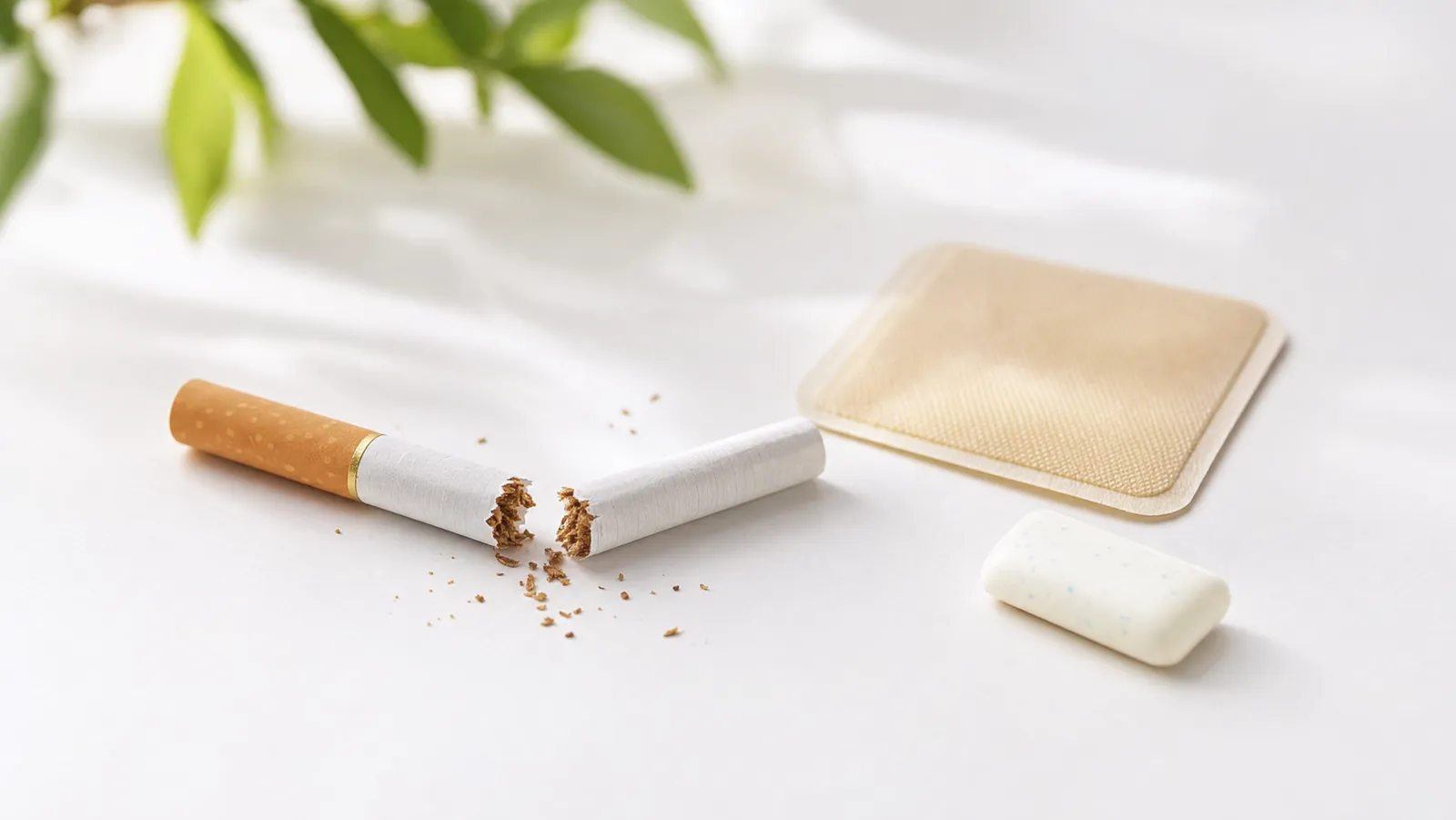
Nicotine replacement therapy, usually shortened to NRT, is one of the most widely used and well-studied quit aids. The idea is simple: NRT gives your body a controlled, lower dose of nicotine without the tar, carbon monoxide, and thousands of harmful chemicals found in cigarette smoke. That steadier supply takes the sharp edge off withdrawal, so you can focus on breaking the habit rather than white-knuckling your way through.
Research consistently suggests that NRT roughly improves your odds of quitting compared with going it alone, though it is not a magic bullet and not a guarantee. It works best when you use it correctly and pair it with behavioral support. The most common forms are patches, gum, and lozenges, and many people combine a long-acting option with a fast-acting one.
-
Patches deliver a slow, steady stream of nicotine through your skin over the day. You apply a fresh one each morning to clean, dry, hair-free skin, and it keeps your baseline craving level down. They come in different strengths so you can step down gradually over several weeks, and they're great for all-day coverage but won't help much with sudden, intense cravings.
-
Gum lets you respond to cravings in the moment. You chew it slowly until you notice a peppery taste, then "park" it between your cheek and gum so the nicotine absorbs through the lining of your mouth, and it gives your mouth and hands something to do.
-
Lozenges work much like gum but dissolve quietly in your mouth, with no chewing required. They're discreet, portable, and easy to use in public, making them a good fast-acting backup to a patch.
Always read the dosing instructions, since the right strength depends on how much you smoke, and check with a pharmacist or doctor if you're pregnant, have heart problems, or take other medications.
Non-Nicotine Aids and Behavioral Tools
Not everyone wants or needs nicotine to quit. Prescription medications such as bupropion and varenicline work on the brain to reduce cravings and blunt the reward of smoking. These require a doctor's guidance and a prescription, so they're worth raising at your next appointment if NRT alone hasn't been enough.
Beyond medication, behavioral tools tackle the habit side of smoking. Quit-smoking apps have become genuinely useful companions, tracking your smoke-free days, tallying the money you've saved, showing health milestones, and offering craving-busting exercises right when you need them. Seeing your progress add up can be surprisingly motivating on a hard day.
Then there are the simple physical substitutes for the hand-to-mouth ritual. Sugar-free gum, toothpicks, cinnamon sticks, or even a stress ball give your hands and mouth something to do when a craving hits. These swaps sound trivial, but breaking the automatic motion of reaching for a cigarette is a real part of the work.
Building a Quit Plan That Works
Tools work far better inside a plan. A little structure turns a vague intention into something you can actually follow.
Start by setting a quit date, ideally within the next two weeks. That's close enough to keep your motivation high but far enough to prepare. Mark it down and treat it as a real commitment to yourself.
Next, identify your triggers. Spend a few days noticing when and why you reach for a cigarette. Is it stress, boredom, coffee, alcohol, driving, or being around other smokers? Once you know your patterns, you can plan a specific response for each one, whether that's a piece of gum, a short walk, or simply avoiding the situation for the first few weeks.
Line up your support before quit day. Tell friends and family so they can encourage you, and lean on free resources too. In the United States you can call 1-800-QUIT-NOW to reach your state's quitline, where trained coaches offer free, confidential support and can connect you with local programs.
Finally, plan for slip-ups without treating them as failure. A single cigarette doesn't erase your progress. If it happens, look at what triggered it, adjust your plan, and keep going. Persistence, not perfection, is what gets people to the finish line.
How to Choose the Right Product for Your Habit Level
The best product is the one you'll actually use, and that depends a lot on how heavily you smoke. As a general guide, the more cigarettes you smoke per day and the sooner you light up after waking, the stronger your dependence, which usually points toward a higher-strength patch.
If you smoke about half a pack or more a day, a patch combined with a fast-acting gum or lozenge for breakthrough cravings is a common and effective pairing. If you're a lighter or occasional smoker, a single fast-acting product may be enough on its own.
Think about your lifestyle, too. Patches are nearly effortless once applied, lozenges are discreet for work and social settings, and gum gives you something active to do with a craving. If cravings are intense or past attempts have failed despite NRT, a conversation with your doctor about prescription options is a smart next step. There's no single right answer, just the combination that fits your habit, your routine, and your preferences.
Do Nicotine Patches Actually Work?
Yes, for many people they do, but they aren't a cure-all. Patches deliver a steady dose of nicotine that eases withdrawal and roughly improves your odds of quitting compared with willpower alone. They work best when matched to the right strength and paired with behavioral support.
How Long Does It Take to Stop Craving Cigarettes?
The most intense cravings usually pass within a few minutes, even though they can feel overwhelming in the moment. Physical withdrawal typically peaks in the first few days to a week after quitting and then eases steadily. Occasional urges tied to old routines can linger for weeks, which is exactly where behavioral tools and substitutes help you ride them out.
Can I Quit Cold Turkey Without Any Products?
Some people do quit cold turkey, and if that has worked for you, there's nothing wrong with it. That said, research suggests that combining quit aids with behavioral support generally gives most people a better chance than going it completely alone. If you've tried cold turkey before and it didn't last, adding a tool like NRT or a quitline call is worth considering.
Is It Worth Calling a Quitline?
Absolutely. Free quitlines like 1-800-QUIT-NOW connect you with trained coaches who offer confidential support, help you build a plan, and check in along the way. This kind of support improves quit rates, and it costs you nothing. Combining a quitline with a product of your choice is one of the most effective approaches available.
A Final Word of Encouragement
Quitting smoking is hard, and pretending otherwise wouldn't do you any favors. But it is absolutely possible, and you don't have to do it perfectly or all by yourself. The right combination of tools, whether that's a patch, some gum, an app, or a coach on the other end of a phone line, can make the difference between another short attempt and a lasting change.
Be patient and kind with yourself. Every craving you outlast and every smoke-free day you stack up is real progress. Before you start, chat with your doctor or pharmacist about which products fit your health and your habit, since this article is meant to help you understand your options, not to replace professional medical advice. You've already taken the most important step by deciding it's time.

Nicorette 4 mg Nicotine Gum, White Ice Mint, 20 Count
Nicorette is the original and best-known nicotine gum, and this 4 mg White Ice Mint version is meant for heavier or early-morning smokers. As a fast-acting form of NRT, it lets you answer a craving in the moment by chewing until you taste pepper, then parking it between cheek and gum. It pairs naturally with the brand's behavioral support program and is HSA/FSA eligible.

Rugby Clear Nicotine Patch, Step 2, 14 mg, 14 Count
Rugby is a long-standing pharmacy generic whose clear nicotine patch compares to the national brands at a lower price. This is a Step 2, 14 mg, 24-hour transdermal patch — the right starting strength for lighter smokers (10 or fewer cigarettes a day) and the step-down stage for heavier smokers tapering off a 21 mg patch. The pack holds 14 patches, one applied each morning.

Habitrol Nicotine Lozenge, 2 mg, Mint, 72 Count
Habitrol Nicotine Lozenges deliver 2 mg of nicotine in a mint flavor, dissolving over 20 to 30 minutes with no chewing for fast relief from cravings. They are discreet and portable, which makes them easy to use at work or in public. The 2 mg strength suits people who smoke their first cigarette more than 30 minutes after waking; this pack contains 72 lozenges.

Amazon Basic Care Nicotine Polacrilex Coated Gum, 2 mg, Fruit, 160 Count
Amazon Basic Care Nicotine Gum uses the same active ingredient as Nicorette (nicotine polacrilex, 2 mg) at a markedly lower per-piece cost, in a fruit flavor. It is part of a Nicotine Replacement Therapy regimen that helps control and gradually reduce cravings. The large 160-count pack is built to last through the heaviest early weeks of quitting.

Amazon Basic Care Mini Nicotine Polacrilex Lozenge, 4 mg, Mint, 135 Count
Amazon Basic Care Mini Nicotine Lozenge delivers 4 mg of nicotine in a small mint lozenge, comparable to the Nicorette mini, that dissolves quietly to ease cravings. The compact size makes it especially discreet, and the higher 4 mg dose suits people who smoke their first cigarette within 30 minutes of waking. The 135-count pack offers strong value.
Keep reading

The Best Protein Powders for People Over 50
The best protein powder for seniors in 2026: why protein matters more after 50, how to choose one, what third-party testing means, and our five top picks.
Weight Loss After 50: What Actually Works
Weight loss after 50: what the research says about metabolism, protein, muscle, belly fat, menopause and GLP-1 drugs, and the moves worth making first.

Why You Can't Lose Weight After 50 (And What Changes It)
Why can't I lose weight after 50? The largest study of human energy use says it is rarely a broken metabolism. Here is what changed, and what still works.