The Best Eye Vitamins for Aging Eyes in 2026
The best eye vitamins for aging eyes in 2026, and the honest answer about who they actually help. What the AREDS2 evidence shows, plus our top picks.

Affiliate disclosure: This article contains affiliate links. As an Amazon Associate we earn from qualifying purchases, at no extra cost to you. Learn more.
◆ The verdict
5 reviewed- 1Best New FormulaPreserVision AREDS3 Eye Vitamins Macular Supplement, 60 SoftgelsCheck price ▸
- 2Our PickPreserVision AREDS 2 Eye Vitamins Lutein Supplement 120 SoftgelsCheck price ▸
- 3Best for Everyday Eye HealthOcuvite 50+ Eye Vitamins, Lutein & Zeaxanthin Supplement, 90 SoftgelsCheck price ▸
- 4Best Lutein-Only OptionSports Research Lutein + Zeaxanthin with Organic Coconut Oil, 120 PlantgelsCheck price ▸
- 5Best ValuePuritan's Pride Premium Lutigold Lutein Carotenoid 40mg with ZeaxanthinCheck price ▸
Eye vitamins will not sharpen aging eyes. The one formula with real trial evidence behind it, AREDS2, is proven for a specific group: people who already have intermediate or late age-related macular degeneration. If that describes you, our pick is PreserVision AREDS 2. If it does not, the best eye vitamins for aging eyes may honestly be none at all.
Better Life Span is reader-supported: if you buy through links on this page we may earn a small commission, which never affects which products we recommend.
That is an unusual way to open a roundup, and it is deliberate. The eye supplement aisle is built on a genuine, well-run clinical trial whose results have been stretched far past what they actually showed. Below we walk through what the National Eye Institute found, who benefits, what the numbers on the label mean, and which products match the evidence. If you want the wider picture first, start with our guide to eye health after 50, then come back here for the supplement decision.
We did not run a clinical trial or send capsules to a lab. What we did is read the published trial data, pull the nutrient levels the National Eye Institute actually tested, and compare the published formulas of widely available products against them. That is the comparison that matters in this category, because the entire case for eye vitamins rests on one formula.
What the AREDS2 evidence actually shows
The Age-Related Eye Disease Studies are the reason eye vitamins exist as a category. According to the National Eye Institute, AREDS2 enrolled 4,203 participants aged 50 to 85 at 82 clinical sites, and tested whether adding lutein and zeaxanthin (or omega-3s) to the original AREDS formula improved it, and whether beta-carotene could be dropped.
Partly, and the detail matters. The National Eye Institute reports that adding lutein and zeaxanthin to the AREDS formula had no additional overall effect on the risk of advanced AMD across the trial as a whole. The benefit showed up in a subgroup: participants who were getting the least lutein and zeaxanthin from their diets were about 25% less likely to develop advanced AMD if they took the lutein and zeaxanthin formulation. A ten-year follow-up published in 2022 found that the group originally assigned lutein and zeaxanthin had an additional 20% reduced risk of progressing to late AMD compared with the beta-carotene group.
That is a real result, and it is worth taking seriously. It is also a narrow one. The trial measured one thing: whether an existing eye disease got worse. It did not measure sharper vision, less eye strain, or a lower chance of ever developing AMD in the first place. We go deeper into the strength of the evidence in our companion piece on whether do eye vitamins really work, but the short version is that the good evidence is narrow and the marketing is not.
Who these supplements are actually for
Here is the sentence the packaging never puts on the front. According to the National Eye Institute, the AREDS and AREDS2 formulas benefited people with intermediate or late AMD, and there was no benefit for people with early AMD.
The American Academy of Ophthalmology states that nutritional supplements alone are not enough to prevent or delay advanced AMD, and that AREDS2 vitamins are most likely to help people who have a lot of drusen, the yellow deposits under the retina that an eye doctor can see during an exam. The Academy describes these vitamins as often recommended for people with early to intermediate AMD, a slightly wider group than the National Eye Institute's own summary of the trial data supports.
So the decision tree is short:
- You have intermediate or late AMD in at least one eye. An AREDS2 formula is evidence-based, and your eye doctor is the one who should confirm it.
- You have early AMD. The trials found no benefit at that stage. Keep the eye exams; skip the expectation.
- Your eyes are healthy. There is no trial showing these pills prevent AMD. Spend the money on vegetables.
One more thing matters here. The National Eye Institute notes that early dry AMD usually causes no symptoms at all, which means you cannot tell which group you are in by how your vision feels. A dilated eye exam is the only way to find out, and it is the single most useful thing on this page.
The AREDS2 formula, by the numbers
When a supplement claims to be an AREDS2 formula, it is claiming to match a specific list of nutrients. According to the National Eye Institute, the AREDS2 formula contains 500mg of vitamin C, 400 IU of vitamin E, 10mg of lutein, 2mg of zeaxanthin, 80mg of zinc, and 2mg of copper.
Two details on that list deserve a plain-English gloss.
Copper is there for a reason. The NIH Office of Dietary Supplements notes that high doses of supplemental zinc can block copper absorption, and that copper deficiency can cause neurological problems including loss of coordination, numbness, and weakness in the arms, legs, and feet. The 2mg of copper in the formula is insurance against the 80mg of zinc.
80mg of zinc is a lot. The Office of Dietary Supplements puts the tolerable upper intake level for adults at 40mg of zinc per day from all sources, and specifically notes that this limit does not apply to people taking supplemental zinc for medical reasons under a doctor's care. That is exactly what an AREDS2 formula is. It is a therapeutic dose, not a daily multivitamin, and it is another reason this is a conversation to have with a clinician rather than a shelf decision.
There is no beta-carotene, on purpose. The National Eye Institute found that beta-carotene nearly doubled lung cancer risk in people who had ever smoked, with no such signal for the lutein and zeaxanthin version. If you see an old AREDS formula with beta-carotene in it, that is the one to leave on the shelf.
Our pick: PreserVision AREDS 2
If an eye doctor has told you that you have intermediate or late AMD, the logic here is almost boring. The benefit comes from a specific combination of nutrients at specific doses, so the sensible product is the one that reproduces those doses. Bausch + Lomb states that PreserVision AREDS 2 contains the exact nutrient formula used in the AREDS2 study, and the nutrient list on the label lines up with what the National Eye Institute published.
At about $31 for 120 softgels as of September 2026, it is not the cheapest thing in the aisle. But cost per capsule is the wrong lens when the product is essentially a prescription-adjacent dose that your ophthalmologist recommended. Buying a cheaper bottle with different numbers on the back is not a discount; it is a different product.
Best new formula: PreserVision AREDS3
The naming here causes real confusion, so let us be precise about it. There are now both AREDS2 and AREDS3 formulas on shelves, but no AREDS3 clinical trial has reported results: the National Eye Institute is still laying the groundwork for its follow-up to AREDS2, and Bausch + Lomb says it is planning its own long-term trial of this formulation. A B-vitamin complex is in development for testing in that National Eye Institute trial, and a recent published review has summarized the case for B vitamins in AMD, largely on the theory that they lower homocysteine, a blood marker linked to oxidative stress. That is a plausible mechanism with preliminary human evidence behind it. It is not a finished trial of this formula.
PreserVision AREDS3 adds an 8-vitamin B complex on top of the AREDS2 nutrients. Bausch + Lomb also markets it as formulated for 2X better absorption and calls PreserVision the number one eye doctor recommended AREDS brand. Both of those are the manufacturer's claims, and we have not seen independent data on either.
Our read: this is a reasonable choice if you are already on an AREDS formula, you are comfortable paying about $25 for 60 softgels as of September 2026, and you understand that you are buying ahead of the evidence rather than because of it. If you want only what has been proven, stay on AREDS2.
Best for everyday eye health: Ocuvite 50+
Ocuvite 50+ is the product most people over 50 actually think they are buying when they reach for an eye vitamin. According to Bausch + Lomb it pairs lutein and zeaxanthin with omega-3, zinc, copper, vitamin C and vitamin E at lower, everyday levels rather than the full AREDS2 therapeutic dose.
That lower dose is a feature, not a flaw, for the right reader. If you have healthy eyes, a modest carotenoid supplement carries far less baggage than 80mg of zinc every day. Just hold the expectations steady: there is no trial showing that an everyday eye formula prevents AMD or improves how well you see. At about $23 for 90 softgels as of September 2026, treat it as nutritional insurance, not as treatment. And if your doctor said AREDS2, this is not a stand-in for it.
Best lutein-only option: Sports Research Lutein + Zeaxanthin
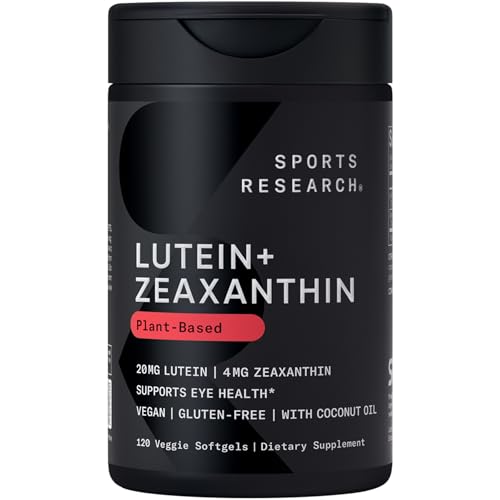
Some readers want the carotenoids and nothing else, usually because they are already taking zinc elsewhere, or because they would rather not take a therapeutic zinc dose they were never told to take. Sports Research Lutein + Zeaxanthin delivers 20mg of lutein and 4mg of zeaxanthin per plantgel, sourced from marigold flowers, at about $23 for 120 plantgels as of September 2026. Sports Research says the product is third-party quality tested, non-GMO Project Verified and vegan.
That is double the lutein and double the zeaxanthin used in AREDS2, which sounds like an upgrade and is not one. More of a nutrient than the trial used means you have left the evidence behind, not improved on it. What this product does well is give you the carotenoid half of the formula cleanly, with a coconut oil base; carotenoids are fat-soluble, and research suggests they are absorbed better when taken with fat.
Best value: Puritan's Pride Lutigold Lutein 40mg
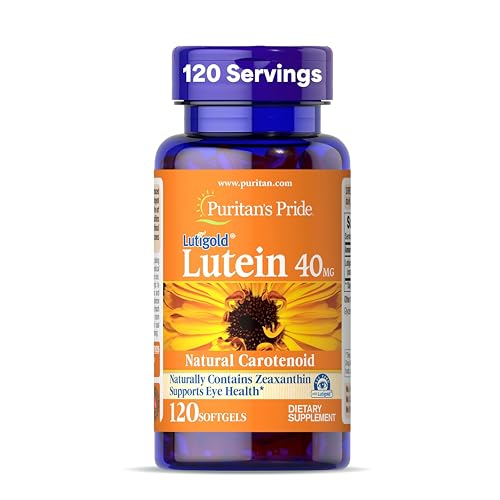
At about $17 for a 120-softgel bottle as of September 2026, roughly a four-month supply, Puritan's Pride Lutigold is the cheapest way on this list to take lutein daily. It provides 40mg of lutein with zeaxanthin per serving.
We will say the obvious thing again, because the dose is the story: 40mg is four times the 10mg of lutein that AREDS2 tested. There is no trial telling us that four times the dose is four times as useful, or even that it is any more useful. The product listing also does not specify how much zeaxanthin is in the blend. Buy this because it is inexpensive and you want a carotenoid habit, not because the bigger number means a bigger effect.
What eye vitamins will not do
This is the section that keeps a roundup honest.
- They do not restore lost vision. The National Eye Institute frames AREDS2 as delaying progression from intermediate to advanced AMD, not as repairing damage that has already happened.
- They do not replace reading glasses. Age-related farsightedness is a change in the lens of the eye, not a nutrient shortfall.
- They do not fix dry eye. The National Eye Institute funded a 535-person trial that gave people with moderate to severe dry eye 3,000mg a day of fish-derived omega-3s, and the supplements were no better than an olive oil placebo. That result is worth remembering before you buy an omega-3 for your eyes specifically. For symptom relief, artificial tears and the advice in a proper guide to the best dry eye drops will serve you better. Omega-3s still have a place for other reasons, which we cover in our roundup of the best omega-3 fish oil supplements.
- They are not a substitute for an eye exam. Nothing on this page detects glaucoma, diabetic retinopathy, or a retinal tear.
Food first: where lutein and zeaxanthin come from
The most interesting detail in AREDS2 is who benefited most. The National Eye Institute reports that the participants who gained the most from lutein and zeaxanthin were those who were getting the least of these nutrients from their diets. That is a strong hint about where to start.
Lutein and zeaxanthin are concentrated in green leafy vegetables such as kale, spinach, broccoli, peas and lettuce, and also show up in egg yolks, corn, and orange and yellow peppers. They are the pigments that accumulate in the macula, the small central part of the retina you use for reading and recognizing faces.
A supplement is a reasonable way to cover a gap. It is a poor way to replace a diet. If you are thinking about your overall stack rather than just your eyes, our guide to the best supplements for healthy aging sorts the handful with decent evidence from the many without.
Safety and who should be careful
Eye vitamins are not risk-free, mostly because of the doses involved.
- Zinc. At 80mg per day, an AREDS2 formula sits well above the 40mg upper limit the NIH Office of Dietary Supplements sets for adults from all sources. Count any zinc in your multivitamin, and tell your doctor what you are taking.
- Copper. The copper in the formula is there to offset zinc's effect on copper absorption. Do not assume a lutein-only product needs it; do not remove it from an AREDS2 product either.
- Beta-carotene and smoking. The National Eye Institute's ten-year data found that beta-carotene nearly doubled lung cancer risk in people who had ever smoked. Anyone with a smoking history should avoid old beta-carotene formulas entirely.
- Everything else you take. High-dose single nutrients interact with medications and with each other. Our piece on supplement safety after 50 covers how to check for that before you add a bottle.
The American Academy of Ophthalmology recommends discussing the benefits and risks of nutritional supplements with both an ophthalmologist and a primary care doctor, which is the right instinct for anything at this dose.
How to choose, in four questions
- Has an eye doctor diagnosed intermediate or late AMD? If yes, an AREDS2-matched formula is the evidence-based choice. If no, nothing here is proven to help you.
- Does the label match the AREDS2 numbers? 500mg vitamin C, 400 IU vitamin E, 10mg lutein, 2mg zeaxanthin, 80mg zinc, 2mg copper. If it does not, it is a different product, whatever the front of the box says.
- Is there beta-carotene in it? If you have ever smoked, that is a firm no.
- What else are you already taking? Zinc in particular adds up fast across a multivitamin, a cold remedy, and an eye formula.
Frequently asked questions
Do eye vitamins improve eyesight?
No. The AREDS and AREDS2 trials measured whether existing macular degeneration progressed to a more advanced stage, not whether vision got sharper. According to the National Eye Institute, the supplements may delay progression from intermediate to advanced AMD, and nutritional supplements cannot prevent AMD in healthy eyes.
Should I take eye vitamins if my eyes are healthy?
There is no trial evidence supporting it. The National Eye Institute states plainly that nutritional supplements cannot prevent AMD, and that the AREDS formulas showed no benefit for people with early AMD or for people who do not have AMD. A modest lutein and zeaxanthin product is low-risk if you want one, but a full AREDS2 dose of zinc is not something to take on your own initiative.
What is the difference between AREDS 2 and AREDS3 products?
AREDS2 products reproduce the nutrient formula the National Eye Institute tested and published. AREDS3-branded products add a B-vitamin complex that is in development for testing in a future National Eye Institute trial that has not yet reported results.
Is 80mg of zinc safe?
The NIH Office of Dietary Supplements sets the adult tolerable upper intake level at 40mg of zinc per day from all sources, and notes that this limit does not apply to people taking supplemental zinc for medical reasons under a doctor's supervision. That is the situation an AREDS2 formula is designed for, which is why it should be a clinician's call and not a self-prescription.
The bottom line
The best eye vitamin is the one that matches your actual eyes. For people with intermediate or late AMD, PreserVision AREDS 2 reproduces the formula that earned this category its credibility, and it is our pick. For healthy eyes, Ocuvite 50+ or a straightforward lutein and zeaxanthin product like the Sports Research plantgels is a reasonable, low-stakes choice, provided you buy it knowing that no trial has promised you anything. And for a lot of readers, a plate of dark leafy greens and a dilated eye exam will do more than any bottle on this page.
This article is general information, not medical advice. Mary Burson is a health writer, not a physician. Talk to an eye doctor or your physician about your own eyes before starting any supplement, especially one containing high-dose zinc. And if you develop sudden vision changes, eye pain, or new floaters or flashes of light, do not try to manage it with supplements. Get seen promptly.
For the rest of the picture, including exams, screens, light, and the conditions that actually threaten sight as you age, read our complete guide to eye health after 50.

PreserVision AREDS3 Eye Vitamins Macular Supplement, 60 Softgels
PreserVision AREDS3 is the newest macular formula in the PreserVision line: the AREDS2 nutrients plus an added 8-vitamin B complex. Bausch + Lomb also markets it as formulated for 2X better absorption and describes PreserVision as the number one eye doctor recommended AREDS brand. Both of those are manufacturer claims rather than published findings for this specific formula. A bottle holds 60 softgels and runs about $25 as of September 2026.

PreserVision AREDS 2 Eye Vitamins Lutein Supplement 120 Softgels
This is the reference version of the supplement studied in the National Eye Institute's AREDS2 trial, built around lutein, zeaxanthin, zinc, copper, vitamin C and vitamin E, with no beta-carotene. Bausch + Lomb states that it matches the exact nutrient formula used in that study. The bottle holds 120 softgels and costs about $31 as of September 2026, down from a list price of about $41.

Ocuvite 50+ Eye Vitamins, Lutein & Zeaxanthin Supplement, 90 Softgels
Ocuvite 50+ is Bausch + Lomb's everyday eye formula rather than a therapeutic AREDS2 dose. According to the manufacturer it combines lutein, zeaxanthin, omega-3, zinc, copper, vitamin C and vitamin E at lower levels than PreserVision AREDS 2. A bottle of 90 softgels costs about $23 as of September 2026, down from a list price of about $29.
Sports Research Lutein + Zeaxanthin with Organic Coconut Oil, 120 Plantgels
This is a single-purpose carotenoid supplement: 20mg of lutein and 4mg of zeaxanthin in one daily plantgel, derived from marigold flowers and suspended in organic coconut oil. Sports Research says the product is third-party quality tested, non-GMO Project Verified and vegan. A 120-count bottle costs about $23 as of September 2026.
Puritan's Pride Premium Lutigold Lutein Carotenoid 40mg with Zeaxanthin
Puritan's Pride Lutigold provides 40mg of lutein with zeaxanthin per serving, four times the 10mg of lutein used in the AREDS2 trial. The 120-softgel bottle is about a four-month supply and costs roughly $17 as of September 2026, which works out to the lowest cost per serving of anything in this lineup.
Keep reading

Do Eye Vitamins Really Work? What the Evidence Shows
Do eye vitamins really work? For most people, no. We read the AREDS trial data to show who genuinely benefits, who does not, and where diet beats a pill.
AREDS2 vs AREDS3: What Changed in the New Eye Vitamin Formula
AREDS2 vs AREDS3: one is a National Eye Institute trial formula, the other is a product name. What the AREDS 3 formula adds, what the evidence does and does not show.
How Often Should You Get an Eye Exam After 50?
How often should you get an eye exam after 50? The AAO and AOA intervals side by side, the risk factors that shorten them, the red flags that override them, and what Medicare actually pays for.