Eye Health After 50: What Changes, What Helps, and What Actually Works
Eye health after 50: what really changes, which supplements and drops have evidence behind them, how often to get examined, and the symptoms to act on today.


Affiliate disclosure: This article contains affiliate links. As an Amazon Associate we earn from qualifying purchases, at no extra cost to you. Learn more.
Eye health after 50 comes down to four things: reading gets harder, eyes get drier, night driving gets worse, and the odds of cataracts and macular degeneration start to climb. Most of that is ordinary aging. Some of it is treatable for the price of a drugstore run. And a good share of what is sold to fix it has very little behind it.
According to the National Eye Institute, by age 80 most people either have cataracts or have had cataract surgery. That is not a scare statistic. It is a timeline, and knowing where you sit on it changes what is worth your money and attention right now.
We have not examined anyone's eyes and we do not run a clinic. What we did was read the trial data and the guidelines from the National Eye Institute, the American Academy of Ophthalmology, the FDA, and Cochrane, then sort the useful from the oversold.
This guide is the hub of our vision series. We start with the things you can buy and act on this week: vitamins, drops, and readers. Then we move to the checks and the conditions worth understanding as the decades stack up.
Eye vitamins: what to look for after 50
Exactly one eye supplement formula has a large government-funded trial behind it, and it is narrower than the shelf suggests. According to the National Eye Institute, the AREDS2 formula contains 500 mg of vitamin C, 400 IU of vitamin E, 10 mg of lutein, 2 mg of zeaxanthin, 80 mg of zinc, and 2 mg of copper. That is the whole list.
When readers go looking for the best eye vitamins for aging eyes, most of what they find is a variation on those six nutrients, sometimes at lower amounts, often padded with bilberry, astaxanthin, or herbal extracts that were never part of the trial. Extra ingredients are not evidence. They are marketing surface area.
So the label check is simple:
- All six nutrients, at the studied amounts. A blend with 2 mg of lutein instead of 10 mg is not the AREDS2 formula, whatever the front of the box says.
- Copper alongside the zinc. The National Eye Institute's formula pairs 80 mg of zinc with 2 mg of copper. Eighty milligrams is a high dose by supplement standards, and it is not a number to freelance with.
- No beta-carotene, if you ever smoked. The original AREDS formula used beta-carotene. The National Eye Institute advises that current and former smokers should take the AREDS2 formula and avoid the AREDS formula with beta-carotene, which increases lung cancer risk.
One more point that gets lost in the aisle: this formula was studied as a treatment for a specific disease stage, not as general eye insurance. If you take a daily multivitamin, the AREDS2 formula is not a replacement for it, and stacking both can push single nutrients high. Our guide to supplements for healthy aging covers how to think about that overlap before you add another bottle.
Do eye supplements actually work?
For most people over 50 with healthy eyes, no. That is the honest answer, and it comes straight from the people who ran the trial.
According to the National Eye Institute, AREDS or AREDS2 supplements reduce the risk of progression from intermediate to advanced age-related macular degeneration by about 25 percent. The benefit was measured in people who already had intermediate AMD, or advanced AMD in one eye. In the ten-year follow-up, among the participants at highest risk for AMD, 34 percent who had taken the original AREDS formula progressed to advanced AMD, compared with 44 percent of those who had taken placebo.
For everyone else, the NEI is blunt: nutritional supplements cannot prevent AMD, and the trial data showed no benefit for people with no AMD or with early AMD. The original AREDS trial also found no effect on cataract.
So whether eye vitamins really work is not a yes-or-no question. It is a question about which eyes. If an ophthalmologist has told you that you have intermediate AMD or advanced AMD in one eye, this is one of the few supplements in the whole healthspan aisle with a real number attached. If your last exam was clean, the same pills are an expensive multivitamin with an eye-shaped picture on the bottle.
The dose is also a reason to loop in your doctor rather than self-prescribe. Eighty milligrams of zinc a day is far more than a general multivitamin provides, and high-dose single minerals are exactly the kind of thing worth reviewing against your other medications. We walk through that conversation in our guide to supplement safety after 50.
Dry eye: the most common complaint after 50
Dry eye is common enough in this age group that the National Eye Institute lists being age 50 or older as a risk factor on its own. The NEI also flags being female, wearing contact lenses, low intake of vitamin A or omega-3 fatty acids, and autoimmune conditions such as Sjogren syndrome and lupus.
The mechanism is less exotic than the name suggests. According to the NEI, dry eye happens when your glands do not make enough tears, your tears dry up too fast, or your tears simply do not work well enough to keep the eye wet. The symptoms the NEI lists are worth memorizing, because people misread them constantly: a scratchy feeling like something is in your eye, stinging or burning, redness, light sensitivity, and blurry vision.
Screens make it worse, and not because of the light. The American Academy of Ophthalmology notes that most people blink less when looking at screens, which can leave the surface of the eye drier and sometimes brings on eye strain. Its fix is behavioral: the 20-20-20 rule, where every 20 minutes you look at something at least 20 feet away for at least 20 seconds.
Here is where we have to disappoint the supplement aisle again. A 27-center trial funded by the National Eye Institute, published in the New England Journal of Medicine in 2018, randomized 535 people with moderate to severe dry eye to 3,000 mg a day of fish-derived omega-3s or an olive oil placebo for 12 months. The omega-3 group did no better on symptoms or on signs like tear break-up time and corneal staining. There are other reasons to take omega-3s, but if you are managing dry eye after 50, they are not the lever we would pull first.
Choosing artificial tears and lubricating drops
Start with the plainest product on the shelf. According to the National Eye Institute, the most common treatment for mild dry eye is a type of eye drops called artificial tears. Everything fancier is a step you take after that fails.
The one decision that matters most is preservatives. The American Academy of Ophthalmology recommends switching to preservative-free artificial tears if you need drops four times a day or more, because at that frequency the preservatives themselves can begin to irritate the eye. Preservative-free vials cost more per dose, so the honest rule is: occasional use, a preserved bottle is fine; all-day use, buy the vials.
Also read the active ingredients rather than the front label. Drops marketed for redness relief are a different product from lubricating artificial tears, and they are sold to change how your eye looks, not how it feels.
A real comparison of the best dry eye drops belongs in its own article, but the decisions are few: preserved or preservative-free, thin drop or thicker gel and ointment for overnight, and single-use vials or a bottle.
Sterility is not a detail here. The FDA states that any drug used in the eyes must be sterile to reduce the risk of infection, and it tells consumers to wash their hands first and never touch the bottle tip to the eye, hands, clothing, or any surface. Recalls happen: UC Davis Health reported in April 2026 that the FDA had flagged a voluntary recall of more than three million bottles of over-the-counter eye drops over a lack of assurance of sterility, with consumers told to discard the affected lots. Before you restock, it is worth checking the FDA's eye drop alerts page against what is in your cabinet. The FDA also advises stopping use and contacting a doctor if you develop discharge, pain, changes in vision, or discomfort.
Checking your vision at home
Home checks are for noticing change, not for making a diagnosis. That distinction is the whole game.
The most useful one is the Amsler grid, a square of fine lines with a dot in the middle. The American Academy of Ophthalmology recommends a daily Amsler grid check for people with macular degeneration, since it can help you catch a change in central vision early. You cover one eye at a time and look at the center point, noting any lines that appear wavy, broken, blurred, or missing. The Academy is equally clear about the limits: a paper or online grid is a monitoring tool, not a diagnosis, and the Academy advises that people with AMD keep their regular eye examinations regardless of what the grid shows.
The second useful habit costs nothing. Once a month, cover one eye and read something at your normal distance, then switch. Vision loss in one eye is easy to miss because the other eye quietly compensates, and a 30-second check is how people notice.
What a home test cannot do is measure the pressure inside your eye or look at your retina. That gap matters: the American Academy of Ophthalmology warns that many people with glaucoma are unaware they have it until it causes significant, irreversible vision loss. So use these checks the way we suggest you test your hearing at home, as a tripwire that sends you to a professional sooner, not as a substitute for one.
If you want a structured way to test your vision at home, pick a fixed spot with consistent lighting, keep the same distance each time, and write down what you see. A change you can describe is far more useful to a clinician than a vague sense that something is off.
AREDS2, AREDS3, and the formula changes
The formula names on these bottles are trial names, and it helps to know which is which.
The original AREDS formula included beta-carotene. AREDS2 tested swapping it for 10 mg of lutein and 2 mg of zeaxanthin. According to the National Eye Institute, participants who took the version with lutein and zeaxanthin and no beta-carotene had an 18 percent lower risk of progressing to advanced AMD than those on the beta-carotene version, and among participants with the lowest dietary intake of lutein and zeaxanthin, the reduction was 26 percent. Since beta-carotene raises lung cancer risk in current and former smokers, the newer formula became the default.
The NEI also reports a narrower cataract finding from AREDS2: a 32 percent reduction in progression to cataract surgery, seen in participants with the lowest dietary intake of lutein and zeaxanthin, not in everyone.
Then there is 2026's arrival. Bausch and Lomb launched PreserVision AREDS3 in the United States in May 2026, and by the company's own description it keeps the AREDS2 nutrients and adds a complex of eight B vitamins: thiamin, riboflavin, niacin, pantothenic acid, B6, biotin, folate, and B12. The difference between the AREDS2 and AREDS3 formulas is that B-vitamin complex, and the evidence status of the two is not the same. AREDS2 was a randomized NIH trial. The B-vitamin addition is supported by a narrative review the manufacturer cites, and the company says it plans a future long-term clinical trial of the combination. We would treat a manufacturer's planned trial as a promise, not a result.
Reading glasses and presbyopia
If the menu moved farther away sometime after your 40th birthday, that is presbyopia, and it is not a disease. According to the American Academy of Ophthalmology, you may start to notice presbyopia shortly after age 40, because the lens inside the eye becomes more rigid and cannot change shape as easily to focus up close.
Drugstore readers are a legitimate fix. The Academy notes they can be bought without a prescription, but adds a caveat most people ignore: the specific power of reading glasses you need should be determined by an eye exam. Guessing at the rack usually lands you on a pair that is a little too strong, which is its own kind of eye strain.
Two practical notes we would add. Off-the-shelf readers put the same power in front of both eyes, which is fine if your eyes are similar and unhelpful if they are not. And a single pair is rarely enough, because the distance to a paperback, a laptop, and a dashboard are three different distances.
The best reading glasses, in other words, are less about the brand than about the number printed on the arm and where you keep them. Buy the strength your exam points to, then buy enough pairs that one lives wherever you read.
One flag worth taking seriously: if near vision changes suddenly rather than gradually, or one eye drifts noticeably out of step with the other, that is an appointment, not a shopping trip.
Blue light glasses and screen strain
The evidence here is unusually clear, and it is not kind to the product. A 2023 Cochrane review of 17 randomized controlled trials from six countries concluded that blue-light filtering spectacle lenses probably make no difference to eye strain with computer use in the short term. The reviewers also found it unclear whether the lenses affect vision quality or sleep, and said no conclusions could be drawn about long-term effects on retinal health. Their bottom line was that the findings do not support prescribing these lenses to the general population.
The American Academy of Ophthalmology reaches the same place from a different direction. The Academy does not recommend any special eyewear for computer use, states there is no scientific evidence that the light coming from computer screens damages the eyes, and points out that the discomfort people feel is caused by how they use their screens, not by anything coming out of them.
So whether blue light glasses work is one of the rare questions in consumer health with a tidy answer: probably not, at least for eye strain, and not in a way any trial has been able to show.
What does help, per the Academy, is dull and free. Follow the 20-20-20 rule. Sit about arm's length from the screen and position it so you are looking slightly downward. Blink on purpose. Use artificial tears when your eyes feel dry. Adjust room lighting and raise screen contrast.
If you already own a pair of blue light glasses and like them, there is no harm in wearing them. Just do not expect them to do the work that breaks and blinking do.
What actually changes in your eyes after 50
Several separate processes are running at once, which is why the changes can feel like one vague slide.
The lens stiffens. The American Academy of Ophthalmology explains that after 40 the lens becomes more rigid and cannot change shape as easily, which is presbyopia. Separately, the National Eye Institute notes that around age 40 the proteins in the lens start to break down and clump together, which is the beginning of a cataract, decades before anyone calls it one.
Tears change too. Age 50 and older is a risk factor for dry eye in the National Eye Institute's own listing, which is why so many people hit their 50s and suddenly need drops they never used before.
Retinal risk starts to rise. According to the NEI, the risk of age-related macular degeneration increases with age, particularly for people 55 and older, and 11 million people in the United States have AMD.
Practical vision changes after 50 tend to show up in the same handful of places: reading in dim restaurants, glare from oncoming headlights, colors that look slightly faded, and needing more light for detailed work. The National Eye Institute lists faded colors, light sensitivity, and trouble seeing at night among cataract symptoms, which is why these complaints deserve an exam rather than a stronger lamp and a shrug.
The useful mental model: reading distance and dryness are usually nuisances with cheap fixes. Glare, faded color, and dim-light trouble are worth reporting to an eye doctor, because they overlap with conditions that have real treatments.
How often to get your eyes examined
The American Academy of Ophthalmology gives specific intervals, and they tighten as you age. For asymptomatic adults with no risk factors for eye disease, the Academy's guidance is an exam every 2 to 4 years from ages 40 to 54, every 1 to 3 years from 55 to 64, and every 1 to 2 years at 65 and older. The Academy also recommends a baseline eye disease screening at age 40, because early signs of disease and vision change often begin around then.
Those numbers assume nothing is going on. People at higher risk, including those with diabetes or high blood pressure or a family history of eye disease, need exams more often, and the interval is a conversation with your own clinician rather than a table.
The case for keeping the appointment is that the worst diseases are quiet. The Academy warns that many people with glaucoma are unaware they have it until it causes significant, irreversible vision loss, and diabetic retinopathy and early cataract can also be found before you notice a symptom.
If you are deciding how often to get an eye exam, treat it like any other tracked number. A dilated exam reads out the health of small blood vessels and the optic nerve in a way no home device can, which is why we put it alongside the other health numbers worth tracking after 50. Put the next one on the calendar when you leave the current one.
Cataracts: early signs and what comes next
A cataract is a clouding of the eye's lens, and according to the National Eye Institute it begins around age 40, when the proteins in the lens start to break down and clump together. It takes years before that affects sight.
The early signs of cataracts are easy to explain away. The NEI notes that at first there are often no symptoms at all, and that as a cataract develops, vision gets blurry or hazy, colors look faded, lights seem too bright or glaring, and seeing at night becomes harder. If you have quietly stopped driving after dark, that is worth mentioning at your next exam.
Risk factors the NEI lists beyond age include diabetes, smoking, drinking a lot of alcohol, a family history of cataracts, past eye injury, long-term sun exposure, and taking steroid medicines.
What comes next is more reassuring than most people expect. According to the National Eye Institute, doctors generally recommend surgery when cataracts start getting in the way of everyday activities like reading, driving, or watching TV. Surgery removes the clouded lens and replaces it with an artificial one, 9 out of 10 people who have it see better afterward, and waiting to have surgery usually will not harm your eyes.
That last point is worth holding onto, because it means a cataract diagnosis is rarely an emergency decision. It is a conversation about when the trade-off tips, and the timing is largely yours. The National Eye Institute is also explicit that surgery is the only way to get rid of a cataract, which means no supplement or eye drop will clear one.
Macular degeneration: risk and self-checks
Age-related macular degeneration affects the macula, the small central part of the retina that handles sharp, detailed vision. According to the National Eye Institute, 11 million people in the United States have AMD, and it is a leading cause of vision loss in older adults.
The macular degeneration risk factors the NEI lists are age, especially 55 and older, a family history of AMD, being Caucasian, and smoking. Smoking is the one you can change, and that alone makes it the most actionable item on this page.
The reason this condition demands a self-check habit is its timeline. The NEI says early dry AMD does not cause any symptoms. At the intermediate stage, some people notice mild blurriness in central vision or trouble seeing in low light. By the late stage, straight lines may start to look wavy or crooked and a blurry area may appear near the center of vision. By the time it is obvious, a lot has already happened.
That is where the daily Amsler grid earns its place, and why the American Academy of Ophthalmology recommends it for people with AMD. Wavy lines on a grid you check every morning are a phone call you make today rather than a change you notice next spring.
It is also the one context where the supplement discussion turns concrete: the AREDS2 formula is for people with intermediate AMD or advanced AMD in one eye, and it slows progression rather than restoring vision. An eye doctor decides whether you are in that group. A bottle cannot.
The bottom line
The high-value moves after 50 are unglamorous. Keep the exam interval the American Academy of Ophthalmology recommends for your age. Use artificial tears for dryness and go preservative-free if you need them four or more times a day. Buy readers at the strength an exam points you to. Do not smoke. Check an Amsler grid daily if you have AMD, and ask your eye doctor whether it is worth doing if AMD runs in your family.
The low-value moves are the ones with the best packaging: eye vitamins for eyes that do not have intermediate or advanced AMD, omega-3 capsules bought specifically for dry eye, and blue light glasses bought for eye strain.
This article is general information, not medical advice. It is written by a health writer, not a physician, and it cannot account for your medications, your history, or what your own retina looks like. Talk to an eye doctor or your physician before starting a supplement or changing how you treat a symptom.
One exception to all of the above: some eye symptoms are not a wait-and-see matter. The American Academy of Ophthalmology advises calling an ophthalmologist immediately if you suddenly see flashing lights, notice many new floaters at once, or see a shadow or a gray curtain moving across part of your field of vision, since those can signal a retinal detachment that needs treatment right away. Sudden vision loss and eye pain belong in the same category. Get seen, do not self-treat.
Explore the full series
- The Best Eye Vitamins for Aging Eyes in 2026 — Five eye supplements compared, and the far more important question of who the AREDS evidence actually applies to.
- Do Eye Vitamins Really Work? What the Evidence Shows — What the AREDS and AREDS2 trials really tested, who benefits, and who is buying hope in a bottle.
- Dry Eye After 50: Why It Happens and What Actually Helps — Why tear film changes with age, what genuinely helps, and when dryness is a symptom of something else.
- The Best Dry Eye Drops in 2026: Preservative-Free Picks Compared — Preservative-free versus standard artificial tears, and how to read a drop label that is designed to confuse you.
- How to Test Your Vision at Home (and What a Home Test Cannot Tell You) — The home checks worth doing between exams, and the serious problems a home test cannot rule out.
- AREDS2 vs AREDS3: What Changed in the New Eye Vitamin Formula — What changed in the newer formula, what the evidence supports, and whether the upgrade is worth paying for.
- The Best Reading Glasses for Presbyopia in 2026 — Five over-the-counter readers compared, plus the part that actually matters: picking the right strength.
- Do Blue Light Glasses Work? What the Trials Actually Found — Three separate claims — eye strain, retinal damage and sleep — and what the trials found for each.
- Vision Changes After 50: Presbyopia, Night Vision, Floaters and More — Which changes are ordinary aging, which ones are a phone call, and how to tell them apart.
- How Often Should You Get an Eye Exam After 50? — What the AAO and AOA actually recommend, what shortens the interval, and what Medicare does and does not cover.
- Early Signs of Cataracts and What the Timeline Actually Looks Like — The early signs that are easy to explain away, why a diagnosis is rarely an emergency, and why nothing sold over the counter removes one.
- Macular Degeneration: Risk Factors and the Self-Checks Worth Doing — Which risk factors you can actually move, how to use an Amsler grid properly, and who the AREDS2 evidence is really for.
Keep reading
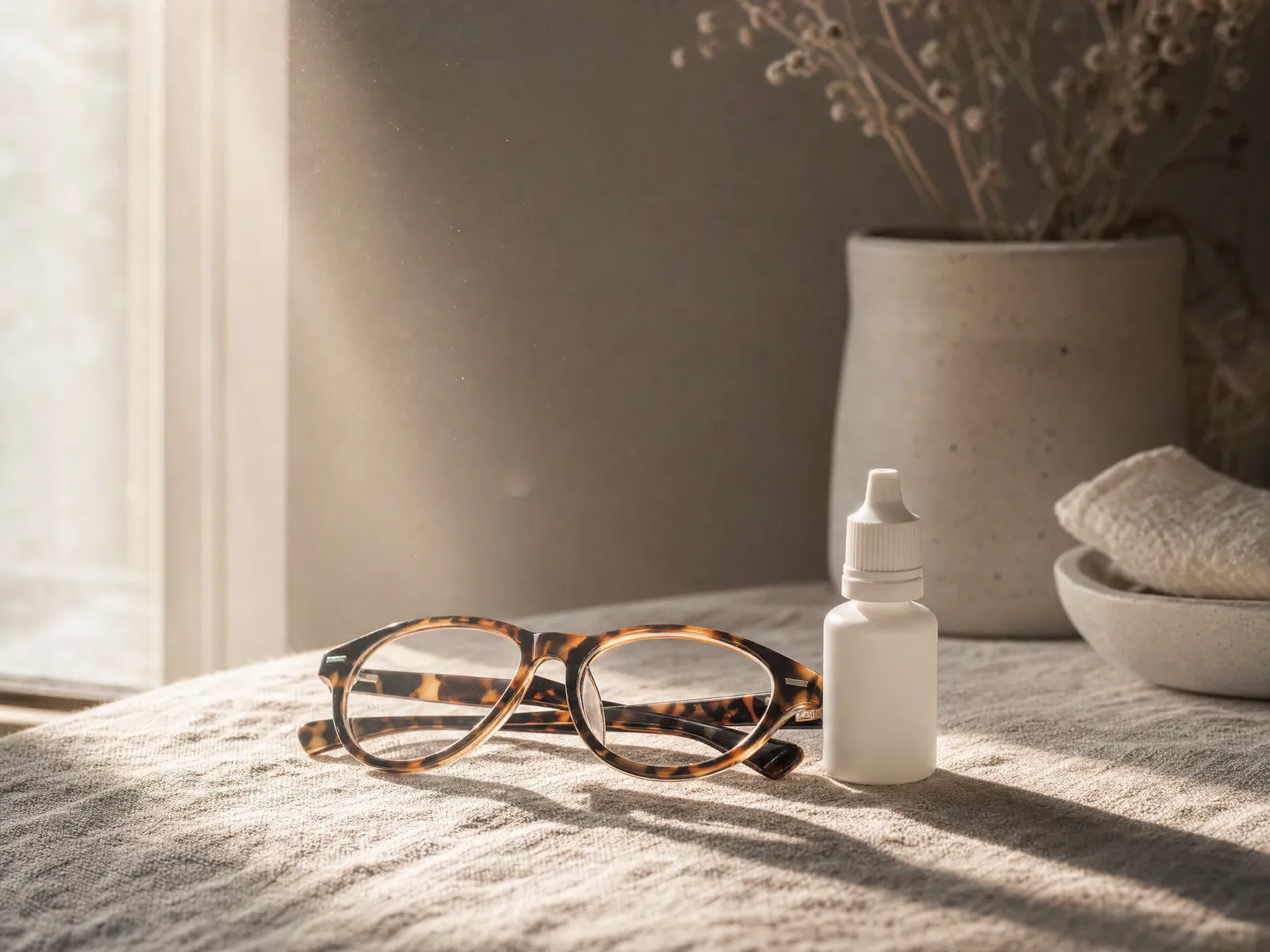
Dry Eye After 50: Why It Happens and What Actually Helps
Dry eye after 50 has two very different causes, and most people treat the wrong one. What the NEI and AAO evidence says actually helps, and what does not.
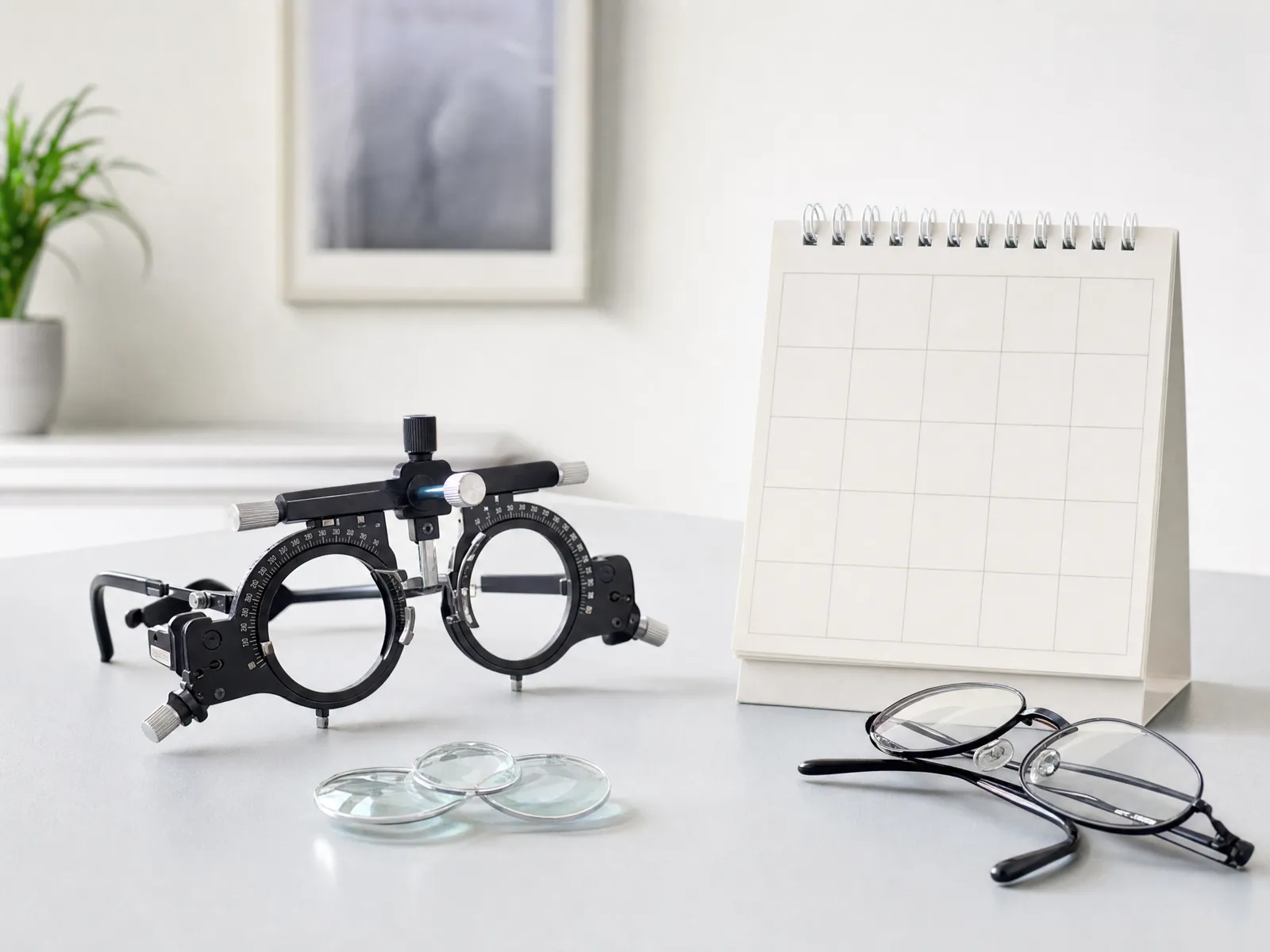
How Often Should You Get an Eye Exam After 50?
How often should you get an eye exam after 50? The AAO and AOA intervals side by side, the risk factors that shorten them, the red flags that override them, and what Medicare actually pays for.

Vision Changes After 50: Presbyopia, Night Vision, Floaters and More
Which vision changes after 50 are ordinary aging and which ones need an appointment. Presbyopia, night glare, floaters, dry eye and the real red flags, sourced.