What Vitamins Help Fight Aging?
What vitamins help fight aging? A clear, evidence-based rundown of the vitamins that matter most as you age — vitamin D, B12, C, K2 and more — and how to get them.

Affiliate disclosure: This article contains affiliate links. As an Amazon Associate we earn from qualifying purchases, at no extra cost to you. Learn more.
When people ask which vitamin "fights aging," they are usually hoping for a single miracle nutrient. The more useful answer is that a handful of vitamins matter genuinely as you age — not because they reverse time, but because shortfalls become more common and more consequential with the years. Fixing those gaps supports your bones, brain, immunity, and skin in ways that help you age well. This guide runs through the vitamins worth knowing about, what each does, and how to get enough. It is a companion to our complete guide to supplements for healthy aging.
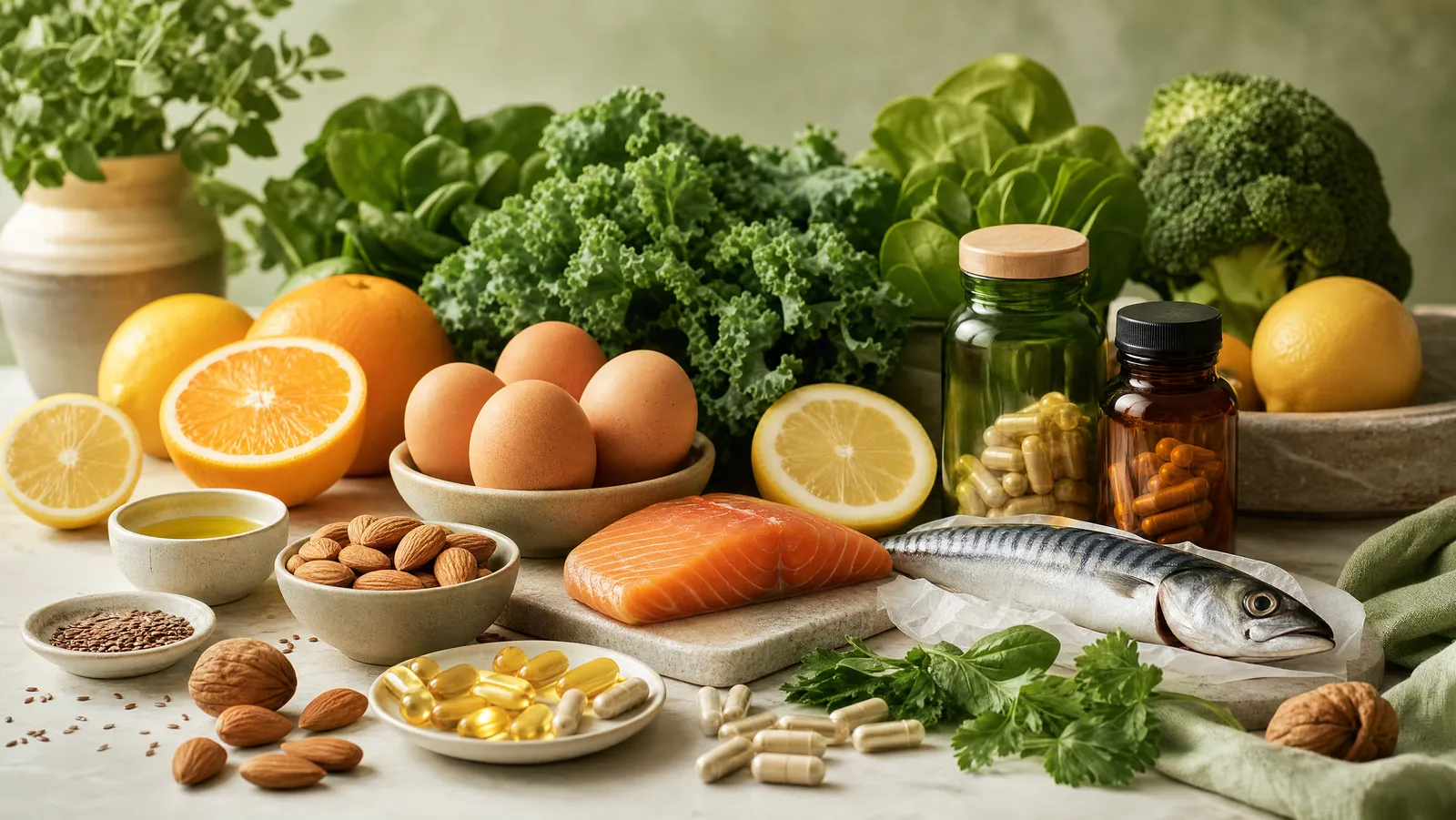
A quick principle before the list: food first. Whole foods deliver vitamins alongside fiber and other compounds, and a varied diet covers most needs. Supplements are for filling genuine gaps — which, with age, become more likely.
Vitamin D: The One to Check First
If any vitamin deserves the "anti-aging" label, vitamin D has the best claim — not because it is magic, but because deficiency is so common and the consequences matter. Drawing on national survey data, researchers estimate that roughly one in five middle-aged and older U.S. adults are deficient, and older skin makes less vitamin D from sunlight. The vitamin is essential for calcium absorption and bone strength (critical as fracture risk rises with age), plays a role in immune function, and may support mood.
The smart move is to test your blood level and supplement to correct a genuine shortfall rather than guessing. D3 is the preferred form, and many products pair it with K2. Our dedicated guide to vitamin D3 and how to choose one covers dosing and quality in detail.
Vitamin B12: Absorption Falls With Age
Vitamin B12 is the classic example of an age-related gap. As we get older, the stomach often produces less acid, which impairs B12 absorption from food — so deficiency grows more common even in people who eat plenty of it. The stakes are real: low B12 can cause fatigue, nerve problems, and memory and cognitive issues that are reversible if caught.
Older adults, vegetarians, vegans, and people on certain medications (like metformin or long-term acid reducers) are at higher risk. A B12 supplement or a B12-containing multivitamin is an easy fix, and it is worth asking your doctor to check your level if you have risk factors.
Vitamin C: Skin, Collagen, and Immunity
Vitamin C does double duty for aging. It is a required cofactor for collagen synthesis — your body literally cannot build collagen without it, which is why it pairs well with collagen supplements for skin, as we discuss in our guide to supplements for aging skin. It is also an antioxidant that helps defend cells against the free-radical damage implicated in aging, and it supports immune function.
Most people who eat fruits and vegetables get enough vitamin C, but intake can slip with a narrowing diet. It is water-soluble and generally safe, though megadoses offer no extra benefit and can upset the stomach.
Vitamin K2: The Calcium Director
Vitamin K2 has gained attention for its role in directing calcium toward bones rather than soft tissues like arteries. The reasoning behind the popular D3-plus-K2 pairing is that vitamin D helps you absorb calcium while K2 helps put it in the right place. The human evidence is still developing rather than conclusive, so think of K2 as a reasonable, well-tolerated addition rather than a proven essential — particularly relevant for bone and cardiovascular health as you age.
Vitamin E and the Antioxidant Vitamins
Vitamin E is a fat-soluble antioxidant that helps protect cell membranes, and it appears in many "anti-aging" formulas. However, high-dose vitamin E supplements have not lived up to early hopes in trials and can carry risks, including a mild blood-thinning effect. The sensible approach is to get vitamin E from foods like nuts, seeds, and oils rather than high-dose pills. The same goes for antioxidants generally: a colorful diet beats isolated megadoses.
The B-Complex and Folate
Beyond B12, the broader B-complex supports energy metabolism and nervous-system function. Folate (B9) matters for cell division and, with B12 and B6, for managing homocysteine, an amino acid linked to cardiovascular and cognitive health. Most people get enough from a balanced diet or a standard multivitamin, which conveniently covers the Bs along with other basics — one reason a daily multivitamin showed modest cognitive benefits in older adults in the large COSMOS trials. See our guide to the best multivitamins for what to look for.
Don't Forget the Minerals
Vitamins get the headlines, but minerals matter too. Magnesium, which roughly half of U.S. adults fall short on, supports muscle, nerve, blood sugar, and sleep. Calcium (ideally from food) and adequate protein protect bone and muscle. Zinc supports immunity. A good multivitamin or targeted supplement can help here, but as always, blood tests and a clinician's input beat guessing — especially since some minerals can be harmful in excess.
What Vitamins Should I Take After 50?
The vitamins most often worth attention after 50 are D (deficiency is common and skin makes less from sun), B12 (absorption declines with age), and the spectrum covered by a daily multivitamin. Depending on your diet and blood work, vitamin C, K2, and minerals like magnesium may also be worthwhile. The best plan is individualized: test where it matters, eat a varied diet, and supplement the genuine gaps with a clinician's guidance.
Can Vitamins Really Slow Aging?
Vitamins do not stop or reverse aging, but correcting deficiencies genuinely supports how well you age — stronger bones, better energy and cognition, healthier skin and immunity. The benefit comes from fixing a shortfall, not from megadosing a healthy person. No vitamin is a fountain of youth, but the right ones in the right amounts are a sensible part of aging well.
Is It Better to Get Vitamins From Food or Supplements?
Food is the better default: it delivers vitamins alongside fiber, minerals, and other beneficial compounds, in forms your body handles well. Supplements are most useful for genuine gaps — like vitamin D in winter, or B12 when absorption declines with age. For most people, a food-first approach with targeted supplements for documented needs is ideal.
The Bottom Line
No single vitamin "fights aging," but several matter genuinely as you get older — vitamin D and B12 above all, with vitamin C, K2, the B-complex, and key minerals playing supporting roles. The winning strategy is food first, testing where it counts, and targeted supplementation for real gaps rather than megadoses. For the full picture, see our complete guide to supplements for healthy aging and our look at the science of anti-aging supplements. This article is general information only and not medical advice.
Keep reading
The Best Multivitamins for Men in 2026
The best multivitamins for men in 2026. Which nutrients men actually need, what to skip, how to read a label, and our researched top picks.
Vitamin D3: Why It Matters and the Best Supplements to Take
Vitamin D3 explained: why it matters for bones, immunity, and mood, how much to take, and the best D3 supplements to choose from in 2026.
Best Omega-3 Fish Oil Supplements for Healthy Aging
The best omega-3 fish oil supplements for healthy aging in 2026: how much EPA and DHA you need, how to judge purity, and our researched top picks.