Best Sleep Trackers: Rings, Watches & Bands Compared
The best sleep trackers in 2026 — rings, watches, and bands compared. What they really measure, accuracy limits, and how to use the data without obsessing.

Affiliate disclosure: This article contains affiliate links. As an Amazon Associate we earn from qualifying purchases, at no extra cost to you. Learn more.
◆ The verdict
5 reviewed- 1Best Smart RingBIEMHA Smart Ring Health TrackerCheck price ▸
- 2Best Budget RingSTILEFIX Smart RingCheck price ▸
- 3Best Watch TrackerRLQA Fitness Tracker WatchCheck price ▸
- 4Best Budget BandFITVII Slim AMOLED TrackerCheck price ▸
- 5Also GreatAMZAIZO Screenless TrackerCheck price ▸
Why Track Your Sleep at All?
Sleep is the one habit that quietly shapes every other part of your health, and yet most of us have only a vague sense of how well we actually do it. You might remember the nights you tossed and turned, but the slow erosion of a few lost hours each week tends to slip by unnoticed. That is the real promise of a sleep tracker: not a single magical number, but a running record that reveals patterns you would otherwise forget. Did that late workout push your bedtime later? Does a glass of wine really cost you deep sleep? A tracker can help you connect the dots.
The goal here is not to chase a perfect score. It is to gather gentle, honest feedback so you can make small adjustments and see whether they help. If you want the foundational habits that actually move the needle, start with our pillar guide on how to sleep better and treat the tracker as a feedback loop on top of it. A device tells you what happened; the habits decide what happens next.
In this guide we compare three form factors, rings, watches, and bands, and walk through five picks worth your attention. We will also be candid about what these gadgets can and cannot do, because a tracker is only useful if you understand its limits.
What Sleep Trackers Actually Measure
No consumer device watches your brain waves while you sleep. Instead, trackers infer your sleep from a handful of signals they can measure from your wrist or finger, then run those signals through an algorithm to make an educated guess.
- Movement. An accelerometer detects how much you move. Long stretches of stillness suggest sleep; restless shifting suggests lighter sleep or wakefulness. This is the oldest and most reliable signal.
- Heart rate. An optical sensor shines light into your skin and reads the rhythm of blood flow. Your heart rate naturally dips during sleep and rises in lighter or REM stages, giving the algorithm clues about what is happening.
- Heart rate variability (HRV). This is the tiny beat-to-beat variation in your pulse. Higher HRV often reflects a relaxed, recovered nervous system, and many devices use overnight HRV as a readiness or recovery indicator.
- SpO2 (blood oxygen). Some trackers estimate the oxygen saturation in your blood. Big overnight dips can be a flag worth discussing with a doctor, though wrist and finger readings are estimates, not clinical measurements. (If you want a more accurate spot reading, a dedicated pulse oximeter is the better tool.)
- Estimated sleep stages. By blending movement, heart rate, and HRV, the device estimates time in light, deep, and REM sleep. The word estimated matters, and we will come back to it.
The takeaway: trackers combine a few simple measurements and use software to interpret them. The hardware is honest; the interpretation is where the uncertainty lives.
Accuracy: An Honest Word on What These Devices Can't Do
Here is the most important section in this guide, so we will not soften it. Consumer sleep trackers estimate sleep stages. They do not directly measure them. The clinical gold standard is polysomnography, an overnight study in a lab that records brain activity, eye movement, muscle tone, breathing, and oxygen all at once. A ring on your finger is not doing that.
In practice, trackers are reasonably good at telling whether you are asleep or awake, and at measuring how long you slept. They are far less reliable at slicing your night into precise minutes of "deep" versus "REM" sleep. Two different devices on the same person can disagree, and even the same device can vary night to night. So treat the stage breakdown as a rough sketch, not a transcript.
What does this mean for you? Use the data for trends, not diagnosis. If your tracker consistently shows you getting less sleep on weeknights, that pattern is meaningful even if the exact numbers are fuzzy. But a single night labeled "poor deep sleep" should not ruin your day. And critically: a tracker cannot diagnose a sleep disorder. If you snore heavily, wake gasping, feel exhausted despite a full night in bed, or your device repeatedly flags low overnight oxygen, that is a reason to talk to a doctor about possible sleep apnea, not a reason to buy a fancier gadget. These tools are a starting point for a conversation, never a substitute for one.
Rings vs. Watches vs. Bands: Which Form Factor Fits You?
The biggest decision is not the brand, it is what you want to wear on your body all night. Each form factor trades comfort, data, and convenience differently.
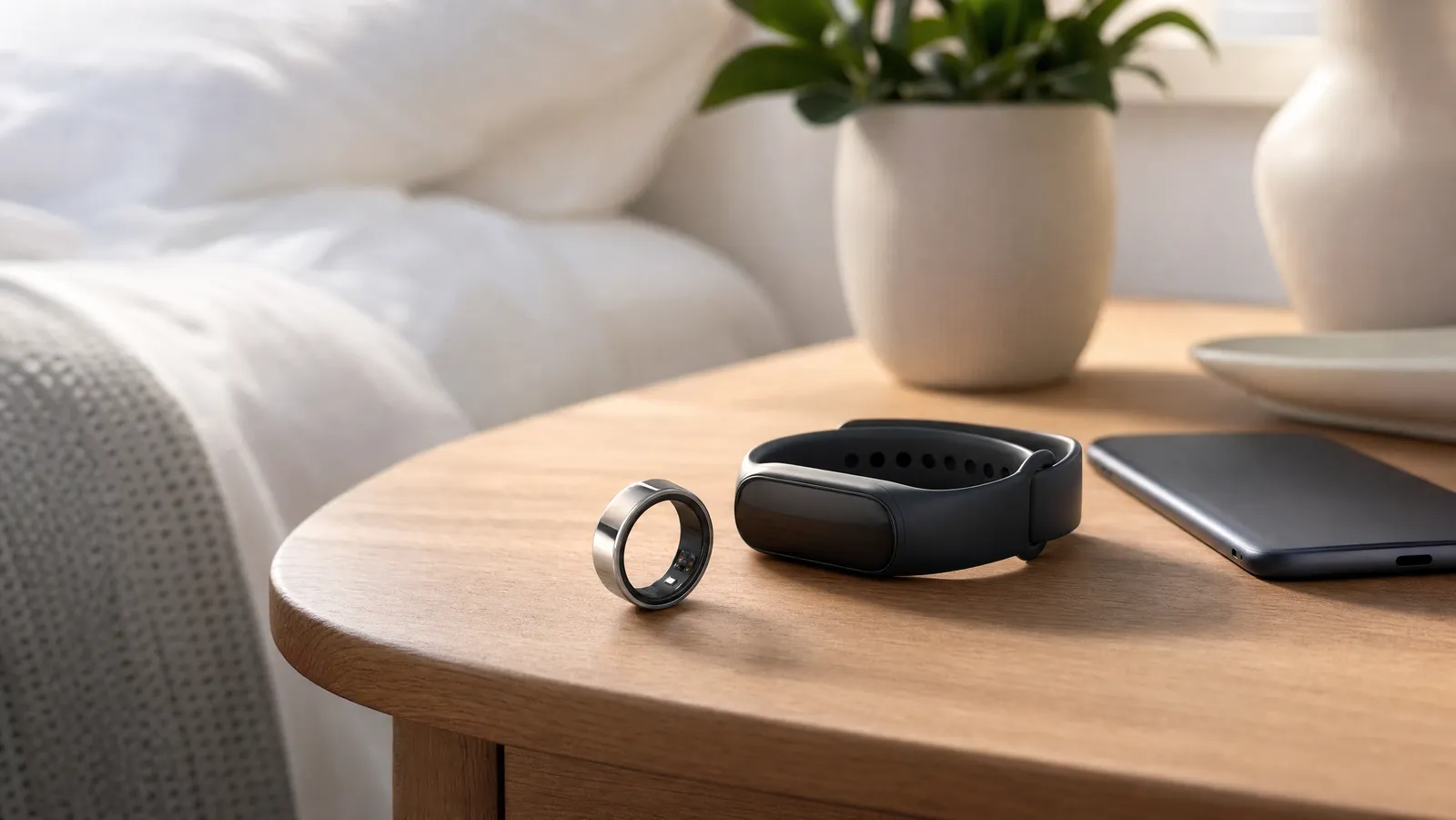
Smart rings are the quiet overachievers of sleep tracking. Worn on a finger, they are unobtrusive, comfortable to sleep in, and often boast multi-day battery life because they do not power a screen. The finger is also a strong spot for reading heart rate and SpO2. The downsides: they cost more per gram, you cannot glance down for the time, and sizing matters since a loose ring reads poorly. The BIEMHA and STILEFIX picks below represent this category.
Watches give you the richest at-a-glance experience. A screen shows the time, your stats, notifications, and daytime activity, so the device earns its place around the clock, not just at night. The trade-offs are bulk and battery. A watch can feel clunky on the wrist in bed, and bright screens drain faster, meaning more frequent charging, which is awkward when charging time competes with sleep time. The RLQA watch is our pick here.
Fitness bands split the difference. Slim and light, they are easier to sleep in than a chunky watch while still offering a small screen and continuous heart rate. They tend to be the most affordable entry point. You give up some screen real estate and, sometimes, sensor sophistication. The FITVII slim band and the screenless AMZAIZO tracker live in this space, the latter ditching the display entirely for maximum comfort and battery.
There is no universally "best" form factor. If you hate wearing things in bed, try a ring or a screenless band. If you want one device for everything, a watch makes sense.
Subscriptions and App Fees: Read the Fine Print
This is where sleep tech can quietly cost you. Several popular trackers, especially premium smart rings, lock their most useful insights behind a monthly or annual subscription. You buy the hardware, then pay again, indefinitely, to actually read your data the way the marketing promised.
We think that model deserves scrutiny, and it is a major reason the picks in this guide lean toward no-subscription devices. The BIEMHA ring and the STILEFIX budget ring both deliver their features without an ongoing app fee, which means the price you pay is the price you pay. Over a few years, that difference can dwarf the cost of the device itself. Before you buy anything, find the line in the product description or app store listing that tells you whether full features are free. If you cannot find it, assume there is a catch and look closer.
What to Look For in a Sleep Tracker
Once you have settled on a form factor, a short checklist will steer you to a good buy:
- Battery life. A tracker only works if you actually wear it at night, and that is hard if it lives on the charger. Multi-day battery, like the BIEMHA's roughly five-day life, means you can charge during a shower or commute and never miss a night.
- Comfort. You will wear this for a third of your life. If it is heavy, hot, or scratchy, you will stop using it. Rings and screenless bands win here.
- No-subscription pricing. As above, prefer devices that give you your data for free.
- Durability and water resistance. An IP68 rating, which the BIEMHA carries, means you can shower or wash dishes without worry.
- App quality. The app is where raw signals become useful insight. A clear, readable app that shows trends over weeks is worth more than a device crammed with sensors but saddled with confusing software.
- The right sensors for you. Want recovery insight? Look for HRV. Curious about breathing? SpO2 helps. But do not overpay for sensors you will never look at.
How to Use the Data Without Obsessing Over It
There is a real condition that sleep researchers have nicknamed orthosomnia, an unhealthy preoccupation with achieving "perfect" sleep as defined by a tracker. Ironically, the anxiety of chasing a better score can make sleep worse. A device meant to help you relax becomes one more thing to perform for.
So here is how to use your tracker like a calm, curious person rather than an anxious one. First, look at weekly and monthly trends, not individual nights. One bad night is noise; a two-week slide is a signal. Second, run small experiments. Change one thing, like a consistent bedtime or no screens for an hour before bed, and watch what the trend does over a couple of weeks. Pair those experiments with proven sleep hygiene habits so the tracker is measuring real changes, not random fluctuation.
Third, and most important: trust how you feel over what the screen says. If you wake rested but your tracker insists you slept poorly, your body wins that argument. The data is a flashlight for spotting patterns, not a judge handing down verdicts. And if checking your sleep score is making you dread bedtime, give yourself permission to look at it once a week instead of every morning, or to put the device in a drawer for a while. The goal is better sleep, not a better number.
The Five Picks, Compared
BIEMHA Smart Ring — Best Smart Ring. Our top overall choice leans on everything that makes rings appealing. It is comfortable enough to forget you are wearing it, carries an IP68 rating so water is a non-issue, and runs roughly five days on a charge, which keeps it on your finger and off the charger. Best of all, there is no subscription, so the data you came for is simply yours. For most people who want serious sleep insight without bulk or recurring fees, this is the one to beat.
STILEFIX Smart Ring — Best Budget Ring. If the ring form factor appeals but you want to spend less, the STILEFIX delivers the same wear-it-and-forget-it comfort with no ongoing app fee. You trade some polish and sensor breadth compared with pricier rings, but the core proposition, comfortable overnight tracking you do not have to keep paying for, stays intact. It is an easy recommendation for first-time trackers.
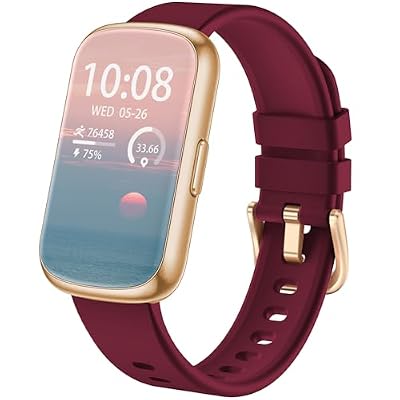
RLQA Fitness Tracker Watch — Best Watch Tracker. For shoppers who want one device on the wrist around the clock, the RLQA watch covers the essentials: continuous heart rate, SpO2 spot readings, and sleep tracking, all on a screen you can glance at for the time, notifications, and daytime stats. It is the natural pick if you would rather not add a separate watch and a separate sleep gadget to your life.
FITVII Slim AMOLED Tracker — Best Budget Band. The FITVII threads a nice needle: a slim AMOLED band that is light enough to sleep in comfortably while still giving you a crisp little screen for your stats. As a budget band, it is one of the gentler ways to dip a toe into sleep tracking without committing to a ring or a full watch.
AMZAIZO Screenless Tracker — Also Great. Rounding out the list, the AMZAIZO drops the display entirely. That sounds like a limitation, but for sleep it is a feature: no screen means a smaller, lighter, longer-lasting band you barely notice at night, and nothing glowing to wake you. If your priority is comfort and you do not care about glancing at your wrist, it is a smart, minimalist choice.
Frequently Asked Questions
Are sleep trackers accurate enough to be worth it?
For tracking how long you sleep and spotting trends over time, yes, they are genuinely useful. For pinpointing exact minutes of deep or REM sleep, they are educated guesses, not precise measurements. Buy one to understand your patterns and test changes to your routine, not to get a clinical readout. Used that way, even a budget tracker earns its keep.
Can a sleep tracker detect sleep apnea?
No. A tracker may show patterns, such as restless nights or dips in estimated blood oxygen, that hint something is off, but it cannot diagnose sleep apnea or any sleep disorder. If you snore loudly, wake gasping, or feel exhausted despite enough time in bed, see a doctor. A medical evaluation, often an overnight sleep study, is the only way to diagnose and treat it.
Do I have to pay a monthly subscription to use one?
Not if you choose carefully. Some premium trackers lock features behind an app fee, but plenty of good devices, including the BIEMHA and STILEFIX rings in this guide, give you full access with no subscription. Always check the product listing for app fees before buying, and treat "no subscription" as a real selling point.
Should I wear a ring, watch, or band to bed?
It comes down to comfort and what else you want from the device. Rings and screenless bands are the easiest to sleep in and tend to have the longest battery life. Watches offer the most daytime functionality but can feel bulky at night. Slim bands sit in between. If you dislike wearing things in bed, start with a ring or a screenless tracker.
The Bottom Line
A sleep tracker is at its best when you treat it as a curious companion rather than a strict judge. Wear something comfortable enough that you actually keep it on, favor a device with solid battery life and no surprise subscription, and read the data for trends rather than obsessing over any single night. Among our picks, the BIEMHA ring stands out for comfort, durability, and subscription-free insight, while the STILEFIX, RLQA, FITVII, and AMZAIZO each serve a different budget and form-factor preference.
Remember, though, that the device is only half the equation. The numbers are useful only if they push you toward better habits, so let your tracker point you back to the fundamentals in our complete guide to building better sleep night after night. And if anything you see worries you, the right next step is a conversation with your doctor, not a deeper dive into the app.

BIEMHA Smart Ring Health Tracker
The BIEMHA is a smart ring that tracks sleep and general health metrics with no ongoing subscription required. It carries an IP68 waterproof rating and runs about five days on a charge, so you can wear it overnight without nightly recharging. The ring form factor is less obtrusive in bed than a watch.

STILEFIX Smart Ring
The STILEFIX smart ring monitors sleep, stress, and daily activity, with no app subscription fees. It's waterproof and advertises a long battery life so it can stay on through the night. The ring keeps tracking discreet without a screen on your wrist.
RLQA Fitness Tracker Watch
The RLQA is a wrist fitness tracker that monitors 24/7 heart rate, blood oxygen, and sleep, with an IP68 waterproof rating. It pairs with both Android and iPhone, giving you on-wrist stats plus app-based history. The watch format also doubles as an all-day activity tracker.

FITVII Slim AMOLED Tracker
The FITVII is a slim fitness band with a bright AMOLED display that tracks blood oxygen, heart rate, and sleep. Its IP68 waterproof rating and slim profile make it easy to keep on overnight. The narrow band is less bulky than a full smartwatch.

AMZAIZO Screenless Tracker
The AMZAIZO is a screenless activity and fitness tracker that records heart rate and sleep and syncs to iOS and Android. Without a display, all your data lives in the companion app, which keeps the device minimal and distraction-free on the wrist. It's aimed at people who want tracking without a screen lighting up at night.
Keep reading
Best Magnesium for Sleep: Top Picks Compared
The best magnesium for sleep in 2026: which forms (glycinate, citrate, more) actually help, how to choose and dose it safely, and our researched top picks.

Best Natural Sleep Aids & Supplements (Melatonin & Beyond)
The best natural sleep aids and supplements in 2026: how melatonin, magnesium, and valerian really work, how to use them safely, and our top picks.
The Best Weighted Blankets for Deeper Sleep
The best weighted blankets for deeper sleep in 2026: how to pick the right weight, cooling vs cozy options, safety notes, and our top picks compared.