The Best Massage Guns for Muscle Pain Relief in 2026
The best massage guns for muscle pain relief in 2026. What percussive therapy can (and cannot) do, how to choose one, and our top picks.

Affiliate disclosure: This article contains affiliate links. As an Amazon Associate we earn from qualifying purchases, at no extra cost to you. Learn more.
◆ The verdict
5 reviewed- 1Our PickTheragun PRO (4th Gen) Bluetooth Percussive Deep-Tissue Massage GunCheck price ▸
- 2Best Mid-RangeOpove M3 Pro 2 Deep Tissue Percussion Massage GunCheck price ▸
- 3Best with Heat & ColdBOB AND BRAD X6 Pro Max Massage Gun with Heat and ColdCheck price ▸
- 4Best PortableBOB AND BRAD Q2 Mini Pocket-Sized Massage GunCheck price ▸
- 5Best ValueMedcursor Handheld Percussion Massage Gun, Deep Tissue, 5 Massage HeadsCheck price ▸
If you have ever finished a hard workout, spent a long day hunched over a laptop, or woken up with a stiff neck, the idea of a handheld device that pounds away your tension sounds almost too good to be true. Percussive massage guns have gone from a niche physical-therapy tool to a fixture in home gyms, office drawers, and gym bags everywhere, promising faster recovery, looser muscles, and relief from everyday aches in a few minutes a day.
The reality is a little more nuanced than the marketing suggests. Massage guns can be genuinely helpful for muscle soreness and short-term flexibility, but they are not magic, and they are not a substitute for rest or medical care when something is actually wrong. Used thoughtfully, they are a low-risk, convenient way to feel better; used carelessly, they can aggravate a problem.
Below, we walk through what the research actually says, where massage guns shine beyond post-workout recovery, how to use one safely, and how to choose a model that fits your body and your budget. We compared several popular options, but the goal here is to help you understand the category so you can decide with confidence. A massage gun is also just one piece of a bigger picture — see our complete guide to muscle recovery and mobility tools for how it fits alongside foam rollers, heat, and the rest.
What percussive massage guns actually do
A massage gun delivers rapid, repetitive pulses of pressure into your muscle tissue, a technique often called percussive or vibration therapy. The motor drives a head back and forth many times per second, stimulating soft tissue, encouraging blood flow to the area, and helping tight muscles relax. It is essentially a powered, more aggressive version of the kneading a massage therapist might do by hand.
The evidence for these devices is promising but mixed, and it is worth being honest about that. Several small studies have found that percussive or vibration treatment can reduce delayed-onset muscle soreness, the stiff, achy feeling that shows up a day or two after hard exercise. Other research suggests a short-term boost in range of motion right after treatment, which can make a warm-up feel smoother, and some support for the idea that a brief session helps muscles feel less tense without reducing strength.
Where the science gets thinner is in claims about long-term performance, injury prevention, or structurally changing your tissue. Most studies are small, use different protocols, and measure effects that fade within minutes to hours. In plain terms: a massage gun can reliably help you feel looser and less sore in the moment, but it will not rebuild a muscle, dissolve scar tissue, or fix the underlying cause of chronic pain. Treat it as a comfort and recovery aid, not a treatment.
Benefits beyond the gym
You do not have to be an athlete to get something out of a massage gun. A lot of the tension we carry has nothing to do with exercise and everything to do with how we sit, sleep, and stress. Hours at a desk tend to leave the shoulders and upper back tight, and a couple of minutes of gentle percussion can take the edge off that end-of-day knotted feeling.
The increased local blood flow that percussion encourages is part of why a session often feels warming and loosening. That same effect can be pleasant for general stiffness, whether it comes from a long flight, a day of yard work, or simply moving a little less than you used to. Many people also find the rhythmic sensation genuinely relaxing, using it as a wind-down ritual.
Think of a massage gun as a convenient, on-demand way to address everyday muscular tension between professional massages or stretching sessions. Just keep your expectations grounded: it is good at temporary relief and relaxation, not at treating medical conditions. Claims you may have seen about reducing cellulite or producing dramatic cosmetic changes are not well supported, so do not buy one on that basis.
How to use a massage gun safely
Safety comes down to a few simple habits. Start on the lowest speed and let the weight of the device do most of the work; you should not have to press hard. Glide it slowly across the muscle rather than digging into one spot, and keep each muscle group to roughly one to two minutes. There is no benefit to grinding away for ten minutes, and over-treating can leave you sore or bruised.
Just as important is knowing where not to use it. Keep the gun on the meaty, muscular parts of your body and avoid bony areas, joints, and the spine. Steer clear of the front and sides of the neck, the throat, the armpits, the groin, and the abdomen, all of which contain delicate structures, nerves, or blood vessels. Never use it directly on a fresh injury, a strain, a bruise, swelling, or any sharply painful area.
Some people should check with a doctor before using percussion therapy at all: anyone who is pregnant, has a bleeding disorder, takes blood thinners, has blood clots or varicose veins, osteoporosis, nerve conditions, or recent surgery. And the most important rule of all: a massage gun is for ordinary muscle tightness, not for diagnosing or treating pain. If something hurts sharply, lasts more than a week or two, or comes with numbness, tingling, or weakness, stop and see a qualified professional. This article is general information, not medical advice.
How to choose a massage gun
The market runs from roughly thirty dollars to well over two hundred, and the price differences are real but not always worth it for everyone. Here is what actually matters when you compare models.
Amplitude and stall force. Amplitude is how far the head travels with each stroke. A longer amplitude (around 12 to 16mm) delivers a deeper, more therapeutic feel that reaches larger muscles, while budget guns often sit closer to 8 to 10mm and feel more like surface vibration. Stall force is how much pressure the motor takes before it stops; a higher stall force means the gun keeps working when you lean into a tight muscle. If you have a lot of muscle mass or want serious deep-tissue pressure, prioritize these two specs.
Speed settings. Most guns offer multiple speed levels, from a gentle pulse to a fast setting. More speeds give finer control, but two or three well-chosen levels are plenty. What matters most is a low setting that is genuinely gentle for sensitive areas and a higher one for big muscle groups.
Attachments. A round or ball head is the all-purpose choice, a flat head works well for larger muscle groups, a fork or U-shaped head straddles areas like the spine or Achilles, and a bullet head targets small knots. You do not need a dozen attachments; three or four well-designed ones cover almost every use.
Battery life. Look for a model that lasts at least a couple of hours of actual use per charge, with bonus points for USB-C charging. Most quality guns are good for several sessions before a recharge, so battery is rarely a dealbreaker unless you travel constantly.
Noise. Early massage guns were loud enough to annoy everyone in the room. Newer brushless-motor models are noticeably quieter, which matters if you want to use yours while watching TV or in a shared space.
Price tiers. In the budget tier (roughly $30 to $70), you can find a capable gun for casual use, though amplitude and durability may be limited. The mid-range ($70 to $150) is the sweet spot for most people, with solid amplitude, quieter motors, and good attachments. Premium models ($150 to $200 and up) add the deepest amplitude, the highest stall force, app connectivity, and refined ergonomics. Those extras are worthwhile for serious athletes or daily heavy users, but plenty of people will be happy never crossing the hundred-dollar line.
Frequently asked questions
Do massage guns actually help with muscle soreness?
For many people, yes, at least in the short term. Several small studies suggest percussive therapy can reduce delayed-onset muscle soreness and the stiff feeling after exercise. The relief is usually temporary rather than permanent, so think of it as comfort and recovery support rather than a cure.
How long should I use a massage gun on one area?
Keep it brief, generally one to two minutes per muscle group, and move the gun slowly rather than holding it in one spot. Longer is not better and can leave you sore or bruised. A short session on each tight area is all most people need.
Can I use a massage gun if I do not work out?
Absolutely. Massage guns are just as useful for everyday tension from desk work, poor sleep, or general stiffness as they are for post-workout recovery. Some research even points to reduced perceived tension after a couple of minutes on tight shoulder muscles. Just stick to the safe-use guidelines regardless of why you are using it.
Is it safe to use a massage gun every day?
For most healthy adults, light daily use on tight muscles is fine, as long as you use gentle pressure, keep sessions short, and avoid sensitive areas. Stop if you notice bruising, increased pain, or numbness, and check with a doctor first if you are pregnant, take blood thinners, or have a medical condition.
The bottom line
A good massage gun is one of the more useful recovery and relaxation tools you can keep at home. The evidence supports real, if modest and short-lived, benefits for soreness and flexibility, plus a lot of everyday comfort for tension that has nothing to do with exercise.
What a massage gun cannot do is treat an injury, replace professional care, or deliver the dramatic results some marketing implies. Use it on muscle, not on joints or sensitive areas; start gentle and keep sessions short; and listen to your body. Match amplitude, attachments, and price tier to your actual needs, and almost any well-reviewed model will serve you well. And if pain persists or worsens, set the gun down and see a professional.
For how a massage gun stacks up against other options — and how to build a complete routine — see our guide to the best muscle recovery and mobility tools and our head-to-head on massage gun vs. foam roller.

Theragun PRO (4th Gen) Bluetooth Percussive Deep-Tissue Massage Gun
The Theragun PRO (4th Gen) is a professional-grade percussive massage gun powered by a brushless QX150 motor with a deep 16mm amplitude for genuine deep-tissue work. It runs quietly via QuietForce technology and offers up to 300 minutes of battery life across two swappable batteries. A rotating arm, OLED screen, and companion app let you dial in speed and pressure.
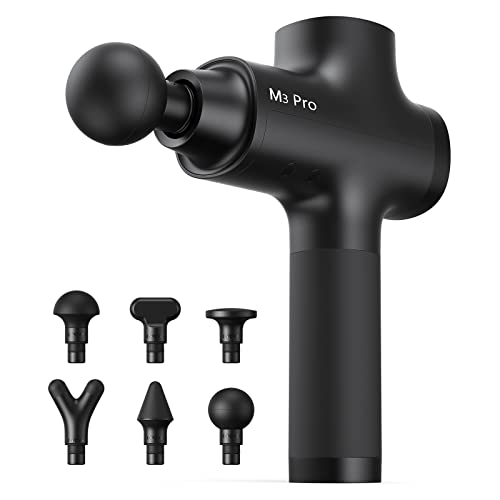
Opove M3 Pro 2 Deep Tissue Percussion Massage Gun
The Opove M3 Pro 2 hits the value sweet spot most people want: a 12mm amplitude and up to 70 lb stall force for real deep-tissue pressure, five speeds topping out at a deliberately moderate 2,500 RPM, and a long 4 to 8 hours of battery life. It runs quietly and comes with a carrying case. The line has sold more than 500,000 units.

BOB AND BRAD X6 Pro Max Massage Gun with Heat and Cold
Designed with physical therapists Bob and Brad, the X6 Pro Max adds switchable heat (up to 113°F) and cold (down to 50°F) therapy to a 55 lb stall-force percussion gun with a metal alloy head and a 10.5mm amplitude. It offers five speeds (2,000 to 3,200 RPM), an extended 9.65-inch reach, USB-C fast charging, and is FSA/HSA eligible.

BOB AND BRAD Q2 Mini Pocket-Sized Massage Gun
Also from the Bob and Brad team, the Q2 Mini weighs just 0.95 lb and fits in a bag or carry-on, yet a high-torque brushless motor still delivers up to 35 lb of stall force and 3,000 RPM. It charges over standard USB-C, runs quietly under 45 dB, and is FSA/HSA eligible — a true grab-and-go recovery tool.

Medcursor Handheld Percussion Massage Gun, Deep Tissue, 5 Massage Heads
The Medcursor uses a high-torque brushless motor that reaches about 11mm into muscle, with five speed levels (1,200 to 3,200 RPM) and noise as low as 35 dB. It is light at 1.5 lb, runs up to 4.5 hours per charge, and ships with five interchangeable heads (shovel, bump, bullet, ball, and flat). It is FSA/HSA eligible.
Keep reading
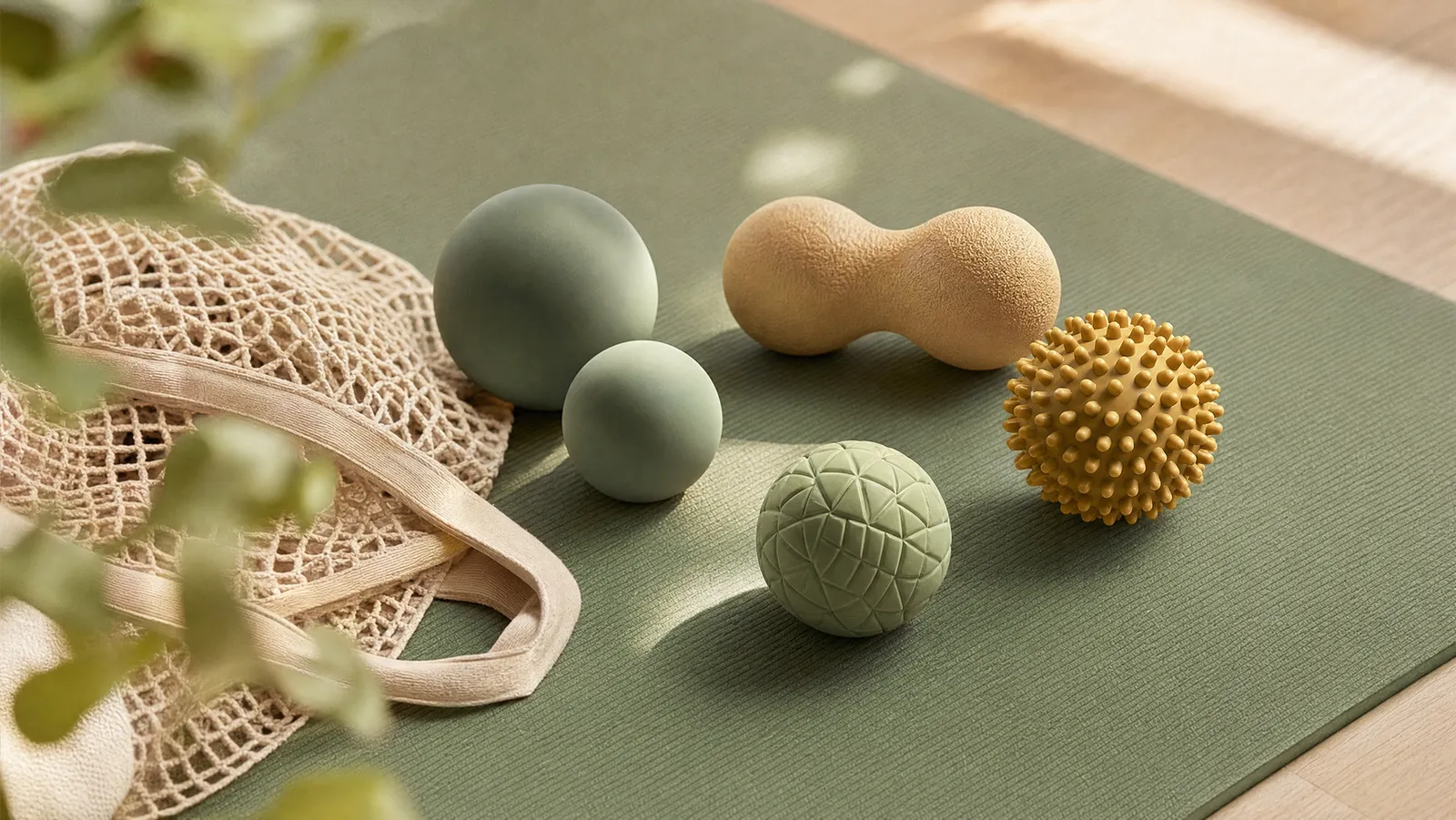
Best Massage Balls & Trigger-Point Tools
The best massage balls and trigger-point tools in 2026: how to use them for knots and tight spots, what to look for, and our top affordable picks.
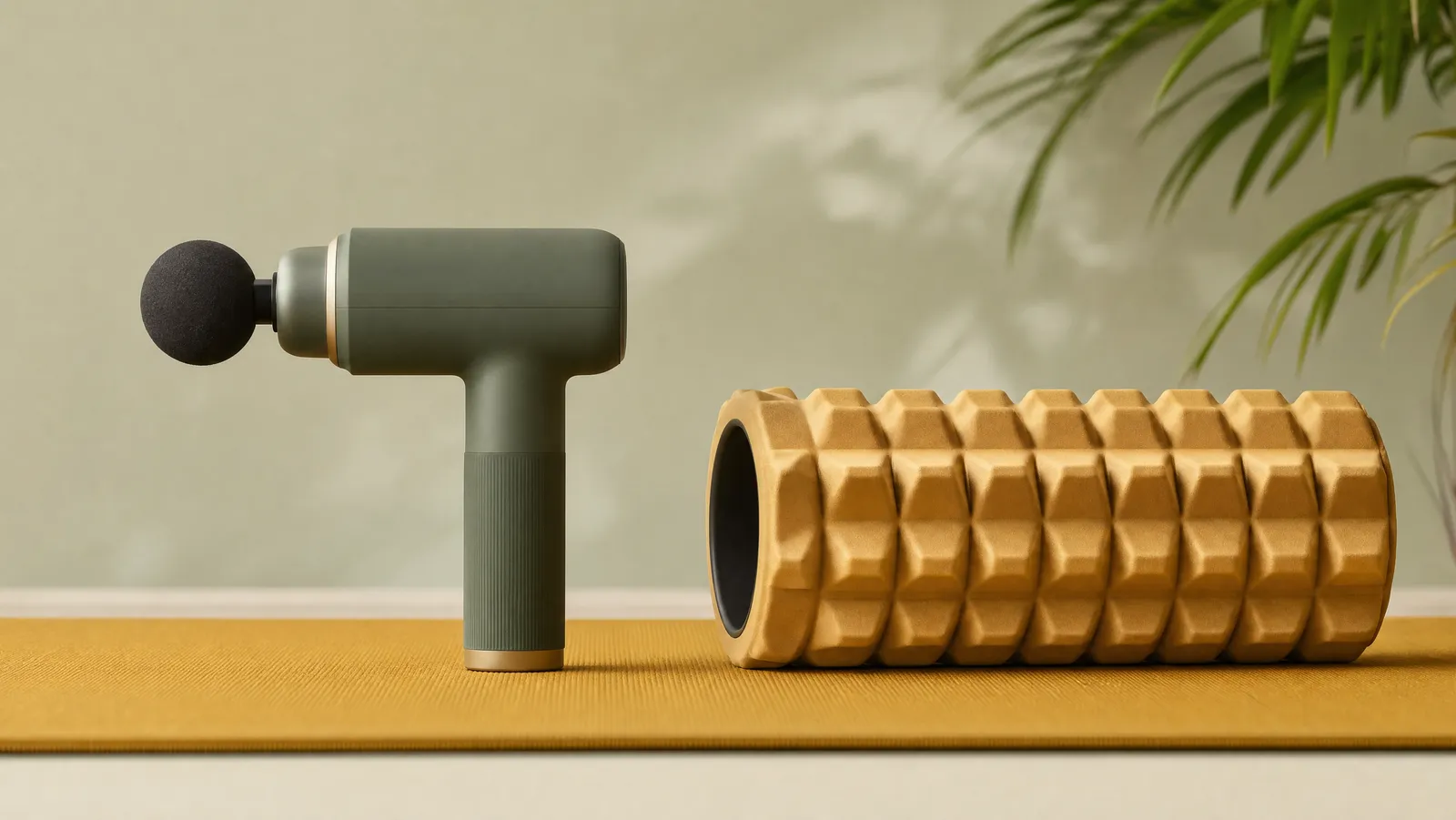
Massage Gun vs. Foam Roller: Which Do You Need?
Massage gun vs. foam roller: how they compare for recovery, mobility, pain, and value — and which one (or both) is right for you.
Best Heating Pads for Muscle & Joint Pain
The best heating pads for muscle and joint pain in 2026: when to use heat (vs cold), what to look for, and our top picks from classic to cordless.