The Best Home Blood Pressure Monitors of 2026
Our picks for the best home blood pressure monitor in 2026, from validated Omron accuracy to big-screen and smart models, plus how to get a reliable reading.

Affiliate disclosure: This article contains affiliate links. As an Amazon Associate we earn from qualifying purchases, at no extra cost to you. Learn more.
◆ The verdict
5 reviewed- 1Our PickOMRON Bronze Blood Pressure Monitor, Upper Arm CuffCheck price ▸
- 2Best ValueOMRON Iron Blood Pressure Monitor, Upper Arm CuffCheck price ▸
- 3Best Smart MonitoriHealth Track Smart Upper Arm Blood Pressure MonitorCheck price ▸
- 4Best BudgetKonquest KBP-2704A Automatic Upper Arm Blood Pressure MonitorCheck price ▸
- 5Best for Easy ReadingHealthing Upper Arm Blood Pressure Monitor, Large Backlit ScreenCheck price ▸
The best home blood pressure monitor for most people is an automatic, clinically validated, upper-arm cuff — and our top pick is the OMRON Bronze. If you want the short version: buy a validated upper-arm model that fits your arm, take two readings each morning and evening, and share the averages with your clinician. Everything below explains how we got there.
Better Life Span is reader-supported; if you buy through links on this page we may earn a small commission, at no cost to you. That does not change which monitors we recommend. According to the CDC, 47.7 percent of U.S. adults had high blood pressure during 2021 to 2023, and the share climbs to roughly 71.6 percent among adults 60 and older — which is why a reliable cuff is one of the most useful tools you can keep at home. A monitor also fits into the bigger picture we cover in our guide to at-home health monitoring devices.
Home tracking is not a fringe idea, either. In a joint policy statement, the American Heart Association and the American Medical Association endorse self-measured blood pressure monitoring — readings you take yourself, outside the clinic — as a way to confirm a diagnosis and see how treatment is working between visits. A good monitor is the first piece of that.
We spent time with the specs, validation records, and owner feedback for dozens of current models to narrow the field to five: a best all-around pick, a best value, a smart option, a budget choice, and one built for easy reading. We weighted validated accuracy most heavily, then cuff fit, ease of reading, and whether the extras justify their price. Below, we explain what actually separates a trustworthy monitor from a gimmicky one, then walk through each pick.
Key Features That Matter in a Home Blood Pressure Monitor
Most blood pressure monitors look alike. The differences that count are less about screens and more about whether the numbers can be trusted.
Upper-arm cuffs are the gold standard
The American Heart Association recommends an automatic, cuff-style, upper-arm monitor and specifically advises against wrist and finger devices, which give less reliable readings. That is why every pick here is an upper arm blood pressure monitor rather than a wrist band. If you are shopping for the best upper arm blood pressure monitor, the good news is that the category is mature and affordable — solid models start under $40.
According to Mayo Clinic, blood pressure taken at the wrist is usually higher and less accurate than a reading from the upper arm, largely because wrist monitors are very sensitive to how your arm and wrist are positioned. A wrist device can be a reasonable fallback if an upper-arm cuff does not fit or causes pain, but it should not be your first choice.
Validated accuracy
Not every monitor on the shelf has been tested to a recognized accuracy standard. STRIDE BP, a scientific body that reviews these devices, notes that of the more than 5,000 electronic blood pressure monitors on the market, only a fraction have passed independent validation. The American Medical Association keeps a free, independently reviewed list of validated devices at validatebp.org. Omron's Advanced Accuracy technology is clinically validated, which is a big part of why two Omron models sit near the top of our list. We take a deeper look at the evidence in our guide to how accurate home blood pressure monitors really are.
Cuff fit
A cuff that is too small or too large skews the reading, and it is a bigger problem than most people realize. A cuff that is too tight can read falsely high; one that is too loose can read falsely low. Measure around your bare upper arm at the midpoint between your shoulder and elbow, then match it to the cuff range before you buy. The models here cover roughly 8.5 to 17 inches, but confirm the range fits you — the wide-range D-ring cuffs on the Omron and Healthing picks span 9 to 17 inches, which suits most adults but not everyone.
Easy reading and app options
The rest comes down to how you like to use the numbers. A large, backlit, color-coded display matters more than it sounds, especially for older eyes or anyone tracking readings twice a day. Bluetooth and a companion app make it easy to build a trend line and share results with a doctor, but they add a pairing step. A simple one-button monitor with no app is often less frustrating — you just write the numbers down.
The 5 Best Home Blood Pressure Monitors of 2026
Each product card below shows the current price and a direct link. The short write-ups here add the context: who each one is for, and where it falls short.
Our Pick: OMRON Bronze
The OMRON Bronze is the monitor we would hand most people. It combines Omron's clinically validated accuracy with the conveniences that make home tracking a habit: irregular-heartbeat detection, a hypertension indicator that lights up on high readings, and Bluetooth syncing to the free OMRON Connect app, which works with Apple Health and Google Fit. At around $47 as of July 2026, it sits in a sensible middle ground — more capable than a bare-bones cuff, far cheaper than a clinic visit. The main catch is that the app and Bluetooth pairing are where much of the value lives, so it rewards people who will actually use them.
Best Value: OMRON Iron
The OMRON Iron is our value play because it keeps the part that matters — the same clinically validated Omron accuracy and irregular-heartbeat detection — and drops the extras. One button starts a reading, a body-movement alert warns you if you moved during the measurement, and the wide-range cuff fits the same 9-to-17-inch span as the Bronze. At around $38 as of July 2026, it is the cheapest way to get genuine Omron accuracy. The trade-off is real, though: there is no app and no onboard memory, so you log every reading by hand.
Best Smart Monitor: iHealth Track
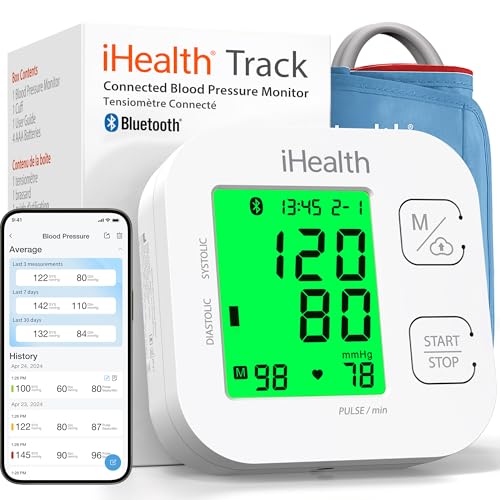
If you want your readings living on your phone, the iHealth Track is the smart pick. It syncs over Bluetooth to a well-regarded free app for iOS and Android, and its large backlit display color-codes each result green, yellow, or red so you get an at-a-glance sense of where you stand. It stores up to 99 readings on the device, keeps unlimited history in the app, and meets ESH 2010 performance standards. At around $40 as of July 2026 (list $49.98), it is priced with the Omron models. Just know the app is central to the experience, so it leans on Bluetooth pairing more than a plug-and-read cuff.
Best Budget: Konquest KBP-2704A
The Konquest KBP-2704A is the pick when price comes first. For around $37 as of July 2026, you get a large backlit LCD that shows systolic, diastolic, pulse, date, and time on one screen, an irregular-heartbeat detector with an automatic alert, and a WHO blood-pressure indicator that classifies each reading. It is genuinely easy to read and use. The honest caveat: it is not one of the individually clinically validated legacy brands, and there is no app, so it is best for someone who wants a simple, affordable number twice a day.
Best for Easy Reading: Healthing Large-Screen Monitor
The Healthing monitor is built for anyone who finds small screens a struggle, which makes it our favorite blood pressure monitor for seniors. It has the largest display in this group, a tricolor readout, and a weekly trend curve that plots changes over time. It is rechargeable — no AAA hunt — supports two users, and stores up to 180 readings. At around $90 as of July 2026, it is the priciest pick here, and like the Konquest it is not a clinically validated legacy brand. But if a big, clear display and rechargeable convenience are your priorities, it earns the premium.
Getting an Accurate Reading at Home
A validated monitor only helps if you use it correctly, and small mistakes can swing a reading by 10 points or more. The technique matters as much as the device — we cover it in depth in how to measure your blood pressure at home, but here is the short version:
- Sit quietly for five minutes before you start, with your back supported and both feet flat on the floor.
- Rest your arm on a table so the cuff sits at heart level, and wrap it on bare skin, not over a sleeve.
- Do not talk, and empty your bladder first — both can nudge the number up.
- Take two readings a minute apart, morning and evening, and record the average rather than a single value.
- Measure at the same times each day for a week to build a picture your clinician can actually use.
The American Heart Association also suggests bringing your monitor to a checkup once a year so your care team can confirm it reads the same as their equipment.
Blood Oxygen and Other Vitals Worth Tracking
Blood pressure is one number in a bigger picture. Many people building a home health kit also want a quick read on heart rate and blood oxygen, especially if they manage a heart or lung condition. A fingertip pulse oximeter is an inexpensive companion to a BP cuff — see our roundup of the best pulse oximeters if you want to round out your setup. Tracking a few vitals consistently gives you and your doctor far more to work with than a single reading at an annual visit.
Talking to Your Doctor About Your Numbers
Knowing the categories helps you know when a reading deserves a conversation. According to the American Heart Association, normal blood pressure is below 120/80 mm Hg, elevated is 120 to 129 over less than 80, and a reading of 130/80 mm Hg or higher is considered high blood pressure, with stage 1 hypertension defined as 130 to 139 over 80 to 89. A single high number is not a diagnosis — home readings vary, and things like a rough morning or a recent coffee can push a value up.
The point of tracking at home is to spot a pattern, not to react to one reading. If your averages stay elevated over a week or two, or if you see very high numbers with symptoms, share the log with your clinician rather than adjusting anything on your own. A monitor is a tool, not a diagnosis — share your readings with your clinician, and never start, stop, or change a medication based on home numbers without medical advice.
The Bottom Line
For most people, the OMRON Bronze is the best home blood pressure monitor of 2026: validated accuracy, app tracking, and a fair price. Want the same accuracy for less? The OMRON Iron is the value pick. Prefer phone-based tracking, the lowest price, or the biggest screen? The iHealth Track, Konquest, and Healthing cover those bases. Whichever you choose, pick a cuff that fits, measure the same way each day, and treat the numbers as a conversation starter with your care team. For the full picture on tracking your health at home, see our complete home health monitoring guide.
Frequently Asked Questions
Is an upper-arm or wrist monitor better?
An upper-arm cuff is better for home use. The American Heart Association recommends automatic upper-arm monitors and advises against wrist and finger devices because they tend to be less reliable and are very sensitive to arm position. Use a wrist monitor only if an upper-arm cuff cannot fit or is painful.
How often should I check my blood pressure at home?
A common approach is two readings a minute apart, morning and evening, for a week or two when you are first tracking or after a treatment change, then less often once your numbers are stable. Your clinician may suggest a specific schedule for your situation.
Do home blood pressure monitors need to be calibrated?
Yes, periodically. The American Heart Association suggests bringing your monitor to an appointment about once a year so your care team can check that it matches their equipment, and following the manufacturer's guidance on recalibration.
What is a normal blood pressure reading?
The American Heart Association defines normal as below 120/80 mm Hg. Readings of 130/80 mm Hg or higher are classified as hypertension. Because a single reading can be misleading, base any judgment on an average of several readings taken over time.

OMRON Bronze Blood Pressure Monitor, Upper Arm Cuff
The OMRON Bronze pairs the brand's clinically validated Advanced Accuracy technology with everyday convenience. It flags an irregular heartbeat during a measurement and lights up a hypertension indicator when a reading runs high. Bluetooth syncs your numbers to the free OMRON Connect app, which stores unlimited readings and works with Apple Health and Google Fit, while the device itself holds up to 14. The wide-range D-ring cuff fits arms 9 to 17 inches, and it ships with a storage case and four AA batteries.

OMRON Iron Blood Pressure Monitor, Upper Arm Cuff
The OMRON Iron carries the same clinically validated Advanced Accuracy technology as pricier Omron models in a stripped-down package. One-touch operation starts a reading with a single button, irregular-heartbeat detection runs during the measurement, and a body-movement alert flags readings taken while you fidget. The wide-range D-ring cuff fits arms 9 to 17 inches, and it comes with an instruction manual and quick-start guide.
iHealth Track Smart Upper Arm Blood Pressure Monitor
The iHealth Track leans into phone-based tracking, syncing over Bluetooth to the free iHealth app for iOS and Android. A large multi-color backlit display uses a green-yellow-red guide to color-code each result, and the monitor stores up to 99 readings on the device with unlimited history in the app. It automatically flags heart-rhythm disturbances after a measurement, meets ESH 2010 performance standards, and its wide-range cuff fits arms 8.7 to 16.5 inches. Four AAA batteries and a 12-month warranty are included.

Konquest KBP-2704A Automatic Upper Arm Blood Pressure Monitor
The Konquest KBP-2704A puts systolic, diastolic, pulse, date, and time on one large backlit LCD, so everything is readable at a glance. It includes an irregular-heartbeat detector with an automatic alert and a WHO blood-pressure indicator that classifies each reading. One-touch automatic operation, a memory function that stores multiple readings, and an adjustable cuff that fits arms 8.5 to 16.5 inches round it out, and it ships with four AAA batteries and a carrying case.

Healthing Upper Arm Blood Pressure Monitor, Large Backlit Screen
The Healthing monitor is built around an extra-large backlit display with a tricolor readout, plus a weekly trend curve so you can watch changes over time. It is rechargeable, so there are no disposable batteries to swap, supports two users, and stores up to 180 readings. It records pulse rate, flags an irregular pulse, and its ergonomic D-ring cuff fits arms 9 to 17 inches. The brand markets it toward middle-aged and older users who want a simple, oversized display.
Keep reading
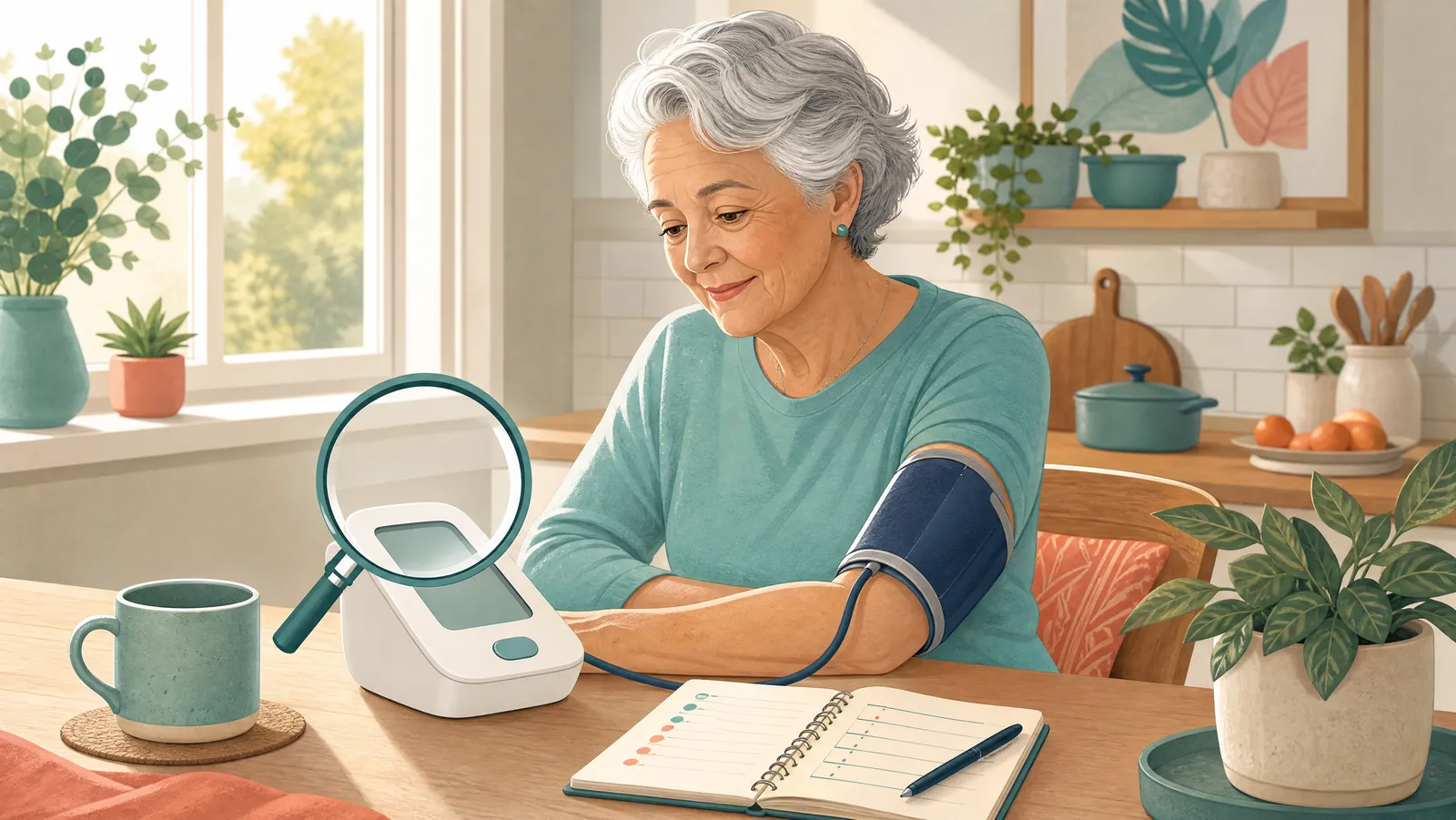
Are Home Blood Pressure Monitors Accurate? What the Evidence Says
Are home blood pressure monitors accurate? Validated upper-arm models are — but most devices sold online never passed testing. Here's how to check yours.
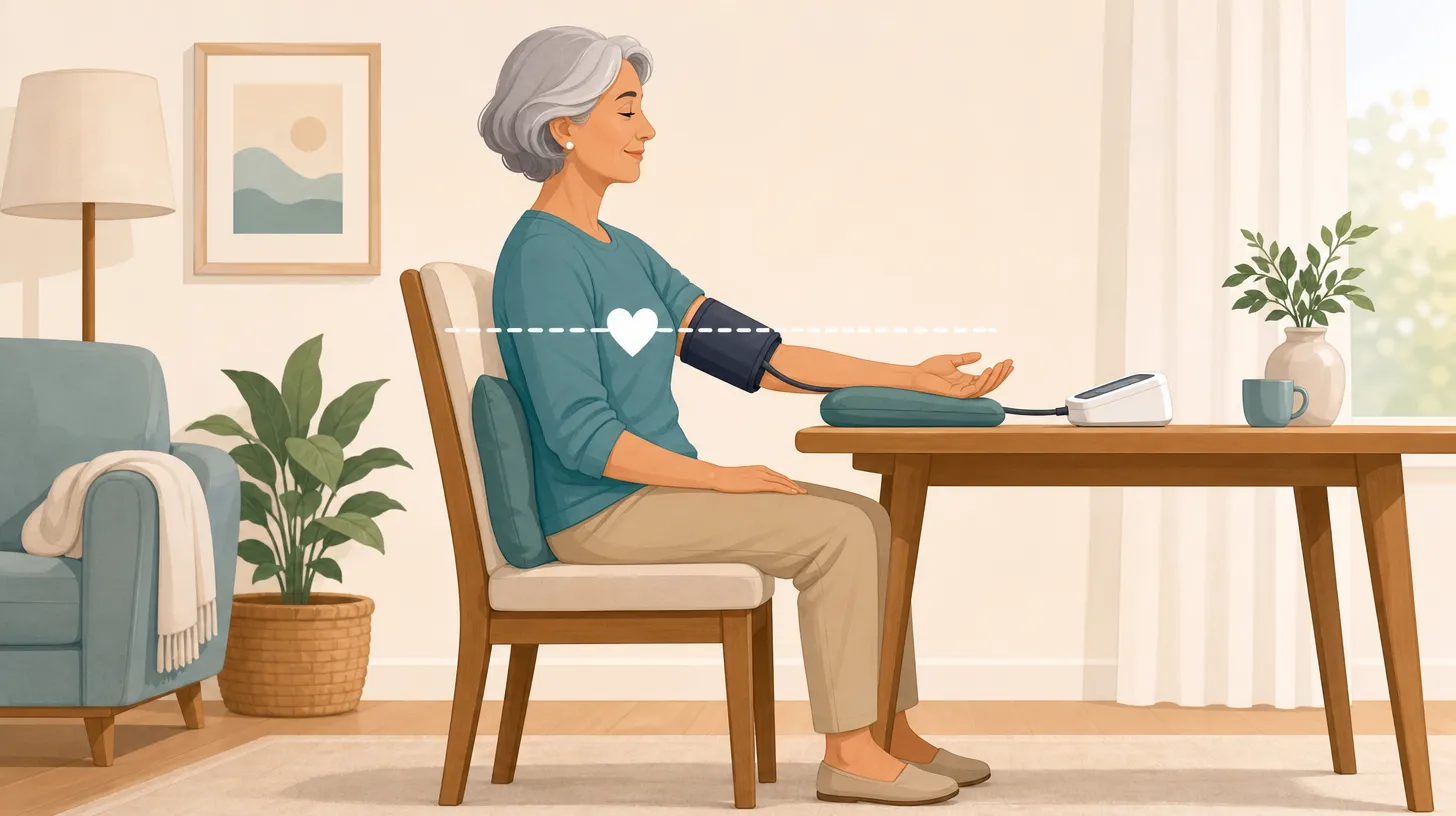
How to Measure Your Blood Pressure at Home (Accurately)
How to measure blood pressure at home accurately: pick a validated monitor, use the right posture and cuff, time your checks, and learn what your numbers mean.
Which Health Numbers Are Worth Tracking at Home After 50?
The health metrics to track at home after 50 — blood pressure, resting heart rate, weight trend, waist-to-height ratio — and which numbers to skip.