The Best Fiber Supplements After 50
The best fiber supplement after 50 is almost always psyllium. Why gel-forming fiber beats prebiotic powders, what the trials show, and our six picks.

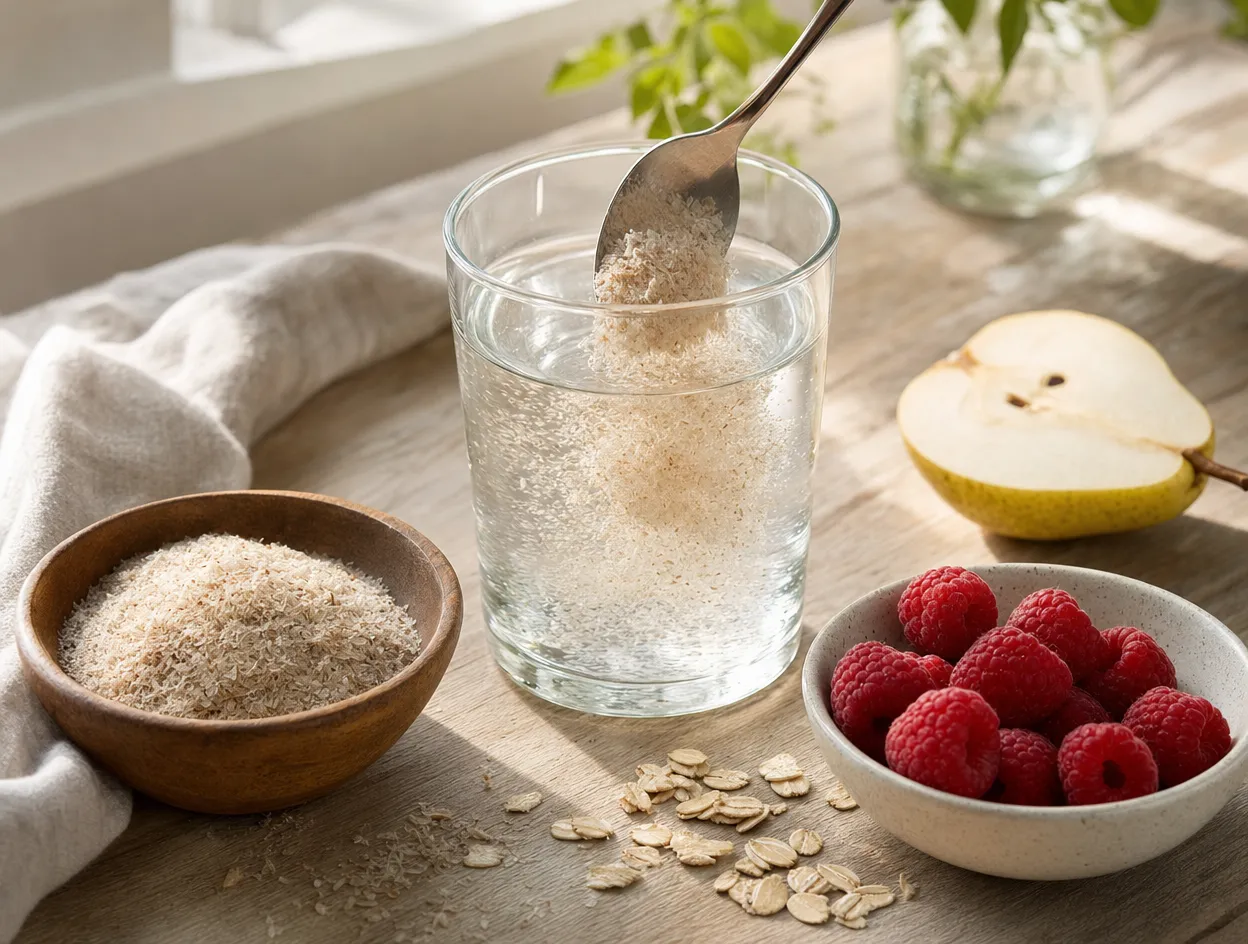
Affiliate disclosure: This article contains affiliate links. As an Amazon Associate we earn from qualifying purchases, at no extra cost to you. Learn more.
◆ The verdict
6 reviewed- 1Our PickMetamucil 4-in-1 Psyllium Husk Fiber Supplement, Sugar-Free, 114 teaspoons, Orange FlavoredCheck price ▸
- 2Best ValueVIZANA Psyllium Husk, 100% Whole Husk Natural Fiber, Pure Plantago Ovata, Unflavored, 300g (60 Servings)Check price ▸
- 3Best CapsulesYerba Prima Psyllium Husks Caps, 400 Capsules, Natural Fiber Regularity Support SupplementCheck price ▸
- 4Best If Psyllium Gives You GasCitrucel Powder Fiber Therapy for Occasional Constipation Relief, Sugar Free Methylcellulose, Orange Flavor, 32 ozCheck price ▸
- 5Best in BulkAnthony's Organic Whole Psyllium Husks, 1.5 lb, Dietary Fiber, Gluten Free, Non GMOCheck price ▸
- 6Most Popular, Least EvidenceBenefiber Prebiotic Fiber Supplement Powder, Unflavored, 250 Teaspoons, Wheat DextrinCheck price ▸
The best fiber supplement after 50 is psyllium. It has the strongest trial evidence of any fiber on both of the things people buy fiber for, regularity and cholesterol, and it is cheap. Methylcellulose is the pick if psyllium leaves you gassy. The popular prebiotic powders are the easiest to drink and the weakest on evidence.
One idea does nearly all the work here. The label word that matters is not "soluble" and it is not "prebiotic". It is whether the fiber forms a gel. Almost every roundup ranks brands; we rank the molecules first, because the molecule is what the trials tested. Fiber is one small piece of a larger picture, and we take the rest of it apart in our guide to weight loss after 50.
Psyllium vs Methylcellulose vs Prebiotic Fiber: Does It Gel?
Fibers differ by physical behavior, not by marketing category. The clearest statement of this comes from Lambeau and McRorie in their 2017 paper in the Journal of the American Association of Nurse Practitioners, "Fiber supplements and clinically proven health benefits," and from McRorie and McKeown on the physics of functional fibers in the Journal of the Academy of Nutrition and Dietetics. Both land in the same place: what a fiber does depends on whether it holds water, and most supplement fibers do not.
- Gel-forming fibers. Psyllium is the example. It forms a gel that holds water through the large intestine and largely resists fermentation, so the water it carries still arrives. That one property produces the measurable effects on stool and LDL cholesterol.
- Viscous but not gel-forming. Methylcellulose thickens a glass of water convincingly but does not form a true gel. It holds some bulk and some water, less reliably, and the clinical record is thinner.
- Low-viscosity fermentable fibers. Inulin, fructooligosaccharides and wheat dextrin dissolve thin and are rapidly fermented in the colon. Fermentation makes gas and consumes the fiber, so nothing is left to hold water. Almost every "prebiotic fiber" powder belongs here.
"Prebiotic" describes what bacteria do with a fiber. It is not a claim about what the fiber does for you.
How Much Fiber Do You Need After 50? Two Official Answers
Two legitimate frameworks give different numbers, which is why fiber advice online contradicts itself. Name the framework and the confusion clears.
The Institute of Medicine Adequate Intake, as presented by Oregon State University's Linus Pauling Institute, is 38 g a day for men and 25 g for women up to age 50, dropping to 30 g for men and 21 g for women from age 51. The Linus Pauling Institute explains that the figure derives from about 14 g of total fiber per 1,000 calories consumed, a level associated in cohort studies with significant reductions in coronary heart disease risk.
That drop at 51 is not a demotion. The number falls because the calorie denominator falls: same 14 g per 1,000 calories, fewer calories.
The Dietary Guidelines for Americans use different figures. Cleveland Clinic, citing the 2020-2025 edition, lists 22 g a day for women and 28 g for men at 51 and older. Neither is wrong. They answer slightly different questions, and anyone quoting one without saying which is quoting a number they have not checked.
Almost Nobody Reaches Either Number
The Academy of Nutrition and Dietetics position paper on dietary fiber, published in 2015, reports a mean US intake of about 17 g a day, with only around 5% of the population meeting the Adequate Intake. Cleveland Clinic gives similar recent figures, roughly 16 g a day and about 5% of adults. The gap is large and nearly universal. One line we will not repeat is the "only 1 in 10 Americans get enough fiber" claim printed on fiber packaging, which we could not trace to a cited source.
Why Fiber Sits in a Weight Article, and What It Will Not Do
This is where most fiber content loses the plot, so we will be blunt. A fiber supplement is not a weight-loss drug.
The proposed mechanism is reasonable as far as it goes: fiber adds bulk, and gel-forming fibers are generally described as slowing gastric emptying, both of which may contribute to fullness. Even that is less settled than it sounds, as the trial below shows. The evidence that this moves a scale is real but small. Jovanovski and colleagues pooled 15 randomized trials in 1,347 people for the European Journal of Nutrition and found that adding viscous fiber to a calorie-restricted diet lowered body weight by about 0.81 kg more than control, with the certainty of the evidence graded moderate. The same group's wider analysis of 62 trials in 3,877 people, published in the American Journal of Clinical Nutrition in 2020, found about 0.33 kg without calorie restriction and described the effect as modest.
The bigger figure that circulates in this niche is older and shakier. Howarth, Saltzman and Roberts, in a 2001 review in Nutrition Reviews, averaged published studies and reported that adding roughly 14 g of fiber a day was associated with a 10% drop in energy intake and about 1.9 kg of weight loss over 3.8 months. Handle it carefully: it is a pooled average across short-term studies rather than a trial result, later papers citing the same review quote the dose as 12 g rather than 14 g, and the review itself opens by calling fiber's influence on energy regulation controversial. The meta-analyses are the number to hold onto, and the number is under a kilogram.
What evidence exists is narrower and more interesting. In a 2013 study in the British Journal of Nutrition, Wanders and colleagues compared bulking, viscous and gel-forming fibers head to head and found that adding a gel-forming fiber, alginate, to a low-fiber cookie produced earlier satiation, while the bulking and viscous fibers did not affect satiation or satiety at all. Even for appetite, the gel is the active part.
So eat more fiber because the intake data say you are almost certainly short, and because it does real work on stool and cholesterol. If the scale is the problem, the honest reasons sit elsewhere: why the weight stopped coming off, how to keep muscle while losing weight, how much protein you need after 50, and whether metabolism slows down with age.
Job One: Regularity
This is the honest reason most people over 50 are shopping, and where the hierarchy matters most.
- Psyllium has the record. McRorie, Fahey, Gibb and Chey, writing in the Journal of the American Association of Nurse Practitioners in 2020, report that nonfermented gel-forming psyllium was 3.4 times more effective than insoluble wheat bran for increasing stool output. The Linus Pauling Institute notes that because psyllium resists fermentation it retains water in stool, and describes it as the only fiber recommended by the American College of Gastroenterology for treating chronic constipation. It softens hard stool and firms loose stool, because what it really does is normalize water content.
- Methylcellulose is a trade. The American College of Gastroenterology determined there was insufficient clinical data to recommend methylcellulose for chronic constipation. Its advantage is that it is not fermented, so there is less gas. If gas is your limiting factor, make that trade knowingly.
- Fermented low-viscosity fibers do not deliver here. The McRorie fiber-physiology reviews state that fermented soluble fibers such as inulin and partially hydrolyzed guar gum do not provide a regularity benefit, and that wheat dextrin can have a stool-hardening effect. If you bought a prebiotic powder for constipation and nothing happened, that was not your fault.
Job Two: Cholesterol
Here the difference between fiber types shows up as a number. In a 105-person hypercholesterolemia trial reported by Lambeau and McRorie, LDL fell significantly only in the psyllium arm, by 8.8% against placebo at p = .02. The methylcellulose and calcium polycarbophil arms showed no significant reduction.
The broader literature is encouraging but wide. The same review reports psyllium lowering LDL cholesterol anywhere from 6% to 24% and total cholesterol from 2% to 20% across studies, which is a range to understand, not a result to expect. The Linus Pauling Institute summarizes a 2009 meta-analysis of 21 randomized trials in 1,717 people with high cholesterol, which found dose- and time-dependent reductions at psyllium doses of 3.0 to 20.4 g a day.
Regulators take it seriously enough to allow a claim: the Linus Pauling Institute notes the FDA permits a heart disease health claim on foods with at least 1.7 g of psyllium per serving, worded as diets low in saturated fat and cholesterol that include at least 7 g a day of soluble fiber from psyllium seed husk may reduce the risk of heart disease. Seven grams is more than a token teaspoon. If you are tracking this, track it properly: we list the health numbers worth tracking after 50.
Job Three: The Best Fiber for Appetite
Fiber helps fullness. That is as strong a statement as the evidence supports, and it is still worth having, because fullness is the currency of every eating pattern that lasts.
Week one is the opposite of the marketing, though. Fiber ferments, fermentation makes gas, and your waistband may get tighter before it gets looser. That is water and gas, not fat, and the two get confused constantly, which is why we wrote how to lose belly fat after 50 separately. Give it two or three weeks at a modest dose before judging.
Constipation After 50: Why It Gets More Common
The numbers are striking. In a 2010 review in Clinical Interventions in Aging, "Update on the management of constipation in the elderly," Rao and Go put the prevalence of constipation in community-dwelling older adults at 50%, and note that 74% of nursing home residents use a daily laxative.
The cause is more interesting than "getting older," and the same review says so directly: factors related to aging, such as chronic medical conditions and immobility, affect gut motility, rather than aging itself.
Medication is a large part of it. The National Institute of Diabetes and Digestive and Kidney Diseases lists antacids containing aluminum or calcium, anticholinergics and antispasmodics, anticonvulsants, calcium channel blockers, diuretics, iron supplements, narcotic pain medicines and some Parkinson's and depression medicines among drugs that can cause or worsen constipation. If you take several prescriptions, there is a fair chance one is contributing, and that is a conversation with a prescriber rather than a reason to buy a bigger tub.
Fiber is not the answer to every cause. NIDDK advises seeing a doctor if symptoms do not improve with self-care or you have a family history of colon or rectal cancer, and seeking care right away for constipation with rectal bleeding, blood in the stool, constant abdominal pain, inability to pass gas, vomiting, fever, lower back pain or unintended weight loss. A new or changed bowel habit after 50 deserves a clinician, not a powder.
The GLP-1 Question
Two of the listings below market themselves on GLP-1 medications, one as "GLP-1 friendly" and one as "GLP-1 support." The pairing is not absurd: MedlinePlus lists constipation among the side effects that may occur with semaglutide, alongside nausea, vomiting, diarrhea and stomach pain.
But that is a reason the category makes sense, not evidence that these products do anything for people on these drugs. Both are label claims, with no demonstrated benefit behind them that we could find. Nothing on a fiber label should influence a decision about a prescription. For the drugs themselves, see GLP-1 weight loss after 50.
Our Picks
Metamucil 4-in-1 Psyllium Husk Powder
Our default recommendation, because of the fiber inside it rather than the brand on it: psyllium husk, the molecule with the deepest evidence base in this category, in a sugar-free orange-flavored powder at 114 teaspoons a jar, about $29.99 as of November 2026. The flavoring is not a gimmick; it is the reason a jar gets finished. The label claims support for digestive health, cholesterol lowering, blood sugar and appetite control, and markets the product as GLP-1 friendly. Treat that as label copy. The psyllium is what we stand behind.
VIZANA Whole Psyllium Husk
The value pick, functionally the same product stripped of flavor: 100% whole psyllium husk from Plantago ovata, 5 g per serving, 60 servings in a 300 g bag, about $16.32 as of November 2026. No flavors, binders or additives, vegan, gluten-free, packed in a GMP-compliant facility. The trade-off is entirely texture. Unflavored whole husk is gritty, it thickens within a minute, and you drink it fast or eat it with a spoon. The listing's talk of a balanced soluble and insoluble blend and of microbiome benefits is label copy we are not endorsing.
Anthony's Organic Whole Psyllium Husks
The bulk pick, for people already sold on psyllium: a 1.5 lb bag of USDA Organic whole psyllium husks, non-GMO, no additives, batch tested and verified gluten free, about $26.09 as of November 2026. Label directions are 1 to 2 teaspoons in a full glass of water. Buying by weight is what makes it cheap: at roughly 680 g a bag, that is under 4 cents a gram against about 5.4 cents for the 300 g bag above. It is also the form bakers use in grain-free bread. Do not start here, though; confirm you tolerate psyllium on a small bag first.
Yerba Prima Psyllium Husks Caps
The capsule pick, and this entry exists to tell you the truth about capsules. Pure psyllium husk, 400 capsules, no binders or fillers, about $29.95 as of November 2026. The label directs 5 capsules up to three times a day with meals, each with a large glass of water. Read that again: 5 to 15 pills a day, because a capsule holds very little fiber, and at the top of that range a 400-capsule bottle is under a month. This is the expensive, high-pill-count way to take a cheap fiber, and it is right for exactly one person: the one who cannot tolerate the powder at all. The listing's "strongest natural fiber" phrasing is marketing and we are not asserting it.
Citrucel Methylcellulose Powder
The pick for one specific problem: psyllium gives you gas. Citrucel is methylcellulose, 2 g per rounded tablespoon along with 80 mg of calcium and 115 mg of potassium, sugar-free orange, 32 oz, about $39.30 as of November 2026. Because methylcellulose is not fermented it produces less gas, a real advantage if you abandoned psyllium in week two. Know what you are trading: methylcellulose is viscous but not gel-forming, it showed no significant LDL reduction in the head-to-head trial, and the American College of Gastroenterology found insufficient evidence to recommend it for chronic constipation.
Benefiber Prebiotic Fiber Powder
One of the most familiar names in the category and the weakest on evidence, which is exactly why it is here. Benefiber is wheat dextrin, unflavored, 250 teaspoons, about $22.98 as of November 2026. It dissolves clear and tasteless into coffee, water or soup, a genuine advantage, because the fiber you can stand is the fiber you take. It is also HSA and FSA eligible and covered by some Medicare Advantage over-the-counter benefits, which for some readers makes it close to free. But wheat dextrin sits in the low-viscosity, non-gel-forming group: the McRorie reviews report no significant cholesterol-lowering benefit at physiologic doses, no reliable regularity benefit from fermented low-viscosity fibers, and a possible stool-hardening effect from wheat dextrin specifically. The "helps you feel fuller longer" and GLP-1 support lines are claims, not findings. Buy it for palatability and the OTC benefit, not the evidence.
How to Take Fiber Without Regretting It
These rules are short and not optional.
- Take it with plenty of liquid. MedlinePlus instructs that psyllium powder and granules must be mixed with 8 ounces of liquid immediately before use, and that you must drink at least 8 ounces when you take it, both for it to work and to prevent side effects. A dry or under-diluted dose is behind most bad experiences.
- Increase the dose gradually. Gas and bloating are dose- and speed-dependent. Start at the low end of the label and build up over a week or two.
- Separate it in time from your medications. Fiber can interfere with the absorption of some drugs. MedlinePlus advises against taking digoxin, salicylates such as aspirin, or nitrofurantoin within three hours of psyllium, and tells you to give your doctor and pharmacist a full list of what you take so doses can be adjusted or monitored. If you are on several prescriptions, ask your pharmacist for the right gap for yours. It is the most useful five-minute phone call in this article.
- Some histories need a clinician first. MedlinePlus says to tell your doctor if you have had intestinal blockage, difficulty swallowing, rectal bleeding, diabetes or heart disease, and not to take psyllium for more than a week unless a doctor directs you to.
Food First
A supplement closes a gap. It does not replace fiber-bearing food, which arrives with potassium, polyphenols and everything else attached. These gram figures come from the food tables published by Oregon State University's Linus Pauling Institute.
- Navy beans, cooked — 9.6 g per half cup.
- Split peas, cooked — 8.1 g per half cup.
- Lentils, cooked — 7.8 g per half cup, and the fastest legume to cook.
- All-bran wheat cereal — 19.5 g per half cup, most of a day's target in one bowl.
- Prunes, uncooked — 6.2 g per half cup, pitted.
- Pear — 4.6 g for one small pear.
- Raspberries, fresh — 4.0 g per half cup.
Two half-cup servings of beans or lentils and a pear cover more ground than a teaspoon of powder.
What We Would Actually Do
For most readers over 50 the answer is plain psyllium husk, taken daily, in a full glass of water, started low and built up over a couple of weeks. The brand barely matters, because the molecule is the product. Everything expensive in this category is flavor, convenience and packaging.
Buy the flavored jar if that is what gets taken. Buy the unflavored bag if you can stand it and want to pay half. Switch to methylcellulose if psyllium's gas is what stops you, and take the thinner evidence as the price. Skip the prebiotic powders unless palatability or an OTC benefit decides it, in which case know that you are buying a drink, not a result.
Keep the expectation calibrated. Fiber is good for your stool, plausibly good for your LDL, and mildly helpful for fullness. It is not a weight-loss treatment, and the rest is in our guide to what actually works for weight loss after 50. We are a research desk, not a clinic, and we did not examine anyone. If your bowel habit has changed, or you take several prescriptions, start with your clinician and pharmacist, not a powder.

Metamucil 4-in-1 Psyllium Husk Fiber Supplement, Sugar-Free, 114 teaspoons, Orange Flavored
Psyllium husk powder in a sugar-free orange flavor, 114 teaspoons to the jar. Psyllium is the gel-forming fiber with the deepest trial evidence behind it on both regularity and LDL cholesterol, and a flavored powder is the version most people are still drinking in month three. The label claims support for digestive health, cholesterol, blood sugar and appetite control, and markets the product as GLP-1 friendly; those are label claims, not results demonstrated for this specific jar.
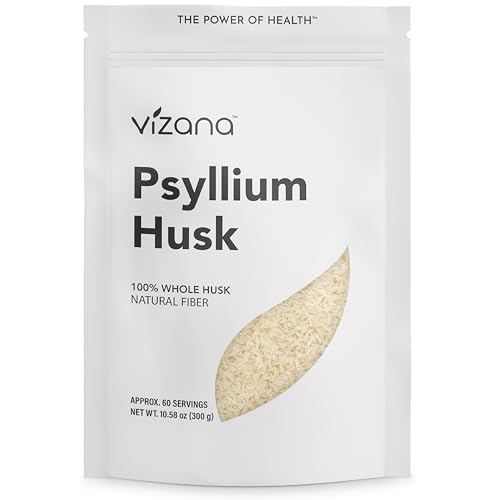
VIZANA Psyllium Husk, 100% Whole Husk Natural Fiber, Pure Plantago Ovata, Unflavored, 300g (60 Servings)
One hundred percent whole psyllium husk from Plantago ovata with no flavors, binders or additives, at 5 g per serving and 60 servings in a 300 g bag. Unflavored and finely sifted, vegan, gluten-free, packed in a GMP-compliant facility. The same active fiber as the name brands without the flavoring or the markup.

Yerba Prima Psyllium Husks Caps, 400 Capsules, Natural Fiber Regularity Support Supplement
Pure psyllium husk in capsule form, 400 capsules, with no binders, fillers or artificial ingredients. The label directs 5 capsules up to three times a day with meals, each dose taken with a large glass of water. That is the honest arithmetic of capsules: each one holds only a small amount of fiber, so a meaningful daily intake means swallowing 5 to 15 pills.
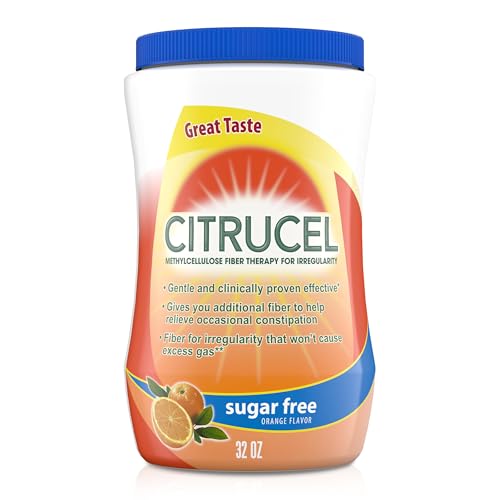
Citrucel Powder Fiber Therapy for Occasional Constipation Relief, Sugar Free Methylcellulose, Orange Flavor, 32 oz
Methylcellulose rather than psyllium, at 2 g of methylcellulose plus 80 mg of calcium and 115 mg of potassium per rounded tablespoon, in a sugar-free orange-flavored 32 oz canister. Methylcellulose is a semisynthetic fiber, chemically treated wood pulp in the description Lambeau and McRorie use, and gut bacteria do not ferment it, which is why it is marketed as not causing excess gas.

Anthony's Organic Whole Psyllium Husks, 1.5 lb, Dietary Fiber, Gluten Free, Non GMO
A 1.5 lb bag of USDA Organic whole psyllium husks, non-GMO, no additives, batch tested and verified gluten free. Label directions are 1 to 2 teaspoons in a full glass of water. Bought by weight rather than by serving, it works out to the lowest cost per gram of psyllium in this group, and whole husk is also the form home bakers use in grain-free breads.

Benefiber Prebiotic Fiber Supplement Powder, Unflavored, 250 Teaspoons, Wheat Dextrin
Wheat dextrin, a low-viscosity fermentable fiber, unflavored, 250 teaspoons. It dissolves clear and tasteless into almost any drink, which is the genuine reason people prefer it, and it is HSA and FSA eligible and covered by some Medicare Advantage over-the-counter benefits. It is marketed as prebiotic and as GLP-1 support; both of those are label claims.
Keep reading
GLP-1 Weight Loss Drugs After 50: What to Know
GLP-1 weight loss after 50: which drugs are approved, what Medicare's $50 pilot actually covers, what the trials measured, and the muscle question.
How to Keep Muscle While Losing Weight After 50
How to avoid muscle loss while losing weight after 50. What a 160-person NEJM trial found, how much protein the guidance lists, and what to measure.
Does Your Metabolism Really Slow Down After 50?
Does metabolism slow down with age? Not when you think. The largest measurement study found adjusted energy burn is flat from 20 to 60, then declines slowly.