The Most Discreet OTC Hearing Aids of 2026
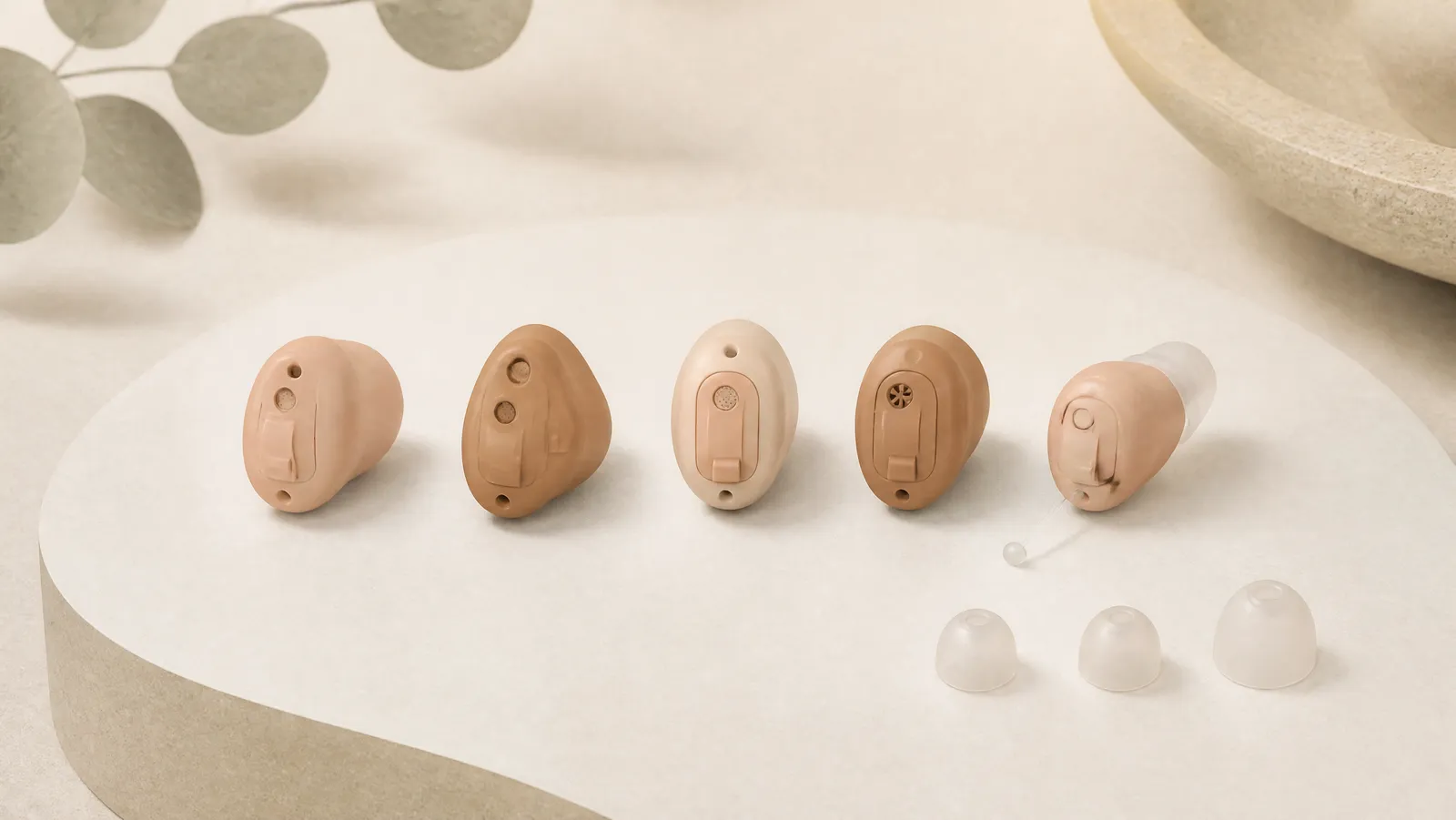
Invisible OTC hearing aids do not really exist, but some are genuinely discreet. Five in-canal picks for 2026, and what going smaller actually costs you.

Affiliate disclosure: This article contains affiliate links. As an Amazon Associate we earn from qualifying purchases, at no extra cost to you. Learn more.
◆ The verdict
5 reviewed- 1Our PickCeretone Core One Pro OTC Hearing Aids for Seniors, Tiny Invisible Rechargeable Hearing Aids for Adults, Intricon® Digital Chip, Wind Noise Reduction, Auto On/Off, Charging Case, Easy Volume ControlCheck price ▸
- 2Best BudgetAudien Atom One OTC Hearing AidsCheck price ▸
- 3Best ValueCeretone Luma OTC Invisible Hearing Aids Low Distortion, Rechargeable Tiny In-Ear Hearing Aids for Seniors, Natural Clear Sound, Intricon® Digital Chip, 80H Battery, 4 Programs, Portable Charging Case—BeigeCheck price ▸
- 4Best App PersonalizationCearvol Nano 2 OTC Hearing Aids for Seniors, App-Personalized HearingCheck price ▸
- 5Best for Easy ControlsAudien Atom X OTC Hearing Aid For Seniors & Adults with Touchscreen ControlCheck price ▸
No over-the-counter hearing aid is invisible. The genuinely invisible ones, called invisible-in-canal or IIC, are custom-moulded from an impression of your ear canal and fitted by a clinician. What you can buy retail is discreet: a small in-canal shell that most people will not notice unless they go looking. Our pick is the Ceretone Core One Pro, $289.99 as of September 2026. Better Life Span is reader-supported, and if you buy through links on this page we may earn a small commission at no cost to you.
That distinction matters, because "invisible" is the word this entire category is sold on. Below are the five most discreet devices we would recommend from the best OTC hearing aids we track, ranked, followed by the part most roundups skip: what shrinking a hearing aid to that size costs you in battery, controls, comfort and upkeep.
The short answer on "invisible"
A true IIC sits so deep in the canal that it is close to impossible to see. According to HearingTracker's guide to invisible hearing aids, IICs are the smallest custom hearing aid style, built to match the shape of your ear canal from an earmold impression taken by your provider, and custom models from the major manufacturers cost several thousand dollars each. You cannot order that over the counter, because the impression and the professional fitting are the product.
Every device on this page is a different object: a pre-made shell you push into your own ear, held by a silicone tip that comes in a few sizes. It also sits shallower than a custom IIC by regulation. Under 21 CFR 800.30, an OTC hearing aid must be designed so its innermost component is reasonably expected to remain at least 10 millimetres from the eardrum.
So we use two words on this page, carefully. Discreet is what these are. Nearly invisible is the most generous honest description of the smallest. Audien's own copy for the Atom One says it discreetly fits in the ear for a "virtually invisible look" — the manufacturer's phrase, quoted as a claim, not our finding.
One more thing before the picks. Size should not be your first filter, or your second. Work through how to choose OTC hearing aids first, because control scheme, support and return window all outrank shell size in practice. A discreet aid you abandon after three weeks is worth less than an obvious one you keep in.
How we picked
Better Life Span is a research desk, not a laboratory. We did not wear these for six weeks and will not imply that we did. We read every published manufacturer specification, the FDA's OTC rule, and what independent lab testing exists, then ranked on four things: how much of the device disappears, what the controls ask of your hands and eyes, what the maker publishes rather than implies, and how long you have to send it back.
We leaned on the regulation because the listings themselves are unreliable. In a cross-sectional study of 138 Amazon OTC hearing aid listings by Conway and colleagues, published in Otology and Neurotology in 2026, only 37 listings — 26.8% — could be verified as FDA-cleared or registered. The authors also found that 52 listings (37.7%) lacked specific marketing for mild-to-moderate hearing loss and that 13 were marketed to people with loss beyond that range. That is the shopping environment. Assume nothing on a bullet point is verified.
Our picks
Five devices, ranked. Prices are as of September 2026 and will drift.
1. Ceretone Core One Pro — our pick
The Ceretone Core One Pro is $289.99 as of September 2026, and it is our pick because it gives up the least to get small. Ceretone describes a skin-tone shell with a 30-degree ergonomic shape that sits inside the ear, and unlike most tiny devices it keeps real controls: four programs, P1 through P4, volume adjustment, a display screen on the charging case, and memory of your last settings. Ceretone states 20 to 25 hours of hearing per charge and over 80 hours of total use with the case. Three eartip sizes, a 60-day return and exchange window and U.S.-based support round it out. What we cannot tell you is how it measures in a lab, because nobody has published that.
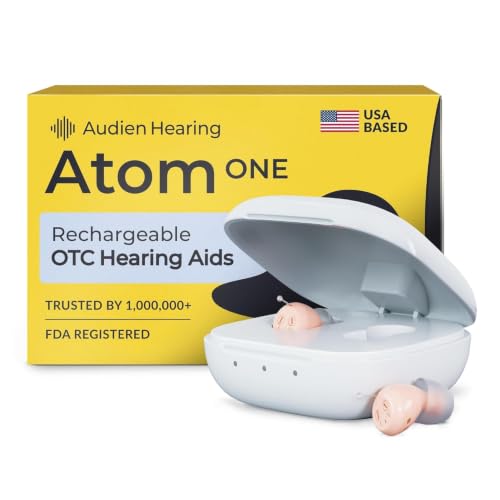
2. Audien Atom One — best budget
The Audien Atom One is $78.40 as of September 2026, which changes what it has to prove. This is an experiment, not a commitment. Two analog dials, one for volume and one for frequency, are the entire interface: no phone, no app, no menu. Audien states a 24-hour battery and a 3-hour charge in a USB-C dock, and the aids switch on when lifted out. The design is universal, so either aid fits either ear, and a pull-wire is included. If you have never worn amplification, spending $78.40 to find out whether it helps is a better sequence than starting in the three figures.
3. Ceretone Luma — best value
The Ceretone Luma is $199.99 as of September 2026 and keeps most of what makes our top pick work: a beige in-canal shell with a soft pull-thread, Intricon processing that Ceretone states holds distortion as low as 2 percent, four presets and six voice-guided volume levels. The catch is the interface. One multi-function button does all of it, long-press to change program, single press for volume. Ceretone states up to 20 hours per charge with 60 more in the case, a 60-day trial and a 1-year warranty. If the $90 between this and the Core One Pro matters, land here.
4. Cearvol Nano 2 — best app personalization
The Cearvol Nano 2 is $269.00 as of September 2026 and is the only pick that tries to measure you. Its My Fit app runs a hearing check across frequencies and shapes amplification to the result, the closest thing on this page to what a fitting does. Cearvol states each aid weighs about 2.4 g, the only published weight among these five, and puts five listening modes on the charging case so you can change them without pulling the aids out. Two caveats. Cearvol's own bullet describes it as designed for adults with mild to moderately severe hearing loss; the OTC category is authorised for perceived mild to moderate loss in adults 18 and over, so that claim reaches past the category. And Cearvol offers app-selectable tinnitus masking sounds while stating in the same bullet that the feature is not a treatment.
5. Audien Atom X — best for easy controls
The Audien Atom X is $311.20 as of September 2026 and solves one problem better than anything else here: the controls are not on the hearing aid. Audien's CaseControl touchscreen, built into the charging case, handles volume and mode across four presets — Conversation, Crowd, TV and Comfort — with no app and no button on the earpiece. For arthritic hands or age-related vision changes, that is genuinely useful. It is ranked last for a reason. HearingTracker's review, drawing on HearAdvisor lab measurements, gave it 1.0 out of 5 for speech in noise and 1.5 out of 5 for speech in quiet, and reported roughly 12 hours of battery against Audien's stated 16.
What you give up when you go smaller
Shrinking a hearing aid is not free, and the costs are predictable.
- Battery life. HearingTracker notes that the small size making these discreet also limits battery, features and maximum power, giving shorter runtime than larger styles. The makers' own numbers show it: Ceretone states 20 to 25 hours for the Core One Pro, Cearvol up to 16 for the Nano 2.
- Your own voice. Sealing the canal traps and amplifies low-frequency energy from your own speech. This is the occlusion effect, and your own voice can sound boomy or hollow. The Hearing Review reports that with the canal blocked, body-conducted sound can raise sound pressure at the eardrum by as much as 20 to 30 dB, and that in Kochkin's MarkeTrak survey of people whose hearing aids sat unused, 30% gave side effects such as feedback and occlusion as the reason. HearingTracker names comfort and occlusion as a major downside of any in-ear device.
- Handling. According to the NIDCD, canal aids "may be difficult for a person to adjust and remove" precisely because they are small. If you struggle to pick up a coin from a flat table, take that seriously.
- Power. The NIDCD also states that canal aids are not recommended for severe to profound hearing loss, because their reduced size limits power and volume.
- Controls move somewhere else. On the Atom X they live on the case; on the Nano 2, on the case and in an app; on the Luma, one button carries every function. There is no room on the device itself.
- Streaming. Do not buy anything on this page for audio streaming. Cearvol states outright that the Nano 2 does not stream music or phone calls, does not connect directly to a TV and does not support remote fitting, and HearingTracker notes that invisible hearing aids are generally too small to include the wireless circuitry streaming requires. If streaming calls and TV is the point, start with best OTC hearing aids with Bluetooth and accept a larger device.
If your ear canals are small
Here is the honest limit of what anyone can tell you: none of these five publishes a millimetre dimension for its shell. Any roundup that ranks OTC hearing aids by measured shell size is not working from published manufacturer figures.
What is published is eartip range, and in practice that is what decides fit. The Ceretone Core One Pro, the Ceretone Luma and the Audien Atom One each ship with three sizes of silicone tips, small, medium and large. The Atom X ships with extra ear domes in multiple sizes. Work through them in order rather than defaulting to medium.
A tip that is too small leaves a leak, and HearingTracker notes that acoustic feedback is what limits amplification in this form factor — the whistling is the device hearing itself. A tip that is too large feels fine for ten minutes and hurts by hour three, which is why the return window matters more than any spec. Ceretone states a 60-day trial on both of its devices here; wear the aid for a full ordinary day, including a meal with other people, before that window closes.
What "FDA-registered" on these listings means
You will see this phrase constantly here. Audien's Amazon bullets use it for both the Atom One and the Atom X. It does not mean what shoppers assume.
The relevant text is 21 CFR 807.39: registration "does not in any way denote approval of the establishment or its products," and any representation creating an impression of official approval because of registration "is misleading and constitutes misbranding." Registration is a filed form. In March 2021 the FDA issued a formal notice calling on firms to stop issuing misleading "FDA registration certificates," stating that it does not issue such certificates at all.
The actual regulatory picture for OTC hearing aids has two lanes:
- Preset and remote-controlled OTC hearing aids are exempt from premarket notification. No FDA review of the model happens before sale; compliance with 21 CFR 800.30 is asserted by the manufacturer.
- Self-fitting OTC hearing aids are class II devices under 21 CFR 874.3325 and generally do require 510(k) clearance, because software walks the user through deriving their own fitting.
None of the product information we have for these five includes a 510(k) clearance number, and the Otology and Neurotology analysis found that most Amazon OTC listings could not be verified as cleared or registered at all. Treat "FDA-registered" as a fact about paperwork, never as a verdict on a product, and never as a synonym for approved or cleared.
Caring for an in-canal hearing aid
Wax and moisture are the practical failure mode for anything worn inside the canal, and the NICE guideline chapter on managing earwax in adults with hearing loss notes that build-up can occur for several reasons, including the use of hearing aids. A short routine prevents most of it.
- Brush it dry, every day. HearingTracker's maintenance guide advises using a soft brush on in-the-ear devices and focusing on the openings, where wax collects. Three of these five ship with one: the Ceretone Core One Pro and both Audien models.
- Replace the wax guard, do not wash it. HearingTracker recommends replacing guards roughly twice a year, or sooner if one looks worn or misshapen or there is visible build-up. Audien ships a wax guard kit with the Atom One and replacement guards with the Atom X.
- No water and no alcohol. HearingTracker advises against alcohol or chemicals unless they are formulated for hearing aids, and against submerging devices, which are water-resistant rather than waterproof. Cearvol rates the Nano 2 at IPX5: a splash rating, not a swimming one.
- Dry them overnight if you sweat or live somewhere humid. A hearing aid dehumidifier or electronic dryer is the standard recommendation for moisture absorbed during normal wear.
- Make the case the default resting place. Ceretone and Audien state that the Core One Pro, the Luma and the Atom One switch off the moment they go back in, and Cearvol and Audien both say their cases, for the Nano 2 and the Atom X, clean the aids with UV light.
Who should buy something bigger instead
Discretion is a preference. Some things outrank it, and they are not subtle.
The FDA lists warning signs that mean you should see a doctor rather than buy anything over the counter: an ear deformity from birth or injury; blood, pus or fluid from an ear in the past six months; pain or discomfort in the ear; excessive earwax or a suspected object in the ear; severe dizziness or vertigo; a sudden change in hearing within the last six months; fluctuating hearing; hearing noticeably worse in one ear; and ringing or buzzing in one ear only. Those are reasons to get looked at, not diagnoses.
Beyond that, skip this form factor if any of these fit you. If your loss may be worse than mild to moderate, read OTC hearing aids and severe hearing loss first — the NIDCD is explicit that canal aids are not recommended for severe to profound loss because their size limits power. If small controls already defeat you, a pea-sized device with a single button is the wrong tool. And if you produce a lot of earwax, an in-canal device will demand more upkeep than a larger style.
Our take
If you want a hearing aid nobody comments on, start with the Ceretone Core One Pro at $289.99 as of September 2026: it stays small without giving up programs, volume control or battery life. If you are testing the idea rather than committing, the Audien Atom One at $78.40 as of September 2026 is a cheap, honest experiment. If arthritis or vision is the real obstacle, the Atom X's touchscreen case earns its place despite weak lab scores.
What we would tell a relative is this: buy on fit, controls and return policy, and treat size as the tiebreaker. Nothing here is invisible, and marketing that says otherwise is telling you something about the seller. For the wider category, including larger devices with more power, start with our OTC hearing aid buyer's guide.
Are there truly invisible OTC hearing aids?
No. Truly invisible devices are invisible-in-canal (IIC) hearing aids, which HearingTracker describes as the smallest custom style, built from an earmold impression taken by a provider and costing several thousand dollars each. Over-the-counter devices use pre-made shells and standard silicone tips, so the honest description is discreet or nearly invisible, not invisible.
Which OTC hearing aids are best for small ear canals?
Fit is decided by eartip range, not shell size, and none of these five publishes a millimetre dimension. The Ceretone Core One Pro, Ceretone Luma and Audien Atom One each ship with small, medium and large silicone tips, and the Audien Atom X includes extra domes in multiple sizes. Try every size during the return window rather than trusting a listing photo.
Do invisible hearing aids have worse sound quality?
Not automatically, but the form factor imposes limits. HearingTracker notes that the small size restricts battery, features and maximum power, and that acoustic feedback tends to cap how much amplification these devices deliver. Independent measurement is scarce here, and where it exists the results can be sobering: HearAdvisor lab testing published by HearingTracker scored the Audien Atom X 1.0 out of 5 for speech in noise.
Why does my own voice sound boomy in an in-canal hearing aid?
That is the occlusion effect. Sealing the ear canal traps low-frequency energy from your own speech inside the ear, where it is amplified. The Hearing Review reports that this can raise sound pressure at the eardrum by as much as 20 to 30 dB, and that 30% of people whose hearing aids ended up unused in a drawer gave side effects such as feedback and occlusion as the reason. A different eartip size often helps, and an audiologist can address it directly.

Ceretone Core One Pro OTC Hearing Aids for Seniors, Tiny Invisible Rechargeable Hearing Aids for Adults, Intricon® Digital Chip, Wind Noise Reduction, Auto On/Off, Charging Case, Easy Volume Control
Ceretone describes a tiny skin-tone in-ear shell with a 30-degree ergonomic shape that sits inside the ear for a discreet look, intended for adults with mild to moderate hearing loss. It ships with three sizes of medical-grade silicone ear tips, small, medium and large, and Ceretone states it uses an Intricon digital chip with Knowles speakers and reduces wind noise. Controls run to four programs, P1 through P4, plus volume adjustment, with a display screen on the charging case and memory of your previous settings. Ceretone states 20 to 25 hours of hearing per charge and more than 80 hours of total use with the case, and the aids power on when lifted out and off when replaced. The box includes the charging case, cable, cleaning brush and three pairs of ear tips, and Ceretone states U.S.-based customer support with a 60-day return and exchange window.
Audien Atom One OTC Hearing Aids
The Atom One is an ultra-small rechargeable nano shell that Audien says discreetly fits in the ear for a virtually invisible look, described in its bullets as an FDA-registered OTC hearing aid for adults with mild to moderate hearing loss. Two analog dials do all the work, one for volume and one for frequency, so no smartphone is required. Audien states a 24-hour rechargeable battery and about a 3-hour full charge in the USB-C dock, and the devices power on when lifted out and off when docked, with no on/off switch. It ships with three sizes of silicone ear domes, small, medium and large, in a universal design where either aid fits either ear, plus a pull-wire for removal. Audien includes a complimentary Sound Check guided setup session, a 1-year warranty, a cleaning brush and a wax guard kit, and states the device is FSA and HSA eligible.

Ceretone Luma OTC Invisible Hearing Aids Low Distortion, Rechargeable Tiny In-Ear Hearing Aids for Seniors, Natural Clear Sound, Intricon® Digital Chip, 80H Battery, 4 Programs, Portable Charging Case—Beige
The Luma is an ultra-small beige in-canal shell that Ceretone describes as sitting inside the ear for a discreet, nearly invisible look, with a soft pull-thread for insertion and removal. Ceretone states Intricon digital sound processing with distortion as low as 2 percent, and describes the device as suited to adults with mild to moderate hearing loss. One multi-function button does everything: a three-second long press changes program, a single press changes volume, across four presets and six voice-guided volume levels. Ceretone states up to 20 hours of listening per charge plus 60 hours of backup power in the case, independent left and right charge indicator lights, and auto on and off within seconds of leaving or entering the case. Ceretone states a 60-day trial with returns, a 1-year warranty and U.S.-based customer service.

Cearvol Nano 2 OTC Hearing Aids for Seniors, App-Personalized Hearing
The Nano 2 is an in-canal aid that Cearvol states weighs about 2.4 g per side, the only published weight among these five picks. Its My Fit app runs a hearing check that maps hearing across frequencies and shapes amplification to that profile, and three ready-to-use programs work without the app at all. Five listening modes, Everywhere, Indoor, Outdoor, Restaurant and TV, are selectable from the charging case, so the aids stay in your ears while you adjust them. Cearvol states NeuroFlow AI 2.0 speech enhancement, up to 20 dB of noise reduction, anti-whistling and up to 40 dB of gain, along with up to 16 hours per charge, up to 50 hours with the case, and about 3 hours from a 15-minute quick charge. The case cleans the aids with UV light and the aids are IPX5-rated, and Cearvol states plainly that the Nano 2 does not stream music or phone calls, does not connect directly to a TV and does not support remote fitting.

Audien Atom X OTC Hearing Aid For Seniors & Adults with Touchscreen Control
The Atom X moves every control off the earpiece and onto a touchscreen built into the charging case. Audien calls the feature CaseControl, and it handles volume and listening mode with no app and no button on the aid itself, switching between four pre-programmed modes: Conversation, Crowd, TV and Comfort. Audien states up to 16 hours of use per charge and up to 48 hours with the portable charging case, and describes the device in its bullets as an FDA-registered OTC hearing aid. The box includes the touchscreen case with backup battery, charging cable and wall adapter, extra ear domes in multiple sizes, replacement wax guards, a cleaning brush and the Audien Sound Check setup session, and Audien states it is FSA and HSA eligible.
Keep reading

Are OTC Hearing Aids FSA, HSA, or Medicare Eligible?
Are OTC hearing aids FSA eligible? Yes, and HSA too. Original Medicare is a flat no, Medicare Advantage usually helps. Here is how to pay for them in 2026.
OTC Hearing Aids and Severe Hearing Loss: Where the Limit Is
OTC hearing aids for severe hearing loss are outside the FDA category, which covers perceived mild to moderate loss. Here is where the line sits, and why.
The Best OTC Hearing Aids with Bluetooth in 2026
The best OTC hearing aids with Bluetooth in 2026: which ones truly stream calls and music, which use Bluetooth only for a phone app, and how to tell.