The Best OTC Hearing Aids of 2026: A Complete Buyer's Guide
The best OTC hearing aids of 2026, compared on price, fit and app control, plus what the FDA rule covers and when to see an audiologist instead.

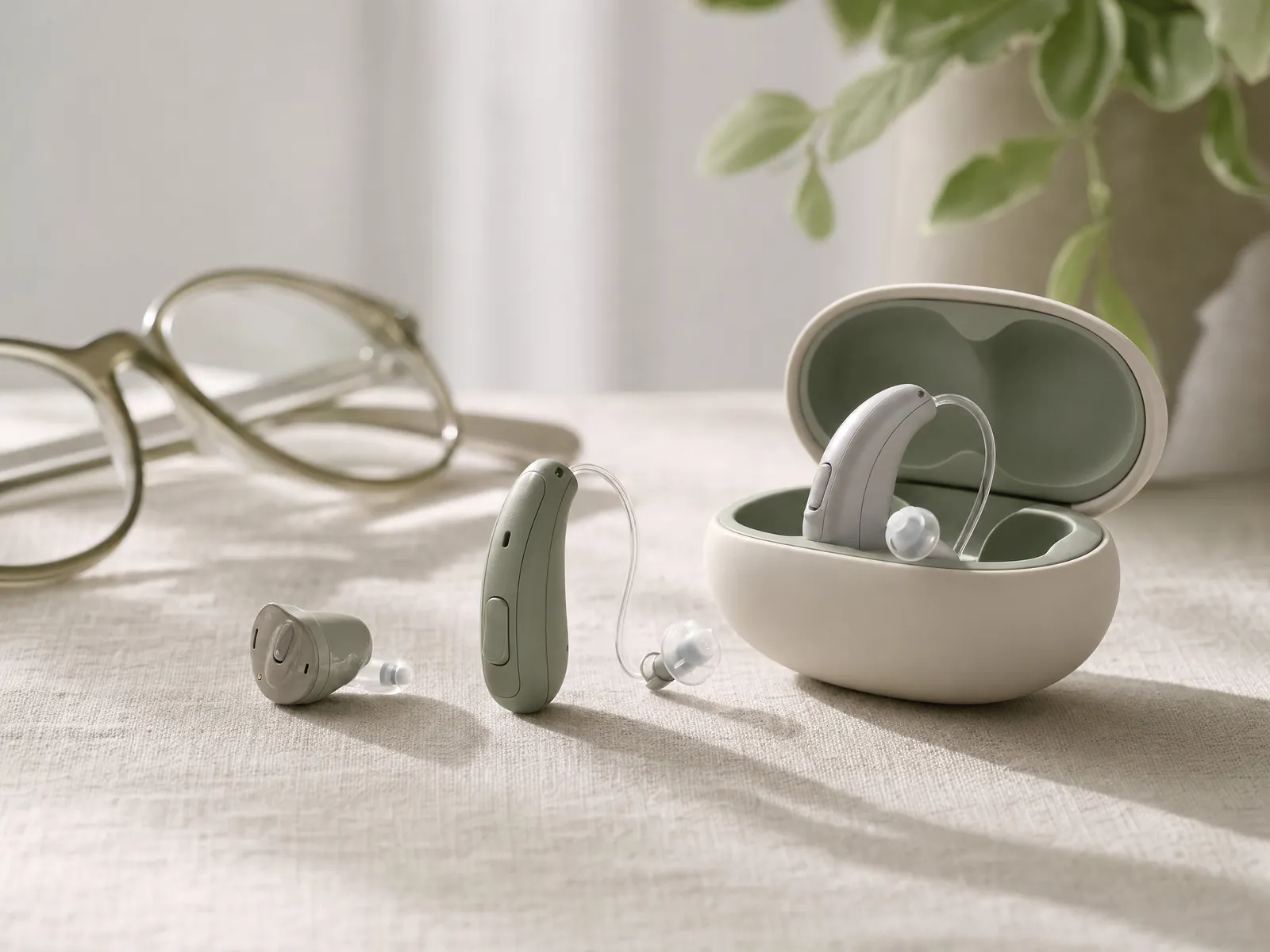
Affiliate disclosure: This article contains affiliate links. As an Amazon Associate we earn from qualifying purchases, at no extra cost to you. Learn more.
◆ The verdict
5 reviewed- 1Best BudgetAudien Atom One OTC Hearing AidsCheck price ▸
- 2Best for Easy ControlsAudien Atom X OTC Hearing Aid For Seniors & Adults with Touchscreen ControlCheck price ▸
- 3Best App Fine-TuningVivtone Xpure 2.0 Bluetooth Rechargeable OTC Hearing Aids with App ControlCheck price ▸
- 4Best Sound Quality Under $600ELEHEAR Beyond Pro Rechargeable OTC Hearing Aids for Seniors, Soft GoldCheck price ▸
- 5Best with Professional SupportJabra Enhance Select 700 Hearing Aids with Audiology SupportCheck price ▸
The best OTC hearing aids for most people in 2026 are the ELEHEAR Beyond Pro, $599 as of August 2026, a rechargeable receiver-in-canal pair with real app fine-tuning and remote support from the company's hearing specialists. If that is more than you want to spend, the Audien Atom One is $87.93 as of August 2026. Better Life Span is reader-supported; if you buy through links on this page we may earn a small commission, at no cost to you.
Over-the-counter hearing aids are a genuine regulated category, not a marketing phrase. According to the U.S. Food and Drug Administration, the agency created the OTC category for adults 18 and older with perceived mild to moderate hearing loss, and the rule took effect on October 17, 2022. The FDA is equally clear about the limits: OTC devices are not for children, and they are not intended to treat severe or profound hearing loss, because their maximum output is capped.
Plenty of people sit inside those limits. According to the National Institute on Deafness and Other Communication Disorders (NIDCD), 22% of adults aged 65 to 74 and 55% of those 75 and older have disabling hearing loss — and among adults 70 and older who could benefit from hearing aids, fewer than one in three has ever used them. Cost and access are among the barriers most often cited, and the OTC rule was written to lower both.
This guide covers what the category can and cannot do, how the five devices above differ, and where the marketing gets slippery. Along the way we will link out to our other buyer's guides, including our roundup of home health monitoring devices, since hearing is one piece of a larger picture. Nothing here is medical advice. An audiologist or physician is the right person to tell you what your ears need; our job is to help you spend well once you have decided to try.
Our picks at a glance
We picked for five different buyers, not for one imaginary average person. Prices below are as of August 2026 and will drift.
Audien Atom One — $87.93, Best Budget. Two analog dials, one for volume and one for frequency, and nothing else to learn. Audien states it runs 24 hours per charge, recharges in about 3 hours in its USB-C dock, and powers on the moment you lift it out. It ships with three dome sizes and a pull-wire, and Audien includes a complimentary Sound Check setup session. This is the device we would hand someone who is not yet sure amplification helps them at all — cheap enough to be an experiment rather than a commitment.
Audien Atom X — $389.00, Best for Easy Controls. The interesting idea here is that the controls are not on the hearing aid. Audien's CaseControl touchscreen, built into the charging case, shows volume, mode and battery, and switches between four presets: Conversation, Crowd, TV and Comfort. Audien positions it for people with arthritis, limited dexterity or age-related vision changes, and states the case gives 48-plus hours of battery life plus UV cleaning while charging. It also streams over Bluetooth without an app.
Vivtone Xpure 2.0 — $489.00, Best App Fine-Tuning. A receiver-in-canal design you can adjust from either the app or the buttons, with presets for quiet rooms, restaurants and outdoors. Vivtone states a 2.5-hour charge yields up to 24 hours of use, or 3 hours if you are streaming, and that the case holds about a week of standby. What tips it for us is the support model: Vivtone offers phone help with an actual person, which matters more than any spec when a dome will not seat properly.
ELEHEAR Beyond Pro — $599.00, Best Sound Quality Under $600. Our starting point for most readers. It is a receiver-in-canal pair with app control over volume and voice fine-tuning, a Music Mode, and 20 ambient soundscapes. ELEHEAR states its VocClear 2.0 processing gives 30% clearer speech, high-frequency detail to 8500Hz, 8ms latency and 50dB of amplification — those are the company's figures, not ours, and we have no independent test to confirm them. What we can say plainly is that it is the most feature-complete device here under $600, and ELEHEAR states it offers remote support from its hearing-care specialists through the app.
Jabra Enhance Select 700 — $1,695.00, Best with Professional Support. This is a different proposition: hearing aids sold with remote audiology support bundled in, which Jabra positions as clinic-level care at about half the price of an in-person clinic. Jabra calls it their smallest rechargeable receiver-in-ear design, with SoundScape processing, Auto Focus that adapts to the room, Bluetooth LE Audio and Auracast, and a double-tap gesture to answer calls. If you want a professional involved without paying full clinic prices, this is the shape that takes.
OTC hearing aids vs. sound amplifiers
The single most useful thing to understand before you spend anything is how OTC hearing aids differ from sound amplifiers, because the two look nearly identical on a product page and are not the same thing at all.
According to the FDA, personal sound amplification products (PSAPs) are intended to amplify sounds for people without hearing impairment — birdwatching, listening to a distant lecturer, picking up soft sounds. Hearing aids, by contrast, are intended to compensate for impaired hearing. The regulatory consequence is significant: the FDA regulates hearing aids as medical devices, while PSAPs are not medical devices under section 201(h) of the Food, Drug, and Cosmetic Act and are not regulated as such. The FDA notes that because PSAPs are treated as consumer electronics, they may be more variable in product quality.
The NIDCD puts the same distinction in plainer language: PSAPs are for people without hearing loss, while OTC hearing aids are meant for people who actually have it.
In practice, the tell is the wording on the box. A device sold as an OTC hearing aid has to say so and carries the labeling the FDA requires. A "sound amplifier," "hearing amplifier" or "hearing enhancer" that never uses the words hearing aid is usually telling you exactly what it is, quietly. That is not automatically a bad product — but it has not been held to the hearing-aid standard, and it should be priced accordingly.
One more layer of confusion is worth naming: "FDA-registered." Two of the devices in this guide carry that phrase from their maker — Audien uses it for both the Atom One and the Atom X. Registration is not approval. According to the FDA, registration of a device establishment or listing of a device "does not in any way denote approval of the establishment or its products by FDA," and the agency says representations implying otherwise are misleading. Treat "FDA-registered" as an administrative fact about a company, not a verdict on a product.
OTC vs. prescription hearing aids
Look at OTC hearing aids compared with prescription hearing aids and the hardware is often less different than the process around it.
According to the NIDCD, the defining difference is who does the fitting: with OTC devices you fit them yourself, and you may be able to control and adjust the devices in ways prescription users cannot. With prescription hearing aids, a licensed audiologist or hearing aid specialist measures your hearing, programs the devices to a prescriptive target, and adjusts them over follow-up visits.
That professional step is doing real work. An audiologist can measure how much gain you need at each pitch, verify what the device is actually delivering in your ear, and rule out causes of hearing loss that amplification will not fix. The FDA notes that hearing loss can turn out to be something as simple as impacted earwax or as serious as a benign tumour on the hearing nerve, which is why it recommends seeing a doctor — preferably an ear, nose and throat doctor — when things do not feel right.
Prescription devices also have no output ceiling tied to the OTC category, so they can serve severe and profound losses that OTC devices are explicitly not built for.
Where OTC wins is access and price. It removes the exam, the appointment and much of the markup. It also removes the safety net, which is why the picks here that come with human support — Vivtone's phone line, ELEHEAR's in-app specialists and Jabra's bundled remote audiology — are worth more than their spec sheets suggest. The honest summary: OTC is a different distribution model, not a different technology. For a mild to moderate loss and a patient tinkerer, that trade can be excellent. For anything complicated, it is not.
Do OTC hearing aids actually work?
The best available evidence on whether OTC hearing aids actually work is more encouraging than the category's reputation, with one important caveat about who was studied.
The most relevant trial was published in JAMA Otolaryngology–Head & Neck Surgery in 2023. Researchers randomised 64 adults with hearing loss to either set up a commercially available self-fitting OTC hearing aid themselves, using instructions and a smartphone app, or to have an audiologist fit the same device to a prescriptive target with real-ear verification. At six weeks, self-reported benefit and speech recognition in noise were equivalent between the two groups. The self-fitting group actually had an early advantage on two self-report measures after the first two weeks, though not on speech-in-noise performance.
Read that carefully, because it is easy to over-claim. The trial tested one self-fitting device with remote support, in 64 people, over six weeks. It does not show that every OTC device works, that a $90 device with two dials performs like a fitted one, or that the result holds over years. What it does support is the core premise of the OTC rule: a well-designed self-fitting device, with help available, can land in the same range as professional fitting for adults with mild to moderate loss.
Our practical translation, and it is a judgement rather than a finding: the more of the fitting a device can do for you — a hearing check in the app, frequency-specific tuning, a real person to call — the better your odds. That is why we would start most readers at the ELEHEAR Beyond Pro or the Vivtone Xpure 2.0 rather than at the bottom of the price range, and why the Audien Atom One earns its place as an inexpensive first experiment rather than as a long-term answer.
How to choose an OTC hearing aid
Here is how to choose OTC hearing aids without getting lost in specification sheets. Six filters do most of the work.
- Confirm it is sold as a hearing aid. If the listing avoids the words hearing aid, you are likely looking at a PSAP. Check before, not after.
- Decide how you want to adjust it. App-tuned devices such as the ELEHEAR Beyond Pro and Vivtone Xpure 2.0 let you shape sound by frequency. Dial-and-button devices such as the Audien Atom One do not. If a smartphone is a source of frustration, the Atom X's case-mounted touchscreen is the middle path.
- Handle the hardware in your mind first. Domes, tiny buttons and magnetic charging cradles all require fingers and eyesight. Devices that power on and off with the case, as ELEHEAR and Audien both describe, remove one fiddly step every day.
- Check the return window before you buy, not after. Self-fitting takes a few weeks of adjustment, and the only real protection against a device that does not suit you is the ability to send it back.
- Weigh the support, not just the specs. Vivtone advertises phone support with a real person; ELEHEAR advertises remote specialists in the app; Jabra bundles remote audiology. When a self-fit stalls, that is what unsticks it.
- Budget for the running costs. Domes and wax filters are consumables, and rechargeable batteries have a finite life.
If that framework feels familiar, it is the same one we apply in our guide to how to choose a home health monitoring device: buy for the way you will actually use the thing, not for the longest feature list.
One last filter, and it is the one people skip. Give any device a fair trial in the situations that made you shop in the first place — a restaurant, a car, a group of grandchildren — rather than only in a quiet kitchen. Amplification often sounds strange for the first week or two, because your brain is being handed back sounds it has learned to ignore.
Testing your hearing before you buy
You do not need a hearing exam to buy an OTC hearing aid. The FDA's rule was designed that way: it lets adults with perceived mild to moderate hearing loss buy without a medical exam, a prescription, or a visit to an audiologist. But it is still worth trying to test your hearing at home before you spend, if only to check that your loss looks like the kind these devices are built for.
The NIDCD lists the everyday signs of mild to moderate hearing loss: speech that sounds muffled, difficulty following conversation in groups or on the phone, needing people to speak louder or repeat themselves, and turning the volume up higher than others in the room find comfortable. If several of those describe you and your hearing has changed slowly over years, you may be in the territory the OTC category was written for — though only a hearing professional can tell you what is actually going on.
Two home options exist. Some OTC hearing aids include a hearing check in their setup app, which uses the results to shape the device's response; that is exactly what the self-fitting device in the JAMA Otolaryngology trial did. Separately, various online and app-based hearing screeners will give you a rough sense of your thresholds. Both are screening tools, not diagnostic audiograms, and the results depend heavily on your headphones and how quiet your room is.
If you want a real audiogram, an audiologist can give you one, and a copy of it makes self-fitting far less of a guess. We would not tell anyone they do or do not need that test. We would say that if your results are confusing, or your two ears seem clearly different from each other, a professional measurement is the fastest way to stop guessing.
Bluetooth and app-connected models
Among the picks here, the best OTC hearing aids with Bluetooth split into two camps: devices that stream audio, and devices that use a phone app to shape sound. Several do both, and the distinction matters more than the marketing suggests.
Streaming sends phone calls, music or TV audio straight into your ears. Audien states the Atom X does this over universal Bluetooth with no separate accessory or app required, which is unusual and genuinely convenient. Vivtone states the Xpure 2.0 handles Bluetooth calls and music on iOS 12 and Android 11.0 or newer. Jabra's Enhance Select 700 goes furthest, supporting Bluetooth LE Audio and Auracast, the newer standard designed to let venues broadcast audio directly to compatible devices.
App control is the other half. The ELEHEAR Beyond Pro and Vivtone Xpure 2.0 both use an app to adjust volume, tune the voice response and switch modes. This is where an app earns its keep: frequency-specific adjustment is the closest a self-fit device gets to what an audiologist does with a prescriptive target.
The costs are worth naming. Streaming drains batteries — Vivtone's own figures give up to 24 hours of ordinary use against 3 hours of streaming. Apps require a phone you are comfortable with, and any device that depends on an app depends on the manufacturer continuing to update it.
If Bluetooth is not something you want to think about, the Audien Atom One has none of it, and that is the point of the product.
Discreet and nearly invisible fits
Search for invisible OTC hearing aids and you will find a lot of language that outruns the hardware. It is worth being precise about what is achievable at these prices.
The devices in this guide come in two shapes. The Audien Atom One is what Audien calls a nano in-ear design: a small unit that sits in the ear canal, universal rather than moulded to a specific ear, with a pull-wire to remove it. That is the most discreet form factor here. The Vivtone Xpure 2.0, ELEHEAR Beyond Pro and Jabra Enhance Select 700 are receiver-in-canal or receiver-in-ear designs, where a small unit sits behind the ear and a thin wire runs into the canal. Jabra describes its Enhance Select 700 as their smallest rechargeable receiver-in-ear design.
Behind-the-ear designs are less hidden than in-canal ones, but the trade is not one-sided. Receiver-in-canal devices leave the ear canal more open, which many people find more comfortable over a long day and which can reduce the plugged-up sensation of your own voice. They also have room for bigger batteries and better antennas.
The truly invisible category — custom-moulded devices that sit deep in the canal — is generally the province of a clinician who takes an impression of your ear, and none of our picks is marketed that way. Our honest advice: chase comfort and sound first. A device you can wear for twelve hours is worth far more than one nobody can see and nobody wears.
Tinnitus and OTC hearing aids
Many people shopping for hearing aids are also living with ringing or buzzing in the ears, so the question of OTC hearing aids for tinnitus comes up constantly. The evidence is thinner than the marketing.
The most careful assessment is a 2018 Cochrane review by Sereda and colleagues, which examined sound therapy — hearing aids, sound generators and combination devices — for tinnitus across eight studies with 590 participants. Its conclusion was that there is insufficient evidence to support the superiority or inferiority of any of those options over the others. In other words, the review did not find good evidence that a hearing aid outperforms other sound-based approaches, and the quality of the underlying evidence was limited.
That is not the same as saying amplification does nothing. Plenty of people with both hearing loss and tinnitus report that hearing aids make the ringing less noticeable, plausibly because restoring ambient sound gives the brain something else to attend to. But if a product promises to treat, mask or cure tinnitus, ask what evidence sits behind the claim. None of the five devices in this guide is presented to us as a tinnitus treatment, and we are not presenting them as one.
There is one situation to take seriously rather than shop around. The NIDCD lists tinnitus in only one ear, alongside one-sided hearing loss, among the symptoms that should prompt a visit to a hearing professional rather than a purchase. Asymmetry is the signal there.
When hearing loss is too severe for OTC
The clearest boundary in this whole category concerns OTC hearing aids and severe hearing loss. According to the FDA, OTC hearing aids are intended only for perceived mild to moderate hearing loss and not for the treatment of severe or profound hearing loss, because their maximum output is limited and may not be adequate for greater losses. If you or someone close to you suspects a more severe loss, the FDA's guidance is to consult a licensed hearing health care professional.
The federal labeling rule for OTC hearing aids also requires the warning that these devices are not for use by children under 18 years of age.
Beyond severity, the NIDCD lists symptoms that call for a clinician rather than a purchase:
- fluid, pus or blood coming out of the ear
- ear pain
- excessive earwax
- vertigo or dizziness together with hearing loss
- sudden or rapidly worsening hearing loss
- hearing that has fluctuated within the past six months
- hearing loss or tinnitus in only one ear
The FDA makes a similar point in its own words, advising people to see a doctor — preferably an ENT — when things do not feel right, when hearing loss is progressing, or when there are associated symptoms such as dizziness, ear pain or drainage from the ear canal. It notes that hearing loss can be caused by something easily treated, such as built-up earwax, or by something more serious, such as a benign tumour on the hearing nerve.
We would treat that list as non-negotiable. Sudden hearing loss in particular is time-sensitive, and an amplifier will not address the cause. Nothing on this page is a substitute for that conversation.
Cost, FSA/HSA, and insurance
The money question comes in two parts: what these devices cost against the alternative, and whether OTC hearing aids are FSA or HSA eligible.
On price, the gap is the whole reason the category exists. Our picks run from $87.93 to $1,695.00 as of August 2026. For comparison, a 2025 HearingTracker survey of more than 2,300 respondents found that people buying prescription hearing aids from traditional clinics without insurance paid roughly $4,727 per pair. Even our most expensive pick sits well below that, and it includes remote audiology support.
On tax-advantaged accounts, the news is good. The IRS states in Publication 502 that you can include in medical expenses the cost of a hearing aid and the batteries, repairs and maintenance needed to operate it, and expenses that qualify as medical care under section 213 are generally eligible to be paid or reimbursed from an HSA or FSA. Audien states that both the Atom One and the Atom X are FSA and HSA eligible. Plans differ in what documentation they want, so confirm with your administrator before you buy — the same caution we give in our guide to whether Medicare and FSA or HSA cover home health devices.
Insurance is where expectations need managing. Medicare states plainly that Original Medicare does not cover hearing aids or exams for fitting hearing aids, and that you pay all costs for them. Some Medicare Advantage (Part C) plans add hearing benefits that Original Medicare does not include, so if you are enrolled in one it is worth checking your plan documents. Private insurance and some state programs vary widely.
Two practical notes. First, factor the running costs — domes, wax filters, eventually batteries — into the comparison rather than only the sticker price. Second, a device you return within the window costs you nothing; a device you keep and never wear costs you everything you paid.
Hearing loss and long-term brain health
No topic in this category is oversold more often than the link between hearing loss and dementia risk. Here is what the evidence supports, and where it stops.
The association is well established. The 2024 Lancet Commission on dementia prevention, intervention and care identified 14 modifiable risk factors that together account for around 45% of dementia cases worldwide, and estimated that hearing loss alone is associated with about 7% of cases — putting it among the largest single contributors on the list.
Whether treating hearing loss reduces that risk is a separate and much less settled question. The best test so far is the ACHIEVE randomised trial, published in The Lancet in 2023, which followed 977 adults aged 70 to 84 with untreated mild to moderate hearing loss for three years. In the primary analysis of the whole cohort, the hearing intervention did not slow cognitive decline compared with a health education control. In a prespecified analysis, however, the picture differed by subgroup: among participants recruited from the ARIC study, who were at higher risk of cognitive decline, the rate of decline was about 48% slower in the hearing intervention group.
That is a genuinely interesting result and a genuinely incomplete one. It suggests a possible benefit concentrated in people already at elevated risk, and it does not establish that hearing aids prevent dementia in the general population. Anyone selling you a hearing aid on that promise is ahead of the science.
What we would say instead is more modest and better supported: hearing well makes conversation less exhausting, and conversation is how most people stay connected to other people. If a device gets you back to dinner with friends, that is worth something on its own terms, regardless of what the cognitive research eventually concludes. Readers interested in the wider question may also want our evidence review of supplements for brain health, which applies the same standard of proof to a noisier market.
Explore the full series
- OTC Hearing Aids vs. Sound Amplifiers: How to Tell the Difference — The legal and technical line between a regulated hearing aid and a consumer amplifier, and how to spot it on a listing.
- OTC vs. Prescription Hearing Aids: Which Should You Buy? — Who the FDA's OTC category actually fits, what a prescription fitting buys you, and how to decide.
- Do OTC Hearing Aids Actually Work? What the Evidence Says — What the trials actually found, who OTC devices help, and the groups they do not work for.
- How to Choose an OTC Hearing Aid: A Step-by-Step Guide — The five decisions that actually determine whether you keep wearing them, in the order to make them.
- How to Test Your Hearing at Home Before Buying Hearing Aids — A free twenty-minute screening you can run at home, how to set it up so the result means something, and what each outcome tells you.
- The Best OTC Hearing Aids with Bluetooth in 2026 — Streaming Bluetooth versus app-only Bluetooth, and which models actually put audio in your ears.
- The Most Discreet OTC Hearing Aids of 2026 — How discreet a retail hearing aid can really get, our five picks, and what going smaller costs you.
- OTC Hearing Aids for Tinnitus: What Helps and What Does Not — Where amplification genuinely helps, what the evidence supports, and when tinnitus needs a doctor first.
- OTC Hearing Aids and Severe Hearing Loss: Where the Limit Is — What the severity bands mean, where the OTC category stops, and the signs it is time to see an audiologist.
- Are OTC Hearing Aids FSA, HSA, or Medicare Eligible? — FSA, HSA, Medicare and private insurance answered one account at a time, with what to check on your own plan.
- Hearing Loss and Dementia Risk: What the Research Actually Shows — What the association really shows, what the one randomized trial found, and why the 'largest modifiable risk factor' figure is widely misread.
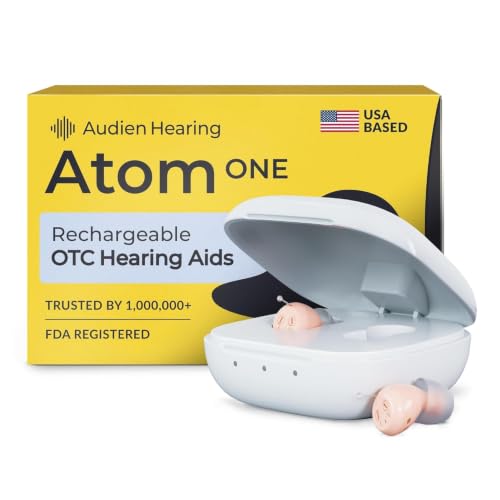
Audien Atom One OTC Hearing Aids
The Atom One is a rechargeable nano in-ear device run by two analog dials, one for volume and one for frequency, instead of an app or a smartphone setup. Audien describes it as an FDA-registered OTC hearing aid for adults with mild to moderate hearing loss, and states it runs 24 hours per charge and refills in about 3 hours in its USB-C dock, powering on when you lift it out and off when you put it back. It ships with three sizes of silicone domes, is universal rather than left-and-right specific, and includes a pull-wire for removal plus a complimentary Audien Sound Check setup session. Audien lists a 1-year warranty and states the device is FSA and HSA eligible.
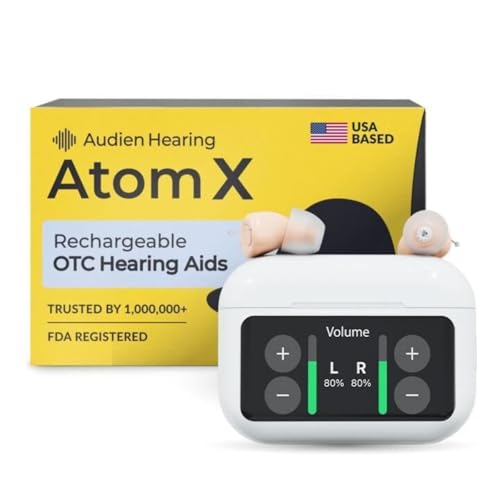
Audien Atom X OTC Hearing Aid For Seniors & Adults with Touchscreen Control
The Atom X moves the controls off the hearing aid and onto the charging case. Audien calls the feature CaseControl, a touchscreen that displays volume, listening mode and battery status, and positions it for people with arthritis, limited dexterity or age-related vision changes. Four presets, Conversation, Crowd, TV and Comfort, switch from that same screen, and Audien states the case provides 48-plus hours of battery life and cleans the earpieces with UV light while they charge. Audien also states the device streams calls, music and TV over universal Bluetooth with no separate accessory or app, describes it as an FDA-registered OTC hearing aid rather than a sound amplifier, lists a 1-year warranty, and states it is FSA and HSA eligible.

Vivtone Xpure 2.0 Bluetooth Rechargeable OTC Hearing Aids with App Control
The Xpure 2.0 is a receiver-in-canal pair that can be adjusted two ways, through a free companion app or with buttons on the devices themselves, covering volume, frequency and preset modes for quiet conversation, noisy restaurants and the outdoors. Vivtone states that the receiver-in-canal design minimises distortion and feedback, and that the aids work with iOS 12 and Android 11.0 or newer for Bluetooth calls and music. On power, Vivtone states a 2.5-hour full charge gives up to 24 hours of hearing-aid use or 3 hours of Bluetooth streaming, with the case holding roughly a week of standby. It ships with a user manual and a quick-start guide, and Vivtone offers phone support with a real person.

ELEHEAR Beyond Pro Rechargeable OTC Hearing Aids for Seniors, Soft Gold
The Beyond Pro is a receiver-in-canal pair positioned for mild to moderate hearing loss, with an iOS and Android app for volume, voice fine-tuning and one-tap settings, 20 ambient soundscapes, and a Music Mode tuned to keep vocals and high-frequency instruments clear. ELEHEAR states that its VocClear 2.0 processing delivers 30% clearer speech, high-frequency detail up to 8500Hz, 8ms latency, 50dB of amplification, feedback reduction and noise cancellation. On power, ELEHEAR states a 15-minute quick charge gives up to 6 hours, a full charge up to 20 hours, and the case holds four extra charges; the aids switch on and off automatically with the case and ship with multiple dome sizes. ELEHEAR also states that it offers remote support from its hearing-care specialists through the app.

Jabra Enhance Select 700 Hearing Aids with Audiology Support
The Enhance Select 700 is sold as a package rather than a gadget: receiver-in-ear hearing aids bundled with remote audiology support, which Jabra positions as clinic-level care at about half the price of an in-person clinic. Jabra calls it their smallest rechargeable receiver-in-ear design and pairs it with SoundScape processing and an Auto Focus feature that adapts to the listening environment in real time. It streams calls, music and media from Apple or Android devices and supports Bluetooth LE Audio and Auracast. Tapcontrol lets you double-tap your ear or the hearing aid to answer calls hands-free on compatible devices.
Keep reading

Are OTC Hearing Aids FSA, HSA, or Medicare Eligible?
Are OTC hearing aids FSA eligible? Yes, and HSA too. Original Medicare is a flat no, Medicare Advantage usually helps. Here is how to pay for them in 2026.
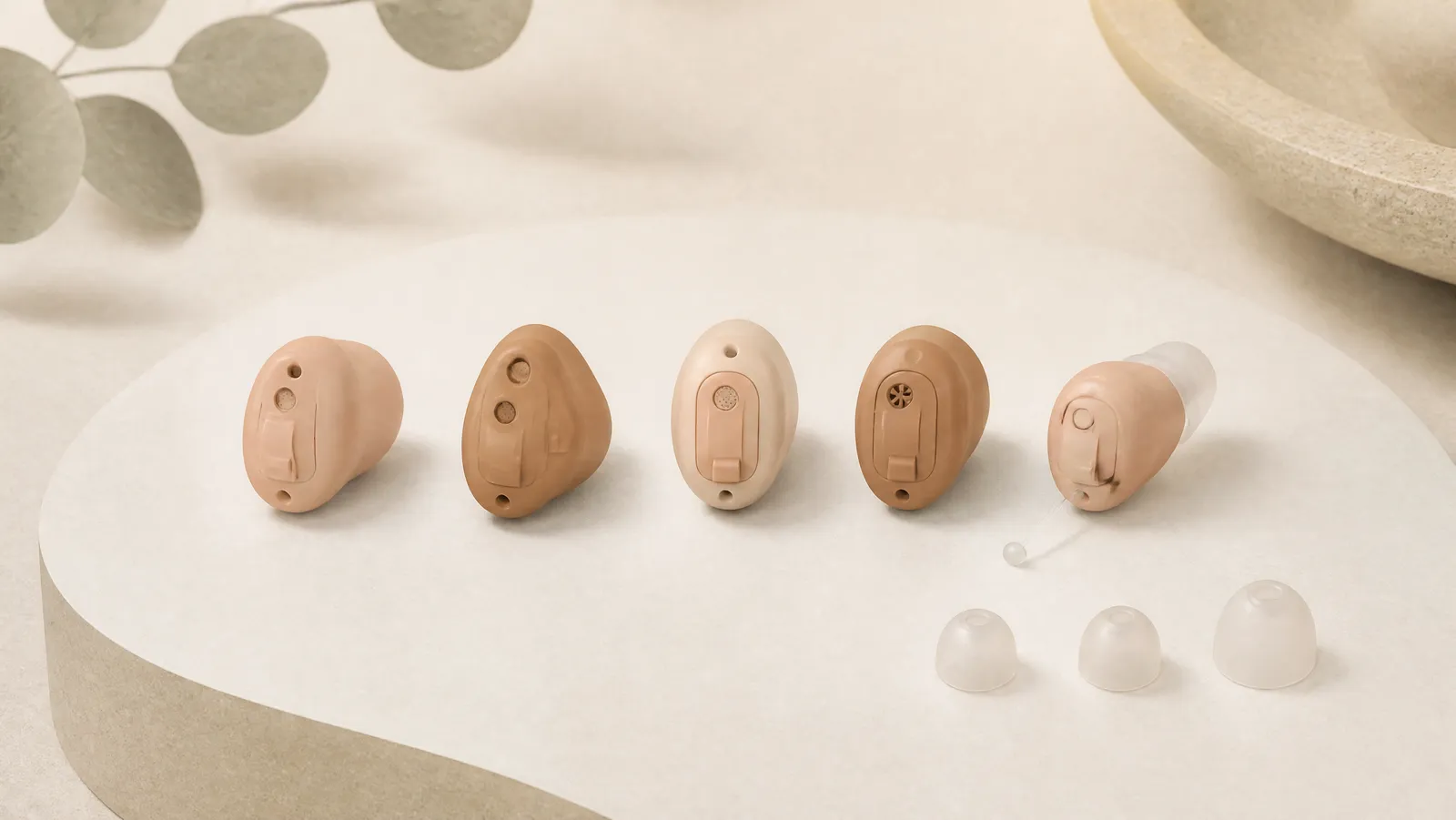
The Most Discreet OTC Hearing Aids of 2026
Invisible OTC hearing aids do not really exist, but some are genuinely discreet. Five in-canal picks for 2026, and what going smaller actually costs you.
OTC Hearing Aids and Severe Hearing Loss: Where the Limit Is
OTC hearing aids for severe hearing loss are outside the FDA category, which covers perceived mild to moderate loss. Here is where the line sits, and why.