Are OTC Hearing Aids FSA, HSA, or Medicare Eligible?
Are OTC hearing aids FSA eligible? Yes, and HSA too. Original Medicare is a flat no, Medicare Advantage usually helps. Here is how to pay for them in 2026.


Affiliate disclosure: This article contains affiliate links. As an Amazon Associate we earn from qualifying purchases, at no extra cost to you. Learn more.
Yes to both pre-tax accounts. Hearing aids are a long-standing qualified medical expense under IRS rules, so FSA and HSA dollars generally work for over-the-counter devices. Original Medicare does not cover hearing aids at all. Medicare Advantage usually offers something. Private insurance depends on your plan; Medicaid depends on your state.
Are OTC hearing aids FSA eligible in the way people mean when they ask? Almost always. But "eligible" and "reimbursed" are two different words, and the gap between them is where readers lose money. Below is each program on its own terms, with the 2026 figures. If you are still choosing hardware, start with our roundup of the best OTC hearing aids and come back once you have a price in mind.
This is general information, not tax or insurance advice. Rules vary and change; the only authority on your plan is your plan administrator or a tax professional.
The short answer, one account at a time
- Health FSA — yes, in the ordinary case. Hearing aids and batteries are qualified medical expenses. Your administrator can still require documentation first.
- HSA — yes, same expense list. The catch is on the front end: having an HSA at all requires a high-deductible health plan.
- Original Medicare — no. Not the devices, not the fitting exams, with one narrow exception for diagnostic exams.
- Medicare Advantage — usually something, rarely everything. Nearly every plan offers a hearing benefit; the amount and the rules are set plan by plan.
- Private insurance — plan by plan. Some employer plans include a hearing aid allowance. Many do not.
- Medicaid — state by state. Adult coverage is not a mandatory federal benefit.
- VA — yes, and generously, for enrolled veterans. The most overlooked route here.
The IRS rule that governs both accounts
Both accounts run off the same definition, so the answer for one is nearly always the answer for the other.
IRS Publication 502 defines medical expenses as "the costs of diagnosis, cure, mitigation, treatment, or prevention of disease," including "the costs of equipment, supplies, and diagnostic devices needed for these purposes." Then it gets specific: "You can include in medical expenses the cost of a hearing aid and batteries, repairs, and maintenance needed to operate it."
Two things follow. The rule does not distinguish OTC from prescription — it describes the function of the device, not the sales channel, which makes this one of the few places OTC hearing aids compared with prescription hearing aids are treated identically. And batteries, repairs, and maintenance travel with the device, because that is written into the sentence rather than inferred. Accessories are murkier; ask first if one is a meaningful expense.
FSA: eligible and reimbursed are two different things
A health FSA is funded by pre-tax salary reductions run through your employer's cafeteria plan. For 2026, the IRS set the limit on those salary reductions at 3,400 dollars, per Revenue Procedure 2025-32.
Here is what almost no one is told: qualified does not mean your administrator will simply pay it. In Chief Counsel Advice memorandum 202317020, released April 28, 2023, the IRS concluded that a cafeteria plan that does not require an independent third party to fully substantiate medical reimbursements — by permitting self-certification, sampling, or skipping substantiation below a dollar threshold — "is not a cafeteria plan within the meaning of section 125," and the benefits employees elected become taxable wages.
That rule targets employers, but it explains your experience: your administrator is protecting the plan's tax status, not being difficult. So keep the itemized invoice showing the product, the date, and the amount. A card slip showing a dollar total does not describe what you bought.
The calendar is the other trap. FSA money is use-it-or-lose-it by default, with two employer-optional escape valves — and you get one of them at most.
- Carryover. Revenue Procedure 2025-32 sets the maximum carryover of unused amounts at 680 dollars for 2026. Your employer may cap it lower or not offer it.
- Grace period. Some plans instead give you extra months after the plan year to incur expenses. Publication 969 describes this as an alternative to a carryover, not an addition to one.
- Run-out period. Separate from both: a window after year end to file claims already incurred. Missing it forfeits money you were owed.
A fourth-quarter FSA balance is a deadline, not a cushion.
HSA: the same expense, a different account
An HSA buys the same things and differs everywhere else.
You cannot simply open one. Publication 969 lists four conditions to be an eligible individual: you are covered under a high-deductible health plan, you have no other health coverage except what is permitted, you are not enrolled in Medicare, and you are not claimed as a dependent. For 2026, Revenue Procedure 2025-19 sets the minimum high-deductible-plan deductible at 1,700 dollars self-only or 3,400 dollars family, and contribution limits at 4,400 dollars self-only and 8,750 dollars family.
Enrolling in Medicare stops contributions, not spending. This is the most misunderstood point for readers our age. Publication 969 states that once you enroll in Medicare your contribution limit is zero — but the balance is still yours, distributions stay tax free for qualified medical expenses, and there is no additional tax on distributions after age 65. A 71-year-old on Medicare can spend an old HSA balance on hearing aids. Many in that position assume the account died at enrollment.
There is no deadline. The balance rolls forward indefinitely and belongs to you, not your employer. If you are 58 and suspect hearing aids are three years out, fund it now.
Medicare: the part most people get wrong
Medicare.gov states it in one line: "Original Medicare doesn't cover hearing aids or exams for fitting hearing aids." That has not changed for 2026, and the FDA's 2022 rule creating the over-the-counter category did not alter it. A cheaper device did not become a covered device.
The exception is real but narrow, and it turns on a distinction worth learning.
- A diagnostic exam is covered. Medicare.gov says Part B covers diagnostic hearing and balance exams when your doctor or other health care provider orders them to find out whether you need medical treatment, plus one audiologist visit per 12 months without an order for non-acute hearing conditions.
- A fitting exam is not. Once the appointment's purpose is selecting and adjusting a device rather than investigating a medical problem, Original Medicare stops.
- Your cost for the covered exam. Medicare.gov states that after you meet the Part B deductible you pay 20 percent of the Medicare-approved amount, with additional copayments in hospital outpatient settings.
That exam is worth having: an audiogram you own is the difference between buying an OTC device on a hunch and buying it on a number.
Medicare Advantage: a real benefit with real strings
This is where hearing coverage actually lives for people over 65. According to KFF's analysis of the 2026 Medicare Advantage landscape, 98 percent of individual plans offer a hearing benefit in 2026, comparable to 2025 when 97 percent or more did — though KFF notes the scope varies plan to plan. KFF also reports that 66 percent of individual plans offer an over-the-counter items allowance in 2026, down from 73 percent in 2025. That flex-card allowance is a separate benefit from the hearing one, and the direction of travel is worth noting.
Before assuming your plan pays for a device you found online, get four answers from your Evidence of Coverage:
- Is it an allowance or a set copay per device? Both exist, and they behave very differently against a 500 dollar purchase.
- Does it route through a contracted hearing network? If your plan uses a vendor with its own provider list and catalog, a device you buy at retail may not qualify.
- Does it apply to over-the-counter devices specifically? Ask in those words. Do not accept "hearing aids are covered."
- When does the allowance reset, and does it roll over? Many of these allowances expire at the end of the period rather than rolling over, so confirm yours.
If your plan only pays through its network, a network device at a plan-negotiated copay may well beat an out-of-pocket OTC one.
Private insurance and Medicaid
Private and employer plans. Adult hearing aid coverage is a plan-level choice, not a standard benefit. Some plans include a periodic allowance; others exclude devices while still covering the diagnostic audiology visit. Find the hearing aid line in your Summary of Benefits and Coverage, and ask whether OTC devices count.
Medicaid. Hearing aids do not appear on Medicaid.gov's list of mandatory Medicaid benefits. Medicaid.gov explains that states may provide optional benefits if they choose to add them through the state plan process, which is why adult coverage differs so much state to state. Call your state Medicaid agency and ask about devices and replacement frequency separately.
The pattern is not unique to hearing — it is the same shape we found in whether home health devices are covered by Medicare, FSA, or HSA: pre-tax accounts broad and reliable, insurance programs narrow and conditional.
The "FSA/HSA eligible" label, decoded
That badge is not nothing, and it is not an approval either.
Retailers selling qualified items use an inventory information approval system, the merchant-side technology described in IRS Notice 2006-69. It classifies every product against the IRS medical expense rules at the point of sale, and card transactions cleared through it count as substantiated without a receipt. That is why the badge exists.
It is not an adjudication by your plan. The merchant is classifying a product; your administrator still governs your account and can apply plan-specific rules. Treat the badge as a hint that checkout will go smoothly, not a guarantee.
Paying for them without a headache
- Confirm before you buy, in writing. Ask your administrator whether OTC hearing aids are eligible and what must accompany the claim. Email leaves a record; a call does not.
- Check the calendar. For an FSA, find your plan year end, your carryover or grace period, and your run-out deadline. An HSA has no clock.
- Buy from a merchant that classifies eligible items so the card clears without paperwork, and keep the itemized invoice, not the receipt total. Save a copy the day you buy.
- If the card is declined, pay another way and file for reimbursement. A decline usually means the merchant is not set up for auto-substantiation, not that the expense is ineligible.
- Do not claim it twice. Publication 502 states you cannot include expenses paid with a tax-free HSA distribution, or amounts fully reimbursed by your FSA. Pre-tax dollars or a deduction, not both.
If none of it covers you
If you are a veteran, start here. The VA's hearing aid fact sheet states that VHA standard practice is that any veteran enrolled and eligible for care is eligible for hearing aids, that there are no administrative barriers to hearing healthcare or hearing aids for enrolled veterans, and that there is no cost for hearing aids from the VA, though visit copays may apply. You need neither a service connection nor a primary care referral, since audiology is direct-schedule. What you get is prescription aids fit against a hearing test, which for most veterans who qualify is likely a better starting point than an OTC purchase.
Keep the price in perspective. The FDA's August 2022 final rule creating the OTC category names high cost as a barrier to hearing aid use, noting that hearing loss affects an estimated 30 million people in the United States while only about one-fifth of those who could benefit seek intervention. Lowering the price of entry was the entire point of the category.
Check the itemized deduction, but do not count on it. IRS Topic 502 states you may be able to deduct medical and dental expenses to the extent they exceed 7.5 percent of your adjusted gross income, claimed on Schedule A when you itemize. With modest spending and a standard deduction, that usually comes to nothing.
Our take
The account you already have is more useful than the insurance you are hoping for. FSA and HSA dollars cover over-the-counter hearing aids under a rule that has been stable for decades and does not care where you bought the device. Medicare still says no in 2026, and Medicare Advantage supplies a benefit that is nearly universal in offering and highly variable in substance.
The order of operations we would give a relative: the VA first if you are a veteran, the FSA or HSA next because it is the most certain money, then the Medicare Advantage hearing benefit — asking whether it reaches OTC devices or only the plan's network.
One last thing, because money articles distort decisions: do not let coverage pick the device. A subsidized aid you never wear costs more than an unsubsidized one you use daily. Once payment is settled, spend your attention on fit, return window, and support — which is what how to choose OTC hearing aids walks through, and where our complete OTC hearing aid guide compares models.
Can I use my FSA card on Amazon for hearing aids?
Usually, if the retailer classifies eligible items at checkout. Under IRS Notice 2006-69, card transactions cleared through a merchant's inventory information approval system are substantiated without a receipt. If the card is declined, pay another way and file for reimbursement with the invoice.
Does Medicare cover OTC hearing aids in 2026?
No. Medicare.gov states that "Original Medicare doesn't cover hearing aids or exams for fitting hearing aids," and the FDA's over-the-counter category did not change that. Part B does cover a diagnostic hearing or balance exam ordered by a provider to determine whether you need medical treatment.
Are hearing aid batteries FSA eligible?
Yes. IRS Publication 502 states you can include in medical expenses "the cost of a hearing aid and batteries, repairs, and maintenance needed to operate it." Repairs and consumables sit inside the same sentence. Save the itemized receipt — small purchases are the ones people fail to substantiate.
Can I still use my HSA for hearing aids after I enroll in Medicare?
Yes, for spending. Publication 969 states that once you are enrolled in Medicare your HSA contribution limit is zero, but distributions stay tax free for qualified medical expenses, and there is no additional tax on distributions after age 65. An existing balance does not expire at enrollment.
Keep reading
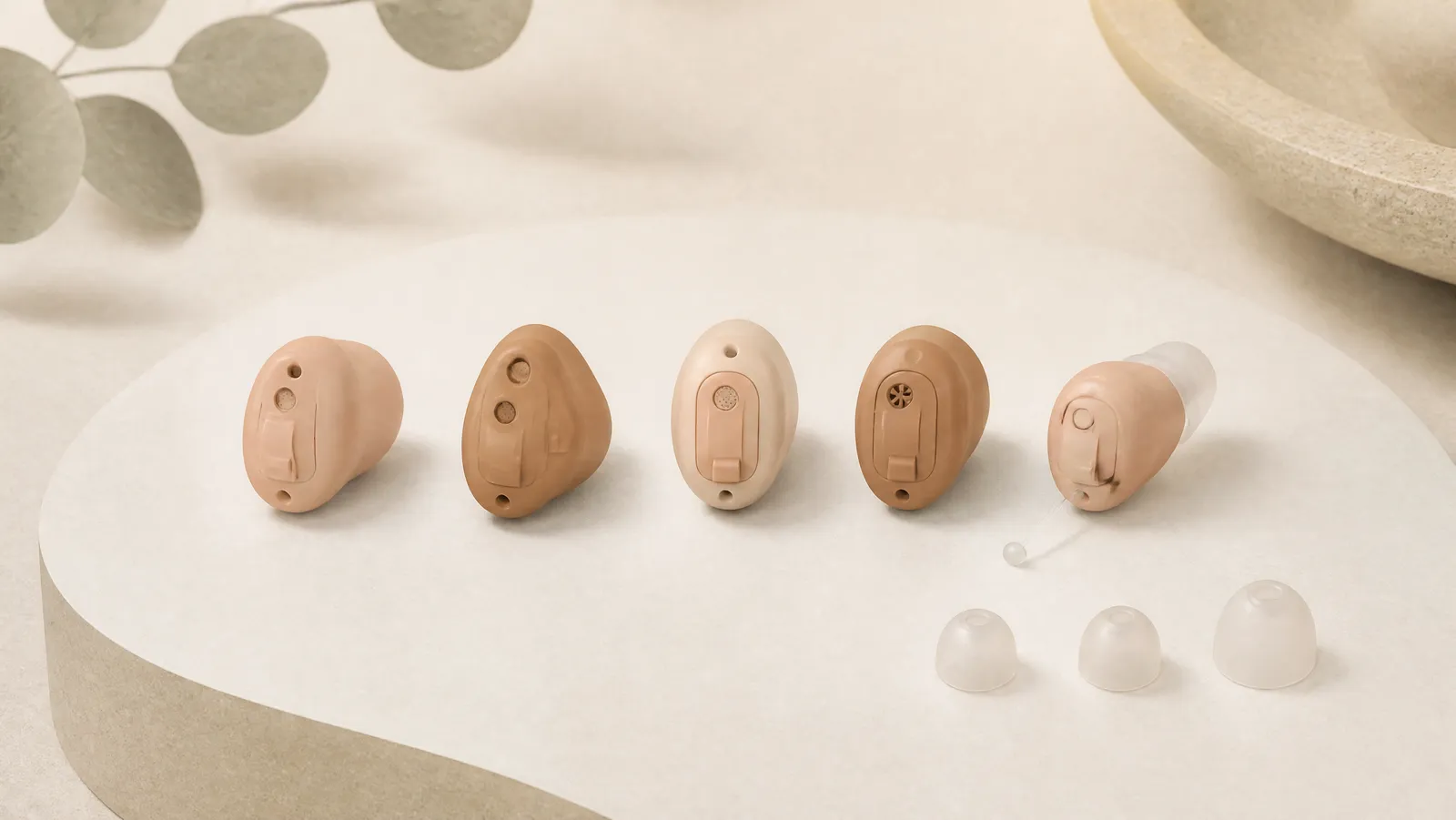
The Most Discreet OTC Hearing Aids of 2026
Invisible OTC hearing aids do not really exist, but some are genuinely discreet. Five in-canal picks for 2026, and what going smaller actually costs you.
OTC Hearing Aids and Severe Hearing Loss: Where the Limit Is
OTC hearing aids for severe hearing loss are outside the FDA category, which covers perceived mild to moderate loss. Here is where the line sits, and why.
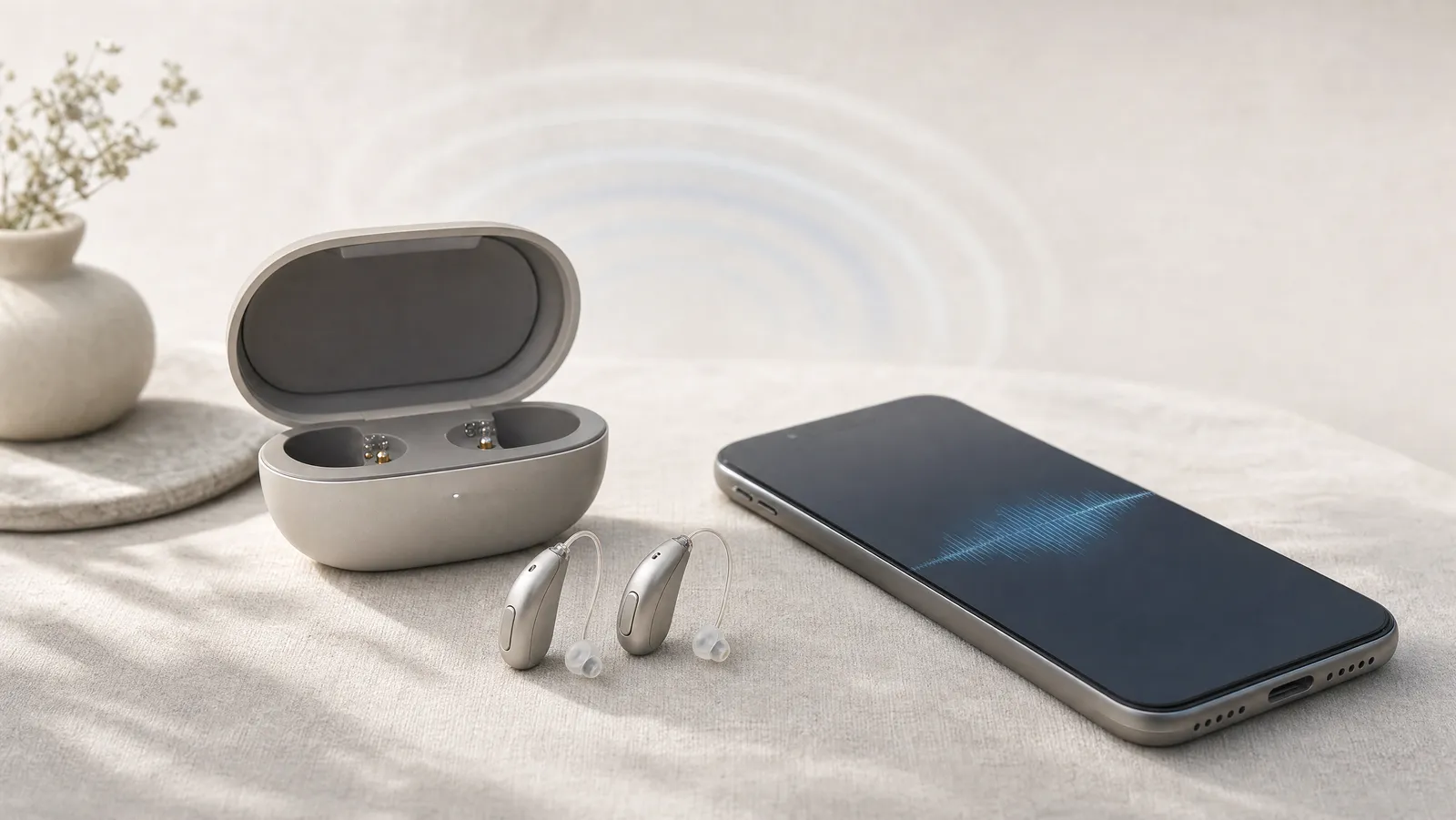
The Best OTC Hearing Aids with Bluetooth in 2026
The best OTC hearing aids with Bluetooth in 2026: which ones truly stream calls and music, which use Bluetooth only for a phone app, and how to tell.