The Best Protein Powders for People Over 50
The best protein powder for seniors in 2026: why protein matters more after 50, how to choose one, what third-party testing means, and our five top picks.

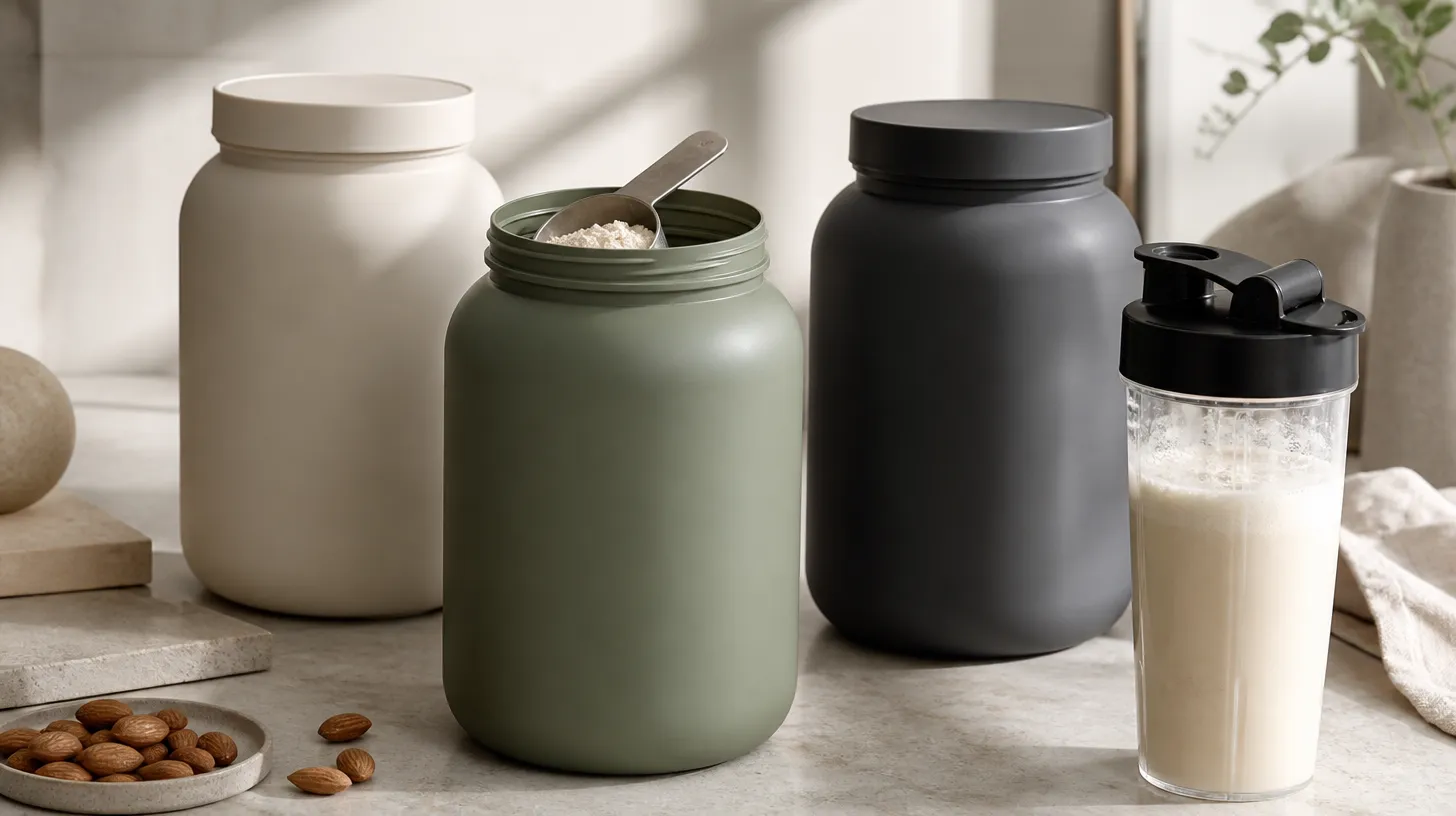
Affiliate disclosure: This article contains affiliate links. As an Amazon Associate we earn from qualifying purchases, at no extra cost to you. Learn more.
◆ The verdict
5 reviewed- 1Our PickAscent 100% Whey Protein Powder, Unflavored, 2 lbCheck price ▸
- 2Best ValueMuscle Milk Genuine Protein Powder, Chocolate, 1.93 lb (13 servings)Check price ▸
- 3Best Plant-BasedOrgain Organic Vegan 30g High Protein Powder, Vanilla, 2.01 lbCheck price ▸
- 4Best Ready-to-DrinkEnsure Max Protein 2-in-1 Vanilla Ready-to-Drink Shake with HMB, 12 packCheck price ▸
- 5Best Whey IsolateBiochem 100% Whey Isolate Protein, Vanilla, 15.1 oz (14 servings)Check price ▸
Buy the Ascent 100% Whey Protein, Unflavored. At 25 g of protein a scoop with nothing added for taste, it stirs into coffee, oatmeal or soup, which is how most people over 50 actually get more protein down. If you want the most protein per dollar instead, buy the Muscle Milk Genuine Protein Powder. Better Life Span is reader-supported: if you buy through a link on this page we may earn a commission, at no cost to you.
That is the whole shopping answer, and it took four sentences. The rest of this guide is about the decision, because the decision is where people searching for the best protein powder for seniors usually go wrong. Most of them do not need a different powder. They need more protein in the three meals they already eat, and something to pull against. Protein powder is a convenience product, and a good one. It is not a treatment. For how protein, muscle and appetite fit into the bigger picture as the body changes, see our complete guide to weight and metabolism after 50.
Why Protein Matters More After 50
Muscle is the thing quietly at stake. Sarcopenia, the age-related loss of muscle mass and function, is described by Douglas Paddon-Jones and Blake Rasmussen in a 2009 review in Current Opinion in Clinical Nutrition and Metabolic Care as "a progressive, insidious process characterized by 3-8% reduction in lean muscle mass per decade." That is the number worth carrying around. It is not dramatic in any single year, which is exactly why it goes unnoticed until something that used to be easy is not.
There is a second, less obvious reason protein gets harder after 50. In a 2015 review in the journal Healthcare, Jamie Baum and Robert Wolfe write that older adults are less responsive to low doses of amino acids than younger adults are, and that the gap can be overcome with higher intakes. In plain terms: a small amount of protein does less for an older body than it does for a younger one. The same yogurt at breakfast is not the same stimulus it was at 30.
So the case for a protein powder after 50 is not about building a different physique. It is about clearing a threshold more reliably than a light breakfast and a sandwich will clear it.
How Much Protein Do Older Adults Actually Need?
Here is where we have to be careful, because this corner of the internet is full of confident numbers.
The long-standing adult figure has not changed. Baum and Wolfe describe the Food and Nutrition Board as setting a Recommended Dietary Allowance of 0.8 g of protein per kg of body weight per day for all adults over 18, explicitly including older adults over 65. No federal body has raised that number out from under you, whatever a headline may have implied.
What has happened is that geriatric and clinical groups have argued it is too low for older people specifically. A 2024 review in Frontiers in Nutrition summarises the position of the PROT-AGE Study Group, which "recommends for older adults an average daily intake of at least 1.0 to 1.2 g/kg/d to maintain and regain lean body mass and function," with "even higher intakes" of 1.2 to 1.5 g/kg/d proposed in acute or chronic disease. The same review cites an ESPEN expert group at "at least 1.0-1.2 g/kg/day for healthy older people," rising to 1.2 to 1.5 g/kg/day for older people who are malnourished or at risk of it.
And the disagreement is real, which the same review is honest about: Dutch and UK organisations have judged that "the evidence is still insufficient to increase the recommendation" above 0.8 g/kg/d. Two credible sets of experts are looking at the same literature and reaching different conclusions. Anyone who tells you the question is settled has not read the second half.
What the published ranges work out to is simple arithmetic rather than advice. For a 160-pound adult, 0.8 g/kg is roughly 58 g of protein a day, and 1.2 g/kg is roughly 87 g. The second number is hard to reach on toast, soup and a small dinner, and that gap is the entire commercial case for protein powder. We will take how much protein you need after 50 apart in more detail separately. Ask your own clinician or a registered dietitian which end of that range applies to you.
One more finding is worth knowing before you buy a tub. Baum and Wolfe note that "ingestion of more than 30 g of protein in a test meal does not further stimulate muscle protein synthesis." Research suggests, in other words, that a single enormous evening shake is a poor way to spend protein. Spreading it across meals makes better use of the same powder.
How to Choose a Protein Powder After 50
Five things separate a worthwhile tub from an expensive one. Price is the least interesting of them.
- Protein per serving, and what a serving actually is. Read the scoop count, not the headline gram figure. Muscle Milk's 32 g is two scoops, so a 13-serving canister empties faster than its weight suggests. Biochem's 20 g is one scoop. Both are honest labels, and they are not comparable at a glance.
- Third-party testing. This is the criterion most buying guides skip. In October 2025 Consumer Reports tested 23 protein powders and shakes and reported that more than two-thirds contained more lead than its food safety experts consider safe, with some more than ten times above that level, against a level of concern of 0.5 micrograms of lead per day. Its coverage notes there are no enforceable federal limits on heavy metals in these products and that the FDA does not approve or test supplements before they go on sale. A certification such as NSF Certified for Sport, which Muscle Milk carries and which screens for more than 270 substances banned by major athletic organizations, is evidence that somebody outside the company opened a finished tub. We do not know which products Consumer Reports tested beyond those it named, and we are not going to imply that an untested product is clean.
- Cost per serving, not cost per tub. As of October 2026, Muscle Milk works out to about $1.78 a serving, Biochem to about $2.14, and the Ensure cartons to about $2.74 each. The cheapest tub on the shelf is frequently not the cheapest protein.
- The form you will genuinely use. Powder is cheaper per gram. A ready-to-drink carton requires no scoop, no shaker and no washing up. Unflavored powder disappears into food you already cook. The best protein powder for seniors is the one still being used in week six.
- What else is in it. Sugar content, added vitamins, fiber, and flavor extras all vary here from 1 g of sugar to 2 g, and from nothing added to turmeric and ginger. None of that is a health claim; it is a question of what you want to taste every morning.
Protein sits inside a wider set of decisions about what is worth taking after 50, which we work through in our guide to supplements for healthy aging.
Our Picks, and Who Each One Is For
Ascent 100% Whey Protein, Unflavored
Our overall pick, and the least exciting product here. It is 100% whey at 25 g of protein per scoop in a 2 lb tub, unflavored and unsweetened, and marketed as fast digesting. The reason it wins is behavioural rather than nutritional: because it tastes of nothing, it goes into oatmeal, soup, mashed potato or coffee without turning any of them into dessert. If your real problem is that breakfast and lunch are light, this fixes the meals you already eat rather than adding a sixth thing to remember. The catch is that it is the most expensive tub in this group, and in plain water it is genuinely joyless.
Muscle Milk Genuine Protein Powder
The value pick, and the only one here with third-party batch testing we can point to. It delivers 32 g of protein and 2 g of sugar per serving from a blend of slow- and fast-releasing proteins, mixed as two scoops into 8 fl oz of water, with calcium and vitamins A, C and D added, and it is an NSF Certified for Sport product. At roughly $1.78 a serving as of October 2026 it is the most protein per dollar in this set. The honest drawback is the two-scoop serving: 13 servings in a 1.93 lb canister goes quickly.
Orgain Organic Vegan 30g Protein
The plant-based pick. It reaches 30 g of protein in a 200-calorie serving from a blend of pea, brown rice, mung bean and chia, and the maker states it supplies all nine essential amino acids, which single-source plant proteins often do not. It is USDA certified organic, non-GMO, gluten-free and kosher, adds 4 g of prebiotic fiber, holds sugar to 1 g, and contains no soy, lactose or dairy ingredients. It also contains tart cherry, turmeric and ginger, which is a flavor decision as much as anything, and plant protein is grittier than whey no matter whose it is.
Ensure Max Protein 2-in-1 with HMB
The ready-to-drink pick, for the day when nothing is going to get mixed. Each shake has 30 g of protein, 1 g of sugar and 160 calories, the maker lists it as a good source of 26 vitamins and minerals, and it contains HMB. We are not going to tell you what the HMB does, because the only thing in front of us is a label. At about $2.74 a shake as of October 2026 it is the highest per-serving cost here, and a 12-pack takes real cupboard space. It is also the one most likely to be drunk on a bad week, which is not a small thing.
Biochem 100% Whey Isolate Protein
The isolate pick, for people who read ingredient lists. It is 100% whey isolate rather than concentrate, 20 g of protein per serving from a grass-fed source, with no preservatives and no artificial colors, flavors or sweeteners, certified gluten-free and B-Corp, listing 18 naturally occurring amino acids including all nine essential ones. One scoop goes into three-quarters of a cup of cold water. At 20 g it is the lowest protein per serving here and the container is the smallest, so at about $2.14 a serving as of October 2026 you are paying for the short ingredient list.
Whey vs Plant Protein After 50
Whey is the default for a reason: it is a complete protein and it is cheap per gram. Plant protein has historically had two problems, one of which is solved and one of which is not.
The solved problem is amino acid completeness. A single plant source often falls short, which is why the Orgain product blends pea, brown rice, mung bean and chia and states all nine essential amino acids are present. Blended plant proteins have largely closed that gap.
The unsolved problem is contamination, and it cuts against plant protein specifically. In the same October 2025 testing, Consumer Reports reported that plant-based powders averaged roughly nine times the lead of dairy-based powders, and that the four products it singled out to avoid entirely or limit to once a week were all plant-based. According to Brian Ronholm, Consumer Reports' director of food policy, contamination "has worsened since we first analyzed these products 15 years ago." That is not a reason to rule out plant protein, which many people choose for reasons that have nothing to do with muscle. It is a reason to want third-party testing more, not less, if you are going plant-based.
If dairy is the issue, note that the Orgain powder contains no lactose or dairy ingredients at all, while Biochem's is whey isolate rather than concentrate. Which of those matters for you is a question for your pharmacist or dietitian, not for a product page. Our guide to supplement safety after 50 covers how to ask that question well, including interactions worth raising.
Protein Powder Will Not Work On Its Own
This is the part the category does not advertise. Protein appears to do its best work in the presence of something that loads the muscle.
A randomized controlled trial by Verreijen and colleagues, published in Nutrition Journal in 2017, put 100 overweight and obese adults aged 55 to 80 on a 10-week reduced-calorie weight loss program, randomly assigned to a higher-protein or normal-protein diet, with or without resistance exercise three times a week. The higher-protein diet on its own did not significantly change fat-free mass. The group that combined higher protein with resistance exercise significantly increased fat-free mass within the group, by 0.6 kg, although the authors report no significant protein-by-exercise interaction, so the trial does not establish that the combination beats either part on its own. The authors were measuring a modest weight loss over ten weeks, and the trial was not large, so read it as a direction rather than a promise. Still, the only group that gained fat-free mass was the one doing both, which is why we would not treat powder as a substitute for load.
The load does not have to be a gym. A set of resistance bands and a chair covers most of what a beginner needs, and we would rather you spent the money there than on an upgrade from one tub to a marginally better tub. We will cover how to keep muscle while losing weight as its own subject.
The other half of this is the part nobody wants: if the scale is not moving, protein is not the lever that is stuck. We go through the actual suspects, from sleep to medication to how much walking has quietly disappeared, in why you can't lose weight after 50. And if you want to know whether a protein-plus-training effort is changing anything other than your weight, a body-composition reading at home is more informative than the number alone, which is why we looked at smart scales separately.
Who Should Talk to a Doctor First
Protein is not a free choice for everyone, and kidney disease is the standard reason.
The National Kidney Foundation puts the general rule plainly in its guidance on supplements: "At any stage of kidney disease, talk with your healthcare provider before you take any kind of nutritional supplement." It also notes that because damaged kidneys struggle to clear waste, certain nutrients can accumulate, and that a dietitian will review what you eat, your lab work and your medication list to decide what may help. That is the right process, and it is not one a label can run for you.
The same applies if you are managing diabetes, taking medication that your doctor has asked you to take with or away from food, or working to a protein target someone has already set for you. And it applies if you are losing weight unintentionally, which is a reason to call a clinician rather than buy a shake.
We are a research desk, not a clinic, and we did not examine anyone. We read labels, guidelines and trials. Deciding what your numbers should be is a conversation with someone who has seen your bloodwork, which is also the argument for knowing which health numbers to track after 50 before you start changing things.
The Bottom Line
Buy the Ascent 100% Whey Protein, Unflavored if your goal is to raise the protein in the meals you already eat, because an unflavored powder is the one that keeps getting used. Buy the Muscle Milk Genuine Protein Powder if you want the most protein per dollar with third-party batch testing behind it. Choose the Orgain Organic Vegan 30g Protein if you are avoiding dairy, the Ensure Max Protein 2-in-1 with HMB if convenience is the deciding factor, and the Biochem 100% Whey Isolate Protein if a short ingredient list matters more to you than grams per scoop.
Then do the part that makes it count. Spread the protein across meals rather than stacking it into one shake, find something to pull against two or three times a week, and ask your own clinician where in the published range you should sit. A tub of powder is the cheapest piece of this, and the least important. For the rest of the picture, start with our guide to losing weight after 50.

Ascent 100% Whey Protein Powder, Unflavored, 2 lb
A plain, unflavored whey at 25 g of protein per scoop in a 2 lb tub. Because it is unflavored and unsweetened, it mixes into coffee, oatmeal, soup or a smoothie without turning the whole thing into a dessert, which is the practical reason it suits people who are adding protein to meals they already eat rather than drinking shakes.

Muscle Milk Genuine Protein Powder, Chocolate, 1.93 lb (13 servings)
32 g of protein and 2 g of sugar per serving from a blend of slow- and fast-releasing proteins, with calcium and vitamins A, C and D added, working out to roughly $1.78 a serving at this price. It is NSF Certified for Sport, a third-party program that screens for more than 270 substances banned by major athletic organizations, which is a useful signal of batch testing whether or not you compete.

Orgain Organic Vegan 30g High Protein Powder, Vanilla, 2.01 lb
Reaches 30 g of protein per 200-calorie serving using a blend of pea, brown rice, mung bean and chia, and the maker states it delivers all nine essential amino acids, which is the thing single-source plant proteins often miss. It adds 4 g of prebiotic fiber, keeps sugar to 1 g, and contains no lactose or dairy ingredients at all. USDA certified organic, non-GMO and gluten-free.

Ensure Max Protein 2-in-1 Vanilla Ready-to-Drink Shake with HMB, 12 pack
A ready-to-drink shake with 30 g of protein and HMB in 160 calories and 1 g of sugar, which the maker lists as a good source of 26 vitamins and minerals. At roughly $2.74 a shake it costs more per gram than powder, but nothing needs mixing, measuring or washing up, which is the difference between a protein target you hit and one you intend to hit.

Biochem 100% Whey Isolate Protein, Vanilla, 15.1 oz (14 servings)
100% whey isolate rather than concentrate, at 20 g of protein per serving from a grass-fed source, with no preservatives and no artificial colors, flavors or sweeteners. It is certified gluten-free and B-Corp, lists 18 naturally occurring amino acids including all nine essential ones, and a single scoop mixes into three-quarters of a cup of cold water.
Keep reading
Weight Loss After 50: What Actually Works
Weight loss after 50: what the research says about metabolism, protein, muscle, belly fat, menopause and GLP-1 drugs, and the moves worth making first.

Why You Can't Lose Weight After 50 (And What Changes It)
Why can't I lose weight after 50? The largest study of human energy use says it is rarely a broken metabolism. Here is what changed, and what still works.
Apple Cider Vinegar for Weight Loss: Does It Really Work?
Does apple cider vinegar actually help with weight loss? Here is what the research really says, how to use ACV safely, and the best products to try.