The Best Grab Bars for Seniors in 2026: Picks for Bath and Bedside
The best grab bars for seniors in 2026: six picks for tub, shower, toilet and bedside, plus load ratings, mounting heights and the suction-cup caveat.

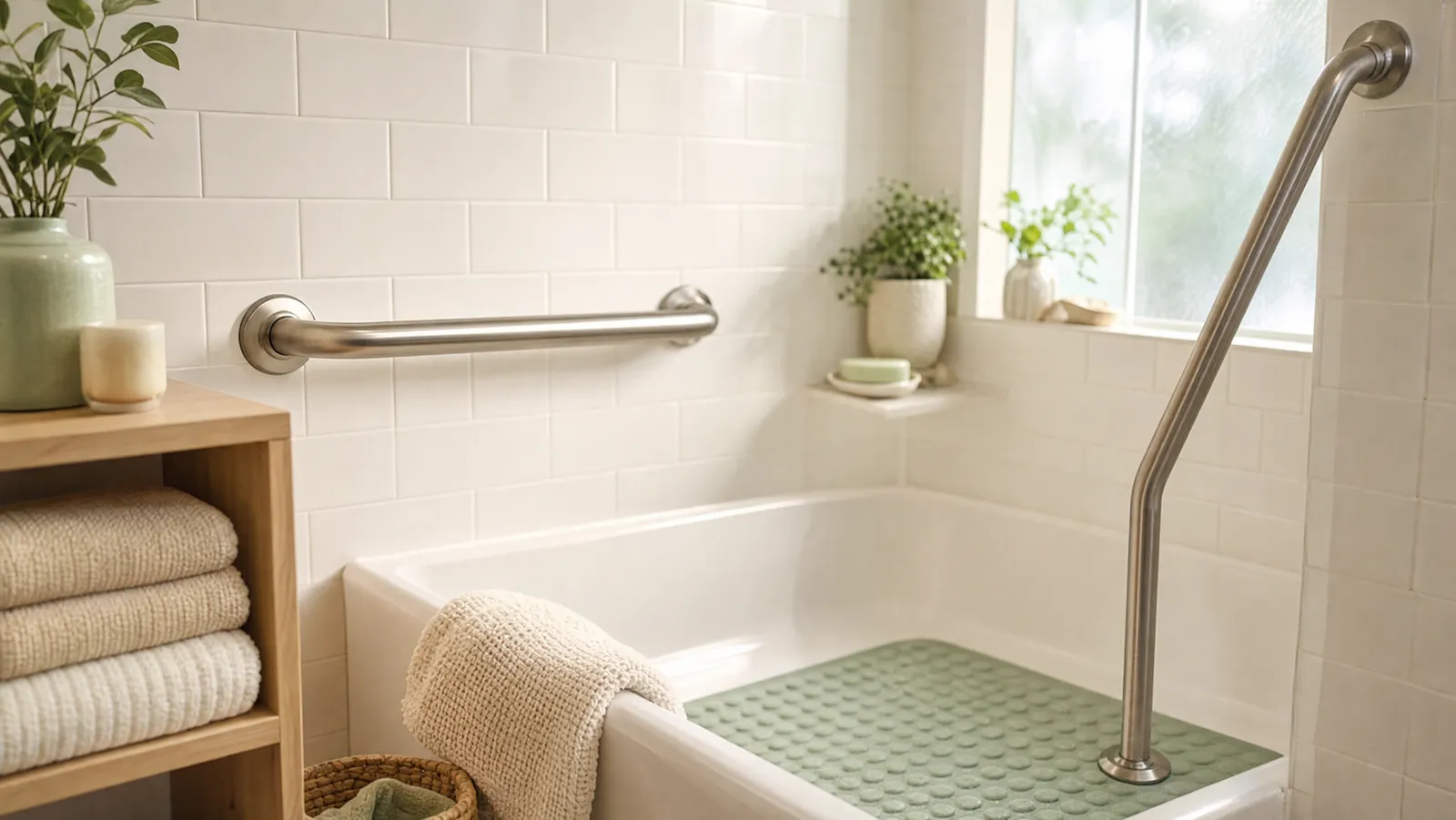
Affiliate disclosure: This article contains affiliate links. As an Amazon Associate we earn from qualifying purchases, at no extra cost to you. Learn more.
◆ The verdict
6 reviewed- 1Our PickStardrix 24-Inch ADA Compliant Grab Bar, 1.5" Diameter, Concealed Mounting Flanges, Brushed Stainless SteelCheck price ▸
- 2Best for TubsMunzong 16 Inch Angled Shower Grab Bar, Brushed Nickel, Anti-Slip Knurled, 2 PackCheck price ▸
- 3Best ValueTesuchan 12 Inch Grab Bars for Wall, White, Safety Shower Grab Bar with Concealed ScrewsCheck price ▸
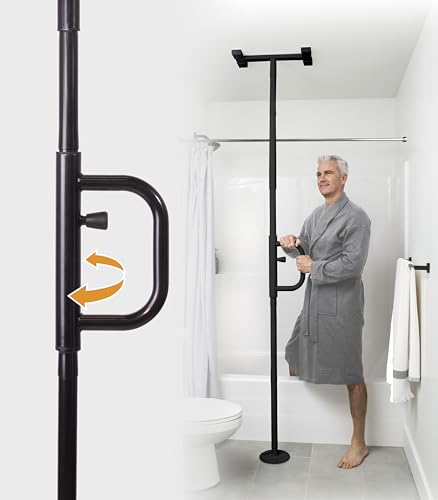
- 4Best for Standing UpStander Security Pole and Curve Grab Bar, Tension Mounted Floor to Ceiling Transfer Pole, Metallic BlackCheck price ▸
- 5Best for BedsideYrHeiper Bed Rails for Elderly Adults with Bedside Support Legs, Bed Assist Rail with Storage PocketCheck price ▸
- 6Removable Option (Read the Caveat)UNBREAKABL MIRO Suction Cup Shower Grab Bars, 16.18 in, 2 Pack, Drill FreeCheck price ▸
The best grab bar for a senior is a screw-mounted, ADA-rated bar anchored into a stud or solid blocking. Our pick is the Stardrix 24-inch ADA compliant bar. The cheap thing most people buy instead, a suction-cup bar, is a steadying handhold only. It can release, and it should never be the thing you trust to stop a fall.
That is the article in four sentences. Everything below is placement, load numbers and an honest reading of the evidence, because the distance between a bar anchored to carry the 250-pound design load the ADA Standards set for the whole assembly and a bar that pops off wet tile is the distance between a scare and a fracture.
Grab bars are one piece of a bigger picture. For the medication review, the lighting, the vision check and the exercise that carries the strongest evidence, start with Better Life Span's complete fall prevention guide. This page is about the hardware.
The bathroom earns the attention. According to the CDC's report on nonfatal bathroom injuries among persons aged 15 and older, 234,094 such injuries were treated in US emergency departments in 2008; 81.1 percent were caused by falls and 68.3 percent happened in or around the bathtub or shower. Among adults aged 85 and older, 51.7 percent of bathroom injuries occurred on or near the toilet, against 7.0 percent among 15 to 24 year olds.
Load Rating and Anchoring: The Two Things That Decide Safety
A grab bar is a structural part of your house wearing the costume of a bathroom accessory.
The 2010 ADA Standards set the test in section 609.8: allowable stresses must not be exceeded for the materials used when a vertical or horizontal force of 250 pounds is applied at any point on the grab bar, fastener, mounting device, or supporting structure. Read that last phrase twice. The 250-pound figure is a design load for the whole assembly, including the wall behind the bar. It is not a product's breaking strength, and it is not a weight limit for the person holding on.
That is why a standard's design load and a product's marketing number are different kinds of claim. According to Stardrix, its 24-inch bar supports up to 500 lbs. Munzong states 500 lbs of pull force, and Tesuchan rates its 12-inch bar to hold up to 500 pounds. Those are maker claims about the steel. Screw any of them into drywall alone and the governing number quietly becomes the holding power of the drywall.
The same section of the standards fixes the dimensions that make a bar grippable. Section 609.2.1 requires a circular bar to have an outside diameter of 1.25 inches minimum and 2 inches maximum, and 609.3 sets the space between the wall and the bar at 1.5 inches. A towel bar meets none of this: it is not rated to a 250-pound design load, it is not sized to be gripped, and it is usually fastened to drywall with a small anchor. Towel bars are not grab bars, and neither is a soap dish, a shower door, or a sink rim.
Anchoring is where most home installs go wrong. The US Access Board's guidance for toilet rooms notes that in private toilet rooms and dwelling units, grab bars can be installed after construction if walls are properly reinforced or blocked, and that where a bar must sit away from the framing it can be mounted on blocking. In plain English: the screws need to land in wood, either a stud or a piece of lumber fitted between studs. AARP's home-safety guidance makes the same point for houses: it advises installing horizontal wood blocking at grab-bar height before the walls are finished, and notes that while there are ways to install grab bars without blocking, "nothing is more solid and secure than fastening directly to the wood framing."
Tile is a finish, not a structure. Some installers use heavy-duty hollow-wall anchors where framing cannot be reached; that is a compromise, and the only authority on whether a given bar may be mounted that way is its own instruction sheet.
Suction Cups Are Balance Aids, Not Fall Arrest
This is the most important paragraph on the page, and it comes from the manufacturers, not from us.
Drive Medical's instructions for its suction-cup grab bar state that the "Grab Bar is to be used as a balance assist only," that "it is not intended to support body weight, and body weight should not be applied to grab bar," and that where a device must bear any body weight or be used for leverage, "it is recommended that a traditional, permanently mounted grab bar be installed." Drive also tells users that before each and every use they should make sure the grab bar is securely attached.
That is a statement about the category, not one bad product. A suction cup holds by air pressure against a smooth surface. Soap film, a temperature swing, a hairline grout line under the rim, or a slow overnight leak all reduce that hold, and it can release without warning. A support that might let go is the worst thing to reach for when you are already falling.
We still included one suction option below, because renters, travellers and people waiting on a landlord's answer are real. Its caveat is the entire reason it has a slot.
Grab Bar Placement: Where to Install Them in Bath, Toilet and Bedside
ADA section 609.4 requires grab bars to be installed in a horizontal position, 33 inches minimum and 36 inches maximum above the finish floor, measured to the top of the gripping surface. For toilets, the Access Board's chapter 6 guidance describes a side-wall bar at least 42 inches long, mounted no more than 12 inches from the rear wall, plus a rear-wall bar at least 36 inches long. Those are requirements for regulated public spaces, not rules for your house. Treat them as a well-tested starting point, then fit the bar to the person who will use it.
Four places earn a bar, roughly in order of payoff:
- Outside the tub or shower entry. The step in carries the most risk, and a vertical bar suits it, because your hand can travel up or down as your body height changes over the tub wall.
- Inside the shower, at shoulder-height reach. A horizontal bar at 33 to 36 inches gives a sliding grip while you turn, soap up, or reach for a tap.
- Beside the toilet. Per the CDC report, 36.9 percent of bathroom injuries among adults aged 85 and older came from standing up from, sitting down on, or using the toilet, against 2.0 percent among 15 to 24 year olds. This is the most commonly skipped bar.
- At the bedside. Night-time trips start with getting out of bed in the dark, which is why a bed assist rail belongs on the same list as a shower bar.
All three orientations get used in homes. Horizontal bars suit a sliding grip along a wall or a sideways pull out of a tub, and this is the only orientation ADA 609.4 attaches a height to. Vertical bars suit a single committed pull while stepping over a tub wall. 135-degree angled bars, like our Munzong pick, split the difference and offer a grip whether the hand arrives high or low; they sit outside the ADA horizontal spec, so position them around the person rather than to a number.
One rule we would follow in any house: mark the height with the person standing or sitting where they will actually grab, not with a tape measure and an average body.
Our Picks
The product cards carry the full specs and links. Here is why each holds its slot. On method: we have not installed or load-tested these bars. These are editorial judgements drawn from the makers' published specs, measured against the standards above.
Stardrix 24" ADA Compliant Grab Bar
Our pick, at $26.99 as of November 2026. It is the only bar here at the full 1.5-inch grip diameter, inside the 1.25-to-2-inch range ADA section 609.2.1 allows, and Stardrix states it exceeds ADA, ANSI and related compliance standards while supporting up to 500 lbs. The feature we care most about is unglamorous: the 12-hole flange gives several screw positions at each end, which makes hitting a stud realistic in a wall you did not frame yourself. The drawback is not small: it needs a drill, a stud finder and permanent holes in your tile.
Munzong 16" Angled Grab Bar (2-Pack)
Best for tubs, a two-pack at $29.99 as of November 2026. The 135-degree angle is the point: at a tub wall your hand arrives high as you lift a leg over, then slides low as you transfer weight, and an angled bar covers both. The knurled center is the best wet-hand surface among our picks, and Munzong states 500 lbs of pull force. Its 1.25-inch diameter sits at the thin end of the ADA range, and a fixed angle is less forgiving to position than a horizontal bar.
Tesuchan 12" Grab Bar
Best value, at $9.69 as of November 2026. It is 304 stainless steel, a grade that resists corrosion better than cheaper 201-grade stainless, with hidden screws and a white finish that disappears against most bathroom walls. Tesuchan rates it to hold up to 500 pounds. At 12 inches it gives one hand position rather than a sliding grip, which makes it right beside a toilet or at a doorway and wrong at a tub entry.
Stander Security Pole & Curve Grab Bar
Best for standing up, at $169.00 as of November 2026, and the pick for anyone who cannot drill. It tension-mounts floor to ceiling with no wall fixings, adjusts to flat ceilings 7 to 10 feet high, and Stander says it supports 300 pounds. The curved handle swivels 360 degrees and locks every 45 degrees, so you can set it for the direction you actually pull. Per Stander, it is not compatible with vaulted ceilings and is not to be used inside a bathtub or shower, which makes it a bedside, armchair or beside-the-toilet solution rather than a bathing one. It also costs several times what a screw-mounted bar does.
YrHeiper Bed Assist Rail
Best for bedside, at $45.99 as of November 2026, and the only pick with a stated certification to a published safety standard, ASTM F3186-17. Per ASTM, that specification covers entrapment and strangulation hazards for adult portable bed rails and says in section 1.5 that other hazards such as falls are outside its scope, so read it as a build-quality signal rather than a fall-prevention claim. The stabilizing floor leg means the load is not carried by mattress straps alone. YrHeiper lists a 350 lb frame, a non-slip foam grip, and a fit for King, Queen, Full and Twin beds with mattresses 7.9 to 13 inches thick, installed tool-free. Per the maker it is not compatible with recessed bed frames or adjustable beds, which rules out a lot of modern bedrooms, so measure first.
UNBREAKABL MIRO Suction Grab Bars (2-Pack)
The removable option, at $43.99 for two as of November 2026, and the one pick that comes with conditions rather than a recommendation. It is for renters, hotel bathrooms and travel: no tools, no drilling, no damage. Per UNBREAKABL, these bars are only for smooth, non-porous, impermeable walls such as metal, glass, tile, marble, stainless and acrylic, and not for uneven tile, unfinished marble, wallpaper, drywall or porous walls. The maker publishes no weight rating. Use it as a steadying handhold, test the suction before every single use, and never rely on it to arrest a fall.
Installation Reality: Studs, Tile and Hiring Help
Start with a stud finder, then confirm with a small pilot hole somewhere a flange will cover. Studs in American houses sit at regular intervals, so the first one you locate tells you roughly where the next sits. A 12-hole flange buys margin when the stud and your preferred bar height do not quite agree.
Hire someone when the wall is tile over cement board, when the surround is fiberglass or acrylic with a void behind it, when you cannot find framing where the bar needs to go, or when the person who needs it cannot wait while you experiment. Opening a wall to add blocking is ordinary work for a handyman, and it is the approved fix rather than a bodge: the Access Board's guidance even specifies, for one toilet case, that blocking should extend at least 12 inches above the bar.
If you rent, ask your landlord in writing before drilling. Some will permit a professionally installed bar, and some will install one. Meanwhile the no-drill options are real, and ranked: the Stander tension pole for rising from a bed, chair or toilet, a bed assist rail for the bedroom, and a suction bar last, for balance only, within its maker's wall restrictions.
Paying for it depends on the plan rather than the product. We walk through the categories in our guide to what Medicare, FSA and HSA cover, including why "medical" and "home improvement" are treated so differently.
Before deciding how many bars you need, spend ten minutes to test your balance at home. The result tells you whether you are buying a convenience or a safeguard, and gives you a baseline to retest in six months.
The Honest Case for Grab Bars
We are a research desk, not a clinic. The honest reading here is messier than the marketing.
The best evidence for changing the home comes from a 2023 Cochrane review by Clemson and colleagues, which pooled 22 studies with 8,463 community-dwelling adults aged 60 and over. Home fall-hazard interventions probably reduced the rate of falls by 26 percent overall (rate ratio 0.74; 12 studies, 5,293 participants), which the review graded as moderate-certainty evidence. Among people already at higher risk of falling, the reduction was 38 percent (rate ratio 0.62; 9 studies, 1,513 participants), graded high-certainty. Where the interventions were given without regard to fall risk, the review found no evidence of a reduction in the rate of falls.
Two things follow. First, those trials tested whole home-hazard programmes, which Cochrane describes as interventions delivered by professionals who identify and remove environmental fall hazards, not a bar someone ordered online. Nobody has shown that a single grab bar cuts your fall risk by a given percentage, and the CDC's own bathroom-injury report, while recommending grab bars inside and outside the tub or shower and next to the toilet, states that more research is needed on their effectiveness. Treat any "grab bars cut falls by X percent" headline as marketing. Second, the benefit concentrates in people already at risk, which is very likely the group reading this page. That same CDC report cites a 2004 Home Safety Council survey finding that only 19 percent of US homes had grab bars, while 63 percent used bathtub mats or nonskid strips.
The intervention with the strongest standing is not hardware at all. In its final recommendation statement of June 2024, the US Preventive Services Task Force gave exercise interventions a Grade B for preventing falls in community-dwelling adults aged 65 and older who are at increased risk, concluding with moderate certainty that exercise provides a moderate net benefit. Multifactorial interventions received a Grade C, meaning clinicians are advised to individualise that decision. No grab bar carries a grade of any kind.
So here is our position, plainly. A bar that costs under thirty dollars and is screwed into a stud is cheap, low-risk, and recommended by clinicians as part of a package. It is not a substitute for the thing that moves the needle. If you have energy for one change this month, spend it on a daily mobility routine and let the hardware follow. Our overview of mobility and aging covers why gait and strength decline in the first place, and why that decline is the real target.
Bathroom safety for seniors is a longer project than one bar, taking in mats, lighting, a shower seat and a raised toilet seat, and non-slip shoes for seniors matter in the hallway where the floor is dry but the socks are not helping. Both are worth their own pages.
Signs a Grab Bar Is Not the Answer
Hardware helps with the moment. It does not touch the reason. These signals suggest a conversation with a clinician rather than another trip to the hardware store:
- You have fallen more than once in the past year, or you have fallen and could not get up without help.
- You feel light-headed or unsteady in the first few seconds after standing up from a chair or a bed.
- You need to push off with your arms to rise from an ordinary chair.
- You have started skipping showers, or going out less, because you are afraid of falling.
- You are taking four or more prescription medications, or a new one has changed how steady you feel.
Treat these as reasons to seek care promptly rather than to plan a project: new weakness, numbness or unsteadiness on one side, new or worsening dizziness, fainting, or any fall involving a head strike, especially if you take a blood thinner.
A clinician may review your medications, check your blood pressure sitting and standing, look at your vision, and refer you to physical therapy for balance work. Ask your doctor before starting new exercise, and ask whether a formal falls assessment makes sense for you. Some fitness trackers for seniors can alert a contact after a detected fall, which complements a grab bar rather than replacing one.
The Bottom Line
Buy the rated bar, and anchor it into wood. For most people that means the Stardrix 24-inch ADA compliant bar at the tub entry and inside the shower, the Tesuchan 12-inch bar beside the toilet, and the Munzong angled pair where a tub wall has to be stepped over. If drilling is off the table, the Stander pole covers rising from a bed, chair or toilet, and the YrHeiper rail covers the bedside. Keep suction bars for travel, for balance only, never as a catch.
Then do the part the evidence favours. A grab bar is cheap insurance on a bad second; balance and strength training is what changes the odds. Pair the hardware with the rest of the plan in our guide to preventing falls at home.

Stardrix 24-Inch ADA Compliant Grab Bar, 1.5" Diameter, Concealed Mounting Flanges, Brushed Stainless Steel
A 24-inch bar in 18-gauge stainless steel with a 1.5-inch outer diameter and a brushed stainless finish. Stardrix states it exceeds ADA, ANSI and related compliance standards and supports up to 500 lbs. A concealed flange design with a snap-on cover hides the mounting screws, and the 12-hole flange allows flexible screw placement so you can line the bar up with framing. Mounting hardware is included and Stardrix backs it with a limited lifetime warranty.

Munzong 16 Inch Angled Shower Grab Bar, Brushed Nickel, Anti-Slip Knurled, 2 Pack
A two-pack of 16-inch bars set at a 135-degree angle, 1.25 inches in diameter, in brushed nickel. The center section is knurled so it stays grippable with wet or soapy hands. Munzong states the bars support up to 500 lbs of pull force. They are anti-rust stainless steel with a concealed-screw wall-mount design, and Munzong includes a 2-year free replacement warranty.

Tesuchan 12 Inch Grab Bars for Wall, White, Safety Shower Grab Bar with Concealed Screws
A 12-inch bar in 304 stainless steel, a grade Tesuchan notes is more rust-resistant than 201 steel, finished in white with a hidden screw design. Tesuchan rates it to hold up to 500 pounds. The maker also suggests it for kitchens and hallways, not only bathrooms.
Stander Security Pole and Curve Grab Bar, Tension Mounted Floor to Ceiling Transfer Pole, Metallic Black
A tension-mounted floor-to-ceiling pole that needs no drilling and no wall mounts, with a curved assist handle that swivels 360 degrees and locks every 45 degrees. Stander says it supports 300 pounds and adjusts to flat ceilings 7 to 10 feet high, and that it is intended for use beside a toilet, chair or bed as a stand-assist. Per the maker, it is not compatible with vaulted ceilings and is not to be used inside a bathtub or shower.

YrHeiper Bed Rails for Elderly Adults with Bedside Support Legs, Bed Assist Rail with Storage Pocket
A bed assist rail that YrHeiper states is certified to ASTM F3186-17, ASTM's specification for adult portable bed rails, built on a 350 lb heavy-duty frame with a stabilizing floor leg. The grip is non-slip foam and there is a mesh storage pocket. It fits King, Queen, Full and Twin beds with mattresses 7.9 to 13 inches thick and installs tool-free, strapping between the bed frame and the mattress. Per YrHeiper, it is not compatible with recessed bed frames or adjustable beds.

UNBREAKABL MIRO Suction Cup Shower Grab Bars, 16.18 in, 2 Pack, Drill Free
A two-pack of 16.18-inch suction-cup bars with locking clips, installed with no tools and no drilling and removable without damaging the wall. The design is waterproof. Per UNBREAKABL, they are only for smooth, non-porous, impermeable walls such as metal, glass, tile, marble, stainless and acrylic, and not for uneven tile, unfinished marble, wallpaper, drywall or porous walls. The maker publishes no weight rating.
Keep reading
Fall Prevention for Seniors: The Complete Guide for Adults Over 50
A practical fall prevention guide for seniors: how to test your own risk, the exercise that works, the medication trap, and a room-by-room home audit.
How to Test Your Balance at Home: 4 Fall-Risk Self-Checks After 50
How to test your balance at home: four tests clinicians use, the published cut-off number for each, and the results that mean see a doctor.
The Best Dry Eye Drops in 2026: Preservative-Free Picks Compared
The best dry eye drops in 2026. Why preservative-free is the honest default, how to match a drop to your type of dry eye, and six picks with their real downsides.