Fall Prevention for Seniors: The Complete Guide for Adults Over 50
A practical fall prevention guide for seniors: how to test your own risk, the exercise that works, the medication trap, and a room-by-room home audit.

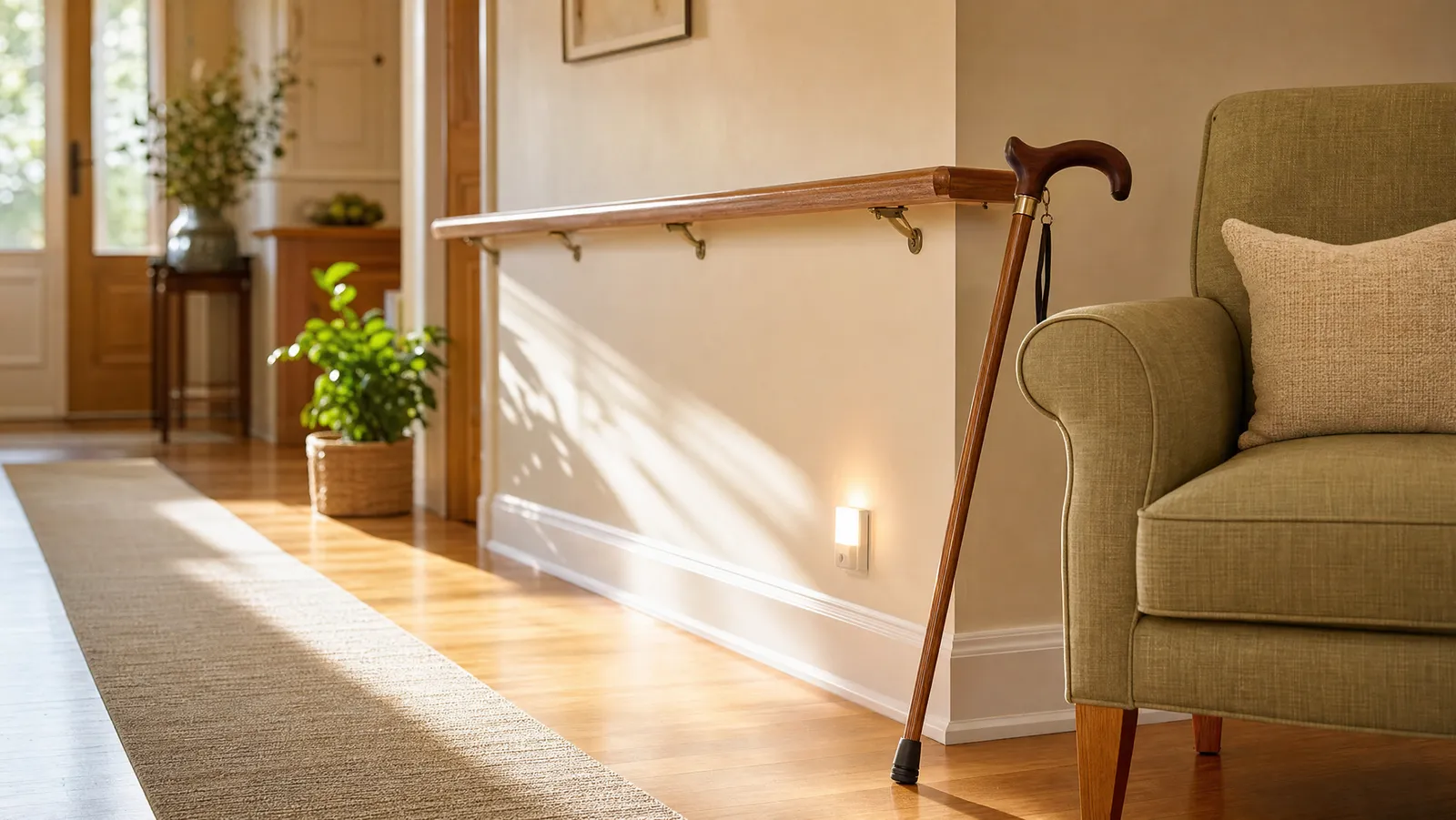
Affiliate disclosure: This article contains affiliate links. As an Amazon Associate we earn from qualifying purchases, at no extra cost to you. Learn more.
The most effective fall prevention tool in your house is not a grab bar. It is your own ability to stand on one leg. Fall prevention for seniors comes down to a short list: train balance and strength two or three times a week, get your medication list reviewed, fix the lighting and the loose rugs, and wear real shoes indoors. Equipment supports that work. It does not replace it.
What follows is the whole picture in the order we would work through it, with the numbers attached to their sources. We are a research desk, not a clinic, so treat this as the map you bring to your next appointment rather than a substitute for one.
Why Falls Are the Risk Worth Taking Seriously After 50
The scale is larger than most people expect. According to the CDC, falls caused over 43,000 deaths among adults 65 and older in 2024, making falls the leading cause of injury death in that age group, and emergency departments recorded about 4.5 million visits for older adult falls that same year.
Falls are also common rather than rare. CDC fall data puts it at over 14 million older adults, or 1 in 4, reporting a fall each year.
The trend is the part that should get your attention. The CDC reports that the age-adjusted fall death rate among older adults rose 21%, from 64.7 to 78.4 deaths per 100,000, between 2018 and 2024. This is not a solved problem that medicine quietly handled while you were busy.
If you are 50 to 70 and reading this because of a parent, read it for yourself too. Balance, leg strength, and reaction time are trainable in your fifties and sixties in a way that is harder at eighty-five. The work is cheaper now.
What Actually Causes a Fall, and Why It Is Never One Thing
A fall is almost always the result of several small deficits lining up at once. That is why single-fix thinking fails, and why the U.S. Preventive Services Task Force frames comprehensive fall prevention as something clinicians should individualize rather than apply as one protocol.
The contributors that show up repeatedly:
- Leg strength and balance. The ability to recover from a stumble rather than avoid one.
- Vision. Depth perception and contrast sensitivity decline quietly. If you have not had a dilated exam in two years, start with what changes in your vision after 50 and the quick screens in our guide to testing your vision at home.
- Hearing. In a 2012 study of 2,017 US adults aged 40 to 69 published in Archives of Internal Medicine, Frank Lin and Luigi Ferrucci found that every 10-decibel increase in hearing loss was associated with 1.4-fold higher odds of reporting a fall in the previous 12 months, with a mild 25-decibel loss associated with nearly threefold higher odds. That study was observational, so it shows association rather than cause. Still, it is a reason to run a hearing check at home, and untreated hearing loss carries other long-term risks worth knowing about.
- Medications. The most under-examined item on the list, covered in detail below.
- Blood pressure that drops when you stand.
- Footwear and what you walk on at home.
- General mobility loss, which compounds everything else. Our primer on mobility and aging covers why range of motion matters as much as strength.
Three of these are free to check and two cost nothing to fix. That is the useful part of the multifactorial picture.
What to Do First, This Weekend
If you only do five things, do these.
- Answer the three screening questions in the next section honestly.
- Time yourself standing from a chair, walking about 10 feet, turning, and sitting back down.
- Photograph your own stairs, bathroom, and bedroom path to the toilet, then look at the photos. You will see hazards in a photo that you walk past daily.
- Put every pill, patch, supplement, and over-the-counter sleep aid in a bag and book a medication review.
- Buy indoor shoes and stop walking around in socks.
None of that takes a weekend. The thing that does take time is the exercise, which is also the thing that works, so start it this week rather than after the audit.
How to tell if you are at risk of falling
The CDC's STEADI initiative screens with three questions, and a yes to any one of them flags you for further assessment: have you fallen in the past year, do you feel unsteady when standing or walking, and do you worry about falling.
That last question does real work. Worry about falling is itself a risk marker, partly because it leads people to move less, which erodes the strength that was keeping them upright.
If you screen positive, the next layer is three functional tests. According to the American Family Physician 2024 review of falls in older adults, an affirmative answer to any STEADI question calls for further evaluation with the Timed Up and Go, the 30-Second Chair Stand, and the Four-Stage Balance Test. MedlinePlus describes the Timed Up and Go as standing from a chair, walking about 10 feet, and sitting back down, and notes that taking 12 seconds or more may mean higher fall risk.
You can run versions of all three yourself with a chair, a stopwatch, and a wall to steady against. We walk through the protocols and what the numbers mean when you test your balance at home.
See a clinician promptly rather than self-managing if you have fallen twice in a year, fallen once with an injury, blacked out or nearly blacked out, or if a fall came with chest pain, new weakness, slurred speech, or a head strike while on a blood thinner. Tracking the basics helps here too, and our guide to the health numbers worth tracking after 50 covers what to bring to the appointment.
Balance and strength training that actually reduces falls
This is the intervention with the best evidence behind it, and it is not close.
In its 2024 recommendation statement, the U.S. Preventive Services Task Force recommends exercise interventions to prevent falls in community-dwelling adults 65 and older who are at increased risk, a B recommendation, concluding with moderate certainty that exercise provides a moderate net benefit. That statement replaced the Task Force's 2018 version.
The size of the effect comes from Cochrane. The 2019 Cochrane review by Sherrington and colleagues pooled 59 trials and found that exercise programmes reduced the rate of falls by 23% (95% confidence interval 17% to 29%) and reduced the number of people experiencing at least one fall by about 15%, both rated high-certainty evidence.
The type matters more than the volume. Cochrane's authors reported high-certainty evidence specifically for programmes mainly involving balance and functional exercises, while programmes mixing several exercise types had less certain results. The Task Force's own evidence review noted that gait, balance, and functional training were the most common exercise types in the trials, followed by strength and resistance work, and that sessions were most commonly scheduled two to three times per week.
Tai chi deserves a specific mention. In a 2018 randomized trial of 670 adults aged 70 and older published in JAMA Internal Medicine, Fuzhong Li and colleagues found that a therapeutic tai ji quan programme delivered as two 60-minute classes a week for 24 weeks produced a fall incidence rate ratio of 0.42 against a stretching control, a 58% lower fall rate, and also beat a multimodal exercise programme.
What that looks like in practice, with the full progressions laid out in our guide to balance exercises for seniors:
- Balance work, most days. Single-leg stands at the kitchen counter, heel-to-toe walking, sit-to-stands without hands. Our daily mobility routine is a reasonable base to build on.
- Lower-body strength, twice a week. Chair squats, step-ups, calf raises. Resistance bands are the cheapest way to add load at home.
- Enough protein to make the strength work stick. See how much protein you need after 50.
- Progression. Holding a counter with two fingers instead of two hands is progression. So is closing your eyes for three seconds.
Find a class if you can. The trials that produced those numbers ran supervised sessions for months, not a video watched twice.
One item to cross off your list: vitamin D. The Task Force's 2018 statement recommended against vitamin D supplementation to prevent falls in community-dwelling adults 65 or older, a grade D recommendation. The 2024 falls statement deliberately does not address vitamin D, noting that the evidence will be reviewed in a separate recommendation that is in progress, and in a December 2024 draft of that separate statement the Task Force again proposed recommending against vitamin D to prevent falls in community-dwelling postmenopausal women and men 60 and older. The American Family Physician review summarises the supporting data as a nationwide study of more than 25,000 people without deficiency in which supplementation did not decrease the risk of falls. None of that means vitamin D is useless for other purposes, and treating a diagnosed deficiency is a separate question for your doctor. We cover the broader picture in our guide to vitamin D3. It is simply not a fall prevention strategy.
The fall risk nobody checks: your medication list
Clinicians call them FRIDs, fall-risk-increasing drugs. In a 2021 systematic review published in BMJ Open, Lee and colleagues listed antihypertensives, antiarrhythmics, anticholinergics, antihistamines, sedative-hypnotics, and antipsychotics among them, with antidepressants, opioids, and non-steroidal anti-inflammatory drugs also named, and described the proposed mechanisms as cardiovascular or central nervous system effects such as orthostatic hypotension.
Here is the honest complication. That same review found that deprescribing FRIDs did not significantly change the rate of falls, the incidence of falls, or the rate of fall-related injuries over 6 to 12 months of follow-up, and its authors judged the evidence too weak to confirm or rule out a benefit. Most of the link between these drug classes and falls comes from observational data, where dose, duration, and confounding are hard to untangle.
So the takeaway is not "stop your pills." It is narrower and more useful:
- Bring everything to one review. Prescriptions, over-the-counter antihistamines, sleep aids, and supplements. Multiple prescribers is how interactions survive.
- Ask specifically about sedating medications and anything taken for sleep. The sedating antihistamines in many night-time formulas are anticholinergic.
- Ask whether any blood pressure medication is being pushed harder than your standing blood pressure can support.
- Never stop or taper a prescription on your own. Abrupt discontinuation of some of these classes carries its own risks.
The American Family Physician 2024 review advises avoiding polypharmacy and fall-risk-increasing drugs where possible, which is a clinician's judgement call rather than a rule you can apply at the kitchen table. We cover which medications that increase fall risk come up most often, and what the alternatives usually are, in a dedicated article.
Dizziness, vertigo, and blood pressure drops
If the room moves when you stand up, that is a fall risk with a name and often a fix.
Orthostatic hypotension is usually defined as a sustained drop in systolic blood pressure of at least 20 mm Hg, or diastolic of at least 10 mm Hg, after standing. A 2022 analysis of the Irish Longitudinal Study on Ageing published in Age and Ageing used that definition, measured at 30, 60, and 90 seconds after standing, and found that even asymptomatic orthostatic hypotension was independently associated with unexplained falls.
That last detail matters. You do not need to feel dizzy for the blood pressure drop to be dropping you.
What to do:
- Measure sitting and standing, not just sitting. Take a reading seated, then stand and take readings at one and three minutes. Our guide to measuring blood pressure at home covers cuff position and the common errors that make home numbers useless.
- Stand in stages. Sit on the edge of the bed, pump your ankles, then stand.
- Watch the heat and the alcohol. Hot showers and a glass of wine both widen blood vessels.
- Treat true spinning differently. Brief, intense vertigo triggered by rolling over in bed behaves differently from a blood pressure drop and is often treatable with a positioning manoeuvre a clinician can perform. Do not self-diagnose it.
Red flags that mean a call rather than a wait: fainting, vertigo with new hearing loss, double vision, severe headache, or dizziness that arrives with chest pain or palpitations. We go deeper into dizziness and vertigo after 50, including what the common causes look like, in a separate guide.
A room-by-room home safety audit
Home modification works, with a catch worth understanding. A 2023 Cochrane review of environmental interventions found that home fall-hazard interventions reduced the overall rate of falls by 26% (rate ratio 0.74, 95% CI 0.61 to 0.91) across 12 studies and 5,293 participants, rated moderate-certainty evidence.
The catch: that review found the effect was larger, a 38% reduction, when participants were selected for higher fall risk, and found no evidence of a reduction in the rate of falls when people were not selected for fall risk. In other words, home modification pays off most for people who already have reason to worry. If you screened negative on all three STEADI questions, spend your effort on the exercise first.
When you do the walkthrough, go room by room:
- Entryways. A chair or bench to sit on while changing shoes. A level threshold. A light you can reach before you step in.
- Stairs. Handrails on both sides that extend past the top and bottom step. Contrast on the stair edges. Nothing stored on the treads. A switch at both ends.
- Hallways and living areas. Remove throw rugs or tape them down on all four edges. Reroute every cord. Clear a walking lane wide enough that you are not turning sideways.
- Bedroom. A lamp or motion light within arm's reach of the bed. A clear path to the bathroom with nothing in it. A bed height that lets your feet reach the floor with knees bent.
- Kitchen. Everyday items between hip and shoulder height. No step stools without a handrail. Spills cleaned immediately.
- Outdoors. Even paving, no moss on the steps, a rail at the porch, and a plan for ice.
Print a home safety checklist and do the walkthrough with someone else, because the hazards in your own house are invisible to you by now.
The bathroom is the highest-risk room in the house
Hard surfaces, water, and tight turns. The CDC quantified it in a 2011 MMWR report: an estimated 234,094 nonfatal bathroom injuries among people aged 15 and older were treated in US emergency departments in 2008, a rate of 96.4 per 100,000, and 81.1% of those injuries were caused by falls.
The report also found that injury rates increased with age, and that where the injury happened shifted with age. Injuries in or around the tub or shower accounted for 84.5% of bathroom injuries among people aged 15 to 24 but 38.9% among those 85 and older, while injuries that happened while using the toilet went the other way, from 2.0% in the youngest group to 36.9% in the oldest.
Read that pattern as a planning instruction. Young people slip in the shower. Older people get into trouble around the toilet, which means transfers, standing up, and the trip there at 3 a.m.
The MMWR authors recommended adding non-slip surfaces in tubs and showers and installing grab rails inside and outside the tub or shower and next to the toilet if needed. In practice we would add:
- A path light or motion-activated night light from bed to toilet.
- A handheld shower head, which lets you wash sitting down.
- A shower chair or bench if standing for a full shower is tiring.
- A bath mat with real suction, replaced when the cups stop gripping.
- A raised toilet seat or a toilet safety frame if standing up takes a push off the sink.
Nothing in that list is expensive, and the trip to the toilet at night is the single most common scenario we would design around. Our full bathroom safety for seniors guide walks the room fixture by fixture.
Grab bars and bathroom support
Install them properly or do not bother. The useful specifications come from accessibility design rather than medicine: under section 609 of the 2010 ADA Standards for Accessible Design, grab bars are mounted 33 to 36 inches above the finished floor measured to the top of the gripping surface, circular bars have an outside diameter of 1.25 to 2 inches, the space between the wall and the bar is 1.5 inches, and the bar and its mounting must withstand a 250-pound force without failure.
Those numbers are a design standard for public accessible bathrooms, not a prescription for your house, but they are the best available answer to "how high and how thick."
What we would look for:
- Mounting into structure. A bar rated for 250 pounds is irrelevant if it is anchored in drywall alone. Studs, blocking, or a proper heavy-duty toggle system.
- A textured or peened grip, because a polished bar is slick when wet.
- Length and placement that match the movement. A vertical bar at the shower entry helps you step in. A horizontal bar helps you steady. A diagonal bar is a compromise that does neither well.
- Not a towel bar, and not a suction cup, which can release without warning on tile grout lines.
Be clear-eyed about the evidence. Grab bars are a sensible engineering response to a documented hazard, and the CDC recommends them, but we did not find trial evidence showing that installing grab bars by itself lowers a person's fall rate. They are also not FDA-approved or FDA-regulated as a fall prevention class, so treat any marketing that implies otherwise as marketing. Coverage questions come up constantly here, and our guide to what Medicare, FSA, and HSA accounts actually cover explains where bathroom modifications usually fall. When the picks matter, see our roundup of the best grab bars for seniors.
Footwear is the cheapest fall prevention you can buy
The MOBILIZE Boston study looked at what people were wearing when they fell at home, and reported that 51.9% of in-home falls happened while the person was barefoot, in socks without shoes, or in slippers. Its authors concluded that it may be advisable for older individuals to wear shoes in their home whenever possible to minimize the risk of falling.
That is observational, and people who shuffle around in socks differ from people who lace up. But it is the cleanest cheap intervention on this page: buy a second pair of shoes and leave them by the bed.
According to a systematic review by Menant and colleagues in Gerontology, older people should wear shoes with low heels and firm, slip-resistant soles both inside and outside the home, and a higher collar around the ankle can help balance during more demanding tasks. Thick, soft soles may also reduce the sensory feedback your feet use to sense the ground.
Now the honest caveat. The same literature notes that systematic reviews have found the evidence inadequate to link any particular footwear style with falls, and the randomized trials that exist are small. One trial of minimal footwear found no significant difference in fall incidence at one year and its authors said it was underpowered to detect one. So the sole-and-heel guidance is reasoned, not proven.
What we would avoid regardless: backless slippers, smooth-soled socks, high heels, and shoes you have to shuffle to keep on. Our picks for non-slip shoes for seniors cover what holds up for indoor and outdoor wear.
Canes, walkers, and walking poles
Height is the whole ballgame, and most canes we see in the wild are wrong. The standard fitting reference is the wrist crease: stand upright in your normal walking shoes with your arms relaxed at your sides, and the top of the handgrip should sit level with the crease of your wrist, which puts a slight bend in the elbow. Mayo Clinic gives the same check for walkers, describing a correctly fitted walker as one whose top lines up with the crease on the inside of your wrist.
Two practical notes. Shoe heel height changes that measurement, so measure in the shoes you will actually wear. And a cane that is too tall pushes your shoulder up, which makes the support it gives you less effective.
Beyond height:
- Get fitted and trained by a physical therapist if you can. The American Family Physician 2024 review lists appropriate use of ambulation devices among the elements of reducing fall risk, and "appropriate" is doing real work in that sentence.
- Match the device to the problem. A single-point cane is for mild steadying. A four-wheeled rollator with brakes and a seat is for endurance and for people who need to rest. A quad cane sits between them and is less stable on stairs than it looks.
- Replace worn tips. A rubber cane tip is a consumable.
- Walking poles are a different tool. They suit outdoor walking and hills, not indoor transfers.
Device use in observational data looks worse than it is, because the people using canes and walkers were already at higher risk. That does not mean the device caused the falls. It does mean a device is a support for a body you are still training, not a replacement for the training. We cover how to choose a cane or walker, including when a rollator beats a cane, in a dedicated guide.
Balance trainers, boards, and wobble cushions
The honest answer is that the evidence here is thin. A 2021 systematic review from Bournemouth University pooled six studies with a combined 129 participants and found conflicting results, with average improvements of 4.4% on balance scales such as the Berg Balance Scale and 6.3% on timed-up-and-go. Its authors described the magnitude of real change as often small and called for work on what an optimal wobble board programme would even look like.
One small randomized trial of 32 community-dwelling adults aged 65 to 92 reported that the wobble board group decreased its falls risk score by 36% while controls did not improve. That is a single small study with a surrogate outcome, not a falls trial.
So: a balance pad or wobble cushion is cheap, takes up no space, and gives you a way to make a single-leg stand harder once the floor version is easy. We would use one that way. We would not buy one expecting the 23% fall reduction Cochrane found for structured balance and functional programmes, because unstable-surface training has not been shown to deliver that. If the choice is a gadget or a class, take the class.
Also worth saying plainly: these products are not regulated as fall prevention devices, so the claims on the box are not pre-reviewed by a regulator. We take the question do balance trainers work device by device in a separate piece, including which ones are really just furniture.
Medical alerts and automatic fall detection
The thing a medical alert is really for is the long lie. Lying on the floor for an hour or more after a fall is the threshold most commonly used, though a 2022 systematic review in International Emergency Nursing found the consequences of a long lie are still poorly understood. The cohort data behind it links long lies to serious injury, hospital admission, and moves into long-term care.
Alarms only help if they are worn and used, and the data on that is discouraging. An English cross-sectional analysis of 3,091 community-dwelling adults aged 65 and older who already reported difficulty with mobility or daily activities found that 180 people, about 6%, used a personal call alarm, and a UK prospective study found that call alarms were widely available but were not used in most falls that led to a long lie.
Automatic detection is the feature people pay extra for, and it is imperfect. Published validation data is scarce. One nursing-home evaluation of a pendant-worn detector reported that 87% of the 128 events it flagged over six months were false positives, and an NIH-funded development project was justified explicitly by the lack of publicly available studies documenting the sensitivity and false alarm rate of commercially available fall detection.
We did not find any trial showing that automatic fall detection reduces injuries, hospitalizations, or deaths. What it plausibly does is shorten the time you spend on the floor, which is the mechanism that turns a survivable fall into a hospital admission. That is a reasonable thing to buy on, as long as you buy it for that reason.
If you are shopping:
- Choose the form factor you will actually wear, including in the shower, since that is where you want it most.
- Check cellular coverage at your address before committing to a mobile unit.
- Expect false alarms and make sure cancelling one is easy.
- Ask what happens if you do not answer. The call tree matters more than the sensor.
- Check the monthly cost against coverage. Our guide to what Medicare, FSA, and HSA accounts cover explains why most monitoring subscriptions come out of pocket.
Our comparison of medical alert systems with fall detection covers the trade-offs between pendants, watches, and in-home units.
What We Would Actually Do
In priority order, because the order is the advice:
- Start supervised balance and functional training two to three times a week and keep doing it. This is the only item on this page with high-certainty Cochrane evidence behind it and a B recommendation from the Task Force.
- Book a medication review and bring everything, including the over-the-counter sleep aids.
- Get your vision and hearing checked if it has been more than two years.
- Measure your blood pressure standing as well as sitting.
- Do the room-by-room audit, prioritising the bathroom and the night-time path to it.
- Buy indoor shoes.
- Then, and only then, consider equipment: grab bars installed into structure, a properly fitted cane or walker, a medical alert if you live alone.
Falls are multifactorial, so expect a modest gain from each of several changes rather than a fix from one. And if you have already fallen in the past year, that single fact puts you in the group where almost everything on this page works better, which is a reason to act rather than a reason to despair.
Talk to your doctor before starting a new exercise programme, changing any medication, or treating dizziness as benign.
Explore the full series
- How to Test Your Balance at Home: 4 Fall-Risk Self-Checks After 50 — Four self-checks clinicians use, and the published cut-off number for each.
- The Best Grab Bars for Seniors in 2026: Picks for Bath and Bedside — Six picks for tub, shower, toilet and bedside, plus the mounting rules that matter.
Keep reading
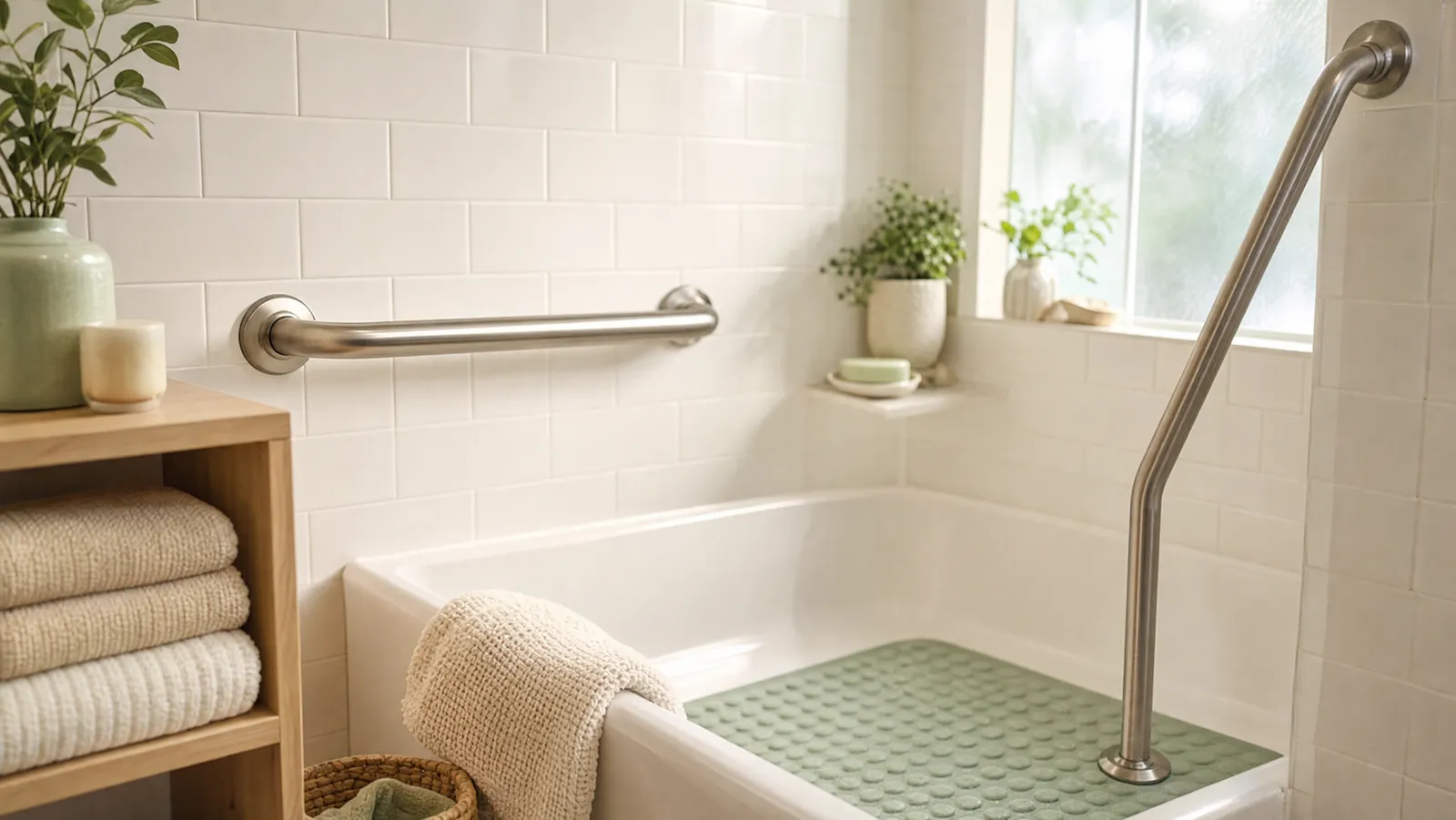
The Best Grab Bars for Seniors in 2026: Picks for Bath and Bedside
The best grab bars for seniors in 2026: six picks for tub, shower, toilet and bedside, plus load ratings, mounting heights and the suction-cup caveat.
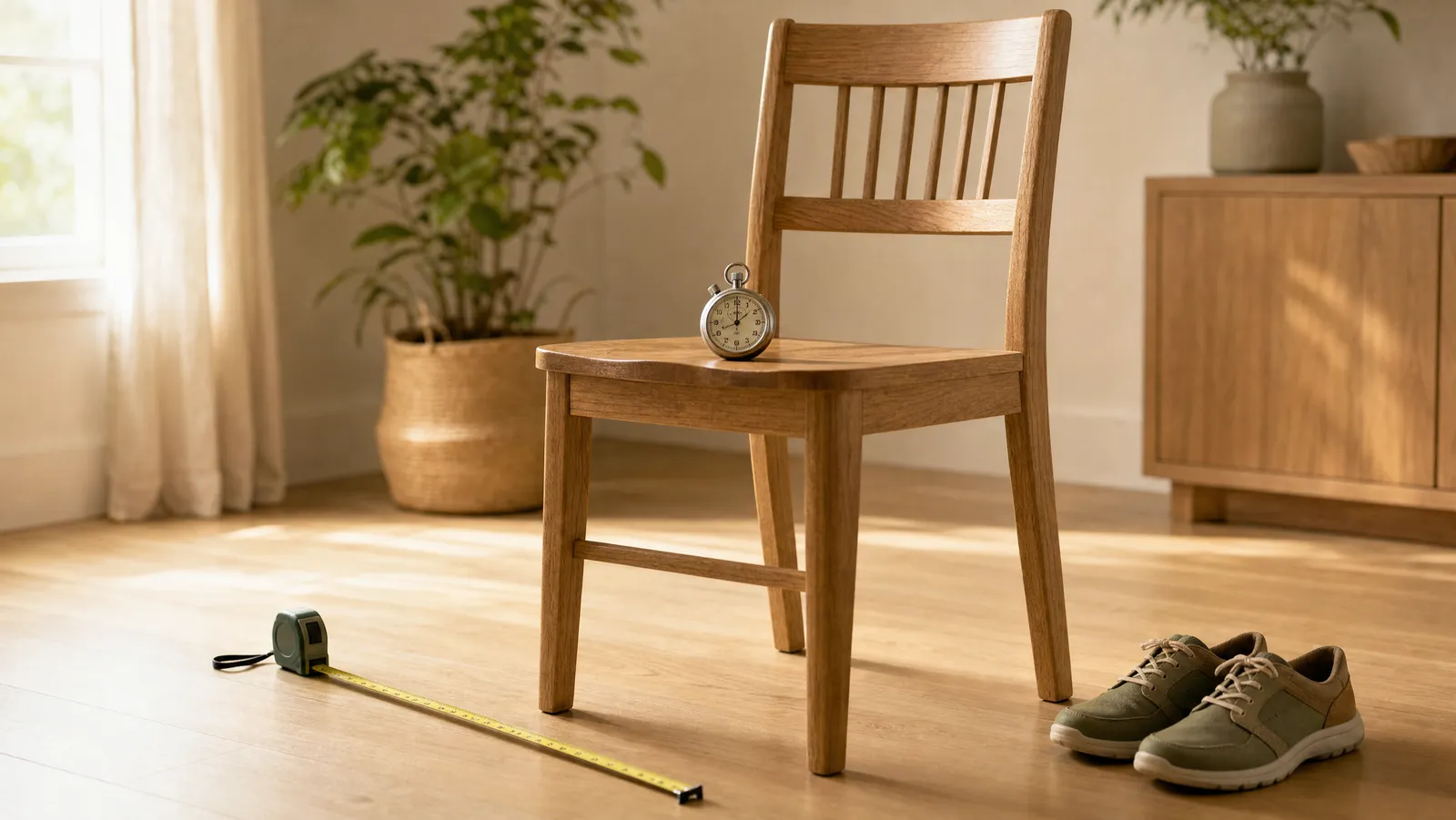
How to Test Your Balance at Home: 4 Fall-Risk Self-Checks After 50
How to test your balance at home: four tests clinicians use, the published cut-off number for each, and the results that mean see a doctor.
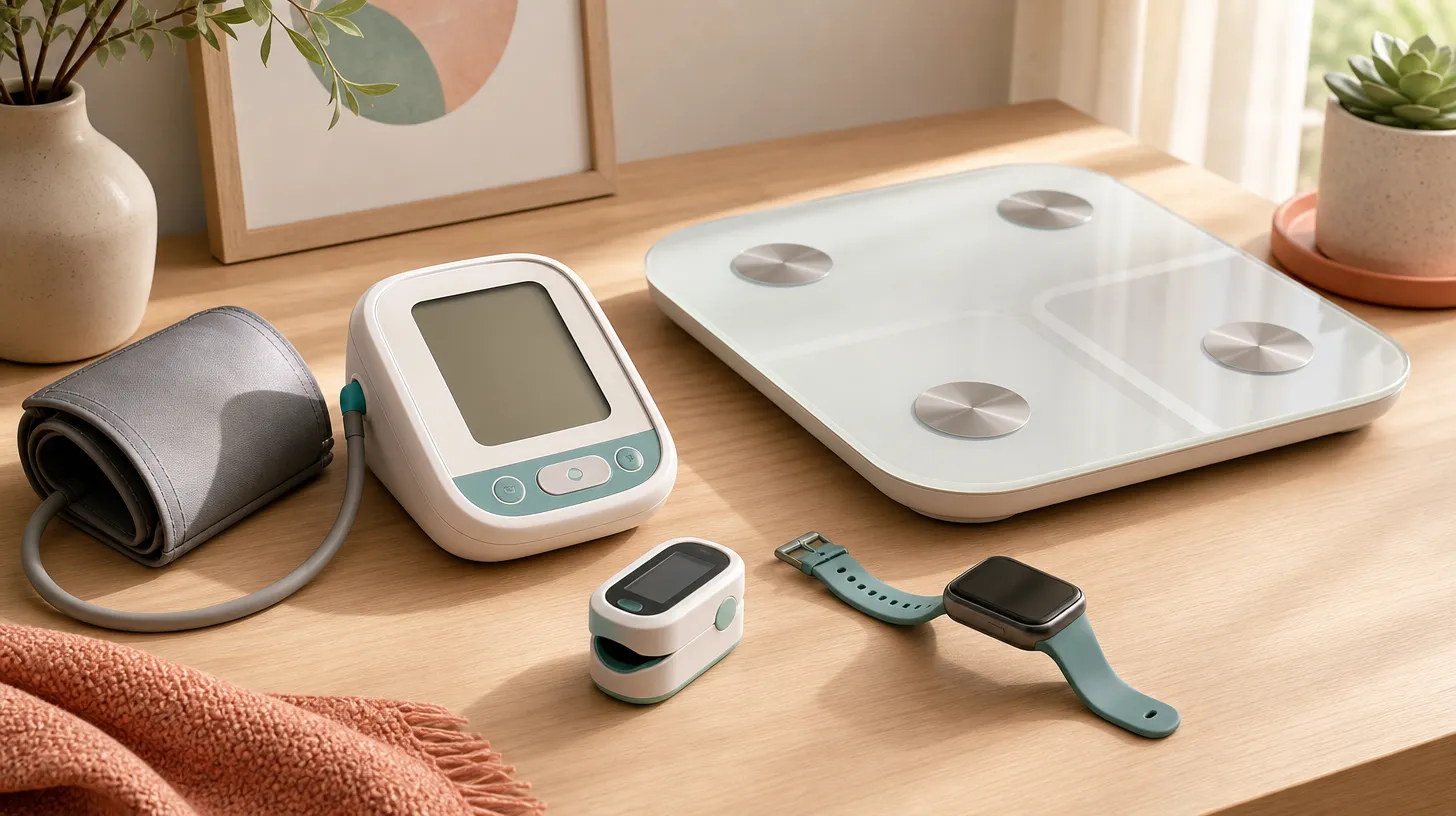
The Best At-Home Health Monitoring Devices for Seniors: A Complete Guide (2026)
The best home health monitoring devices for seniors in 2026: blood pressure monitors, pulse oximeters, smart scales, ECG and glucose monitors explained.