Smart Rings vs. Smartwatches for Health Tracking: Which Is Right for You?
Smart ring vs smartwatch: rings win on comfort, sleep tracking, and battery life; watches win on real-time data, GPS, and safety. Here is how to choose.

Affiliate disclosure: This article contains affiliate links. As an Amazon Associate we earn from qualifying purchases, at no extra cost to you. Learn more.
◆ The verdict
3 reviewed- 1Best Smart RingOura Ring 5 Smart Ring - Sleep, Activity, Heart and Metabolic Health TrackingCheck price ▸
- 2Best Subscription-Free RingRENPHO Lynx Smart Ring, Subscription-Free App, Black, Size 10Check price ▸
- 3Best SmartwatchGarmin vivoactive 5, Health & Fitness GPS Smartwatch, 42mm, IvoryCheck price ▸
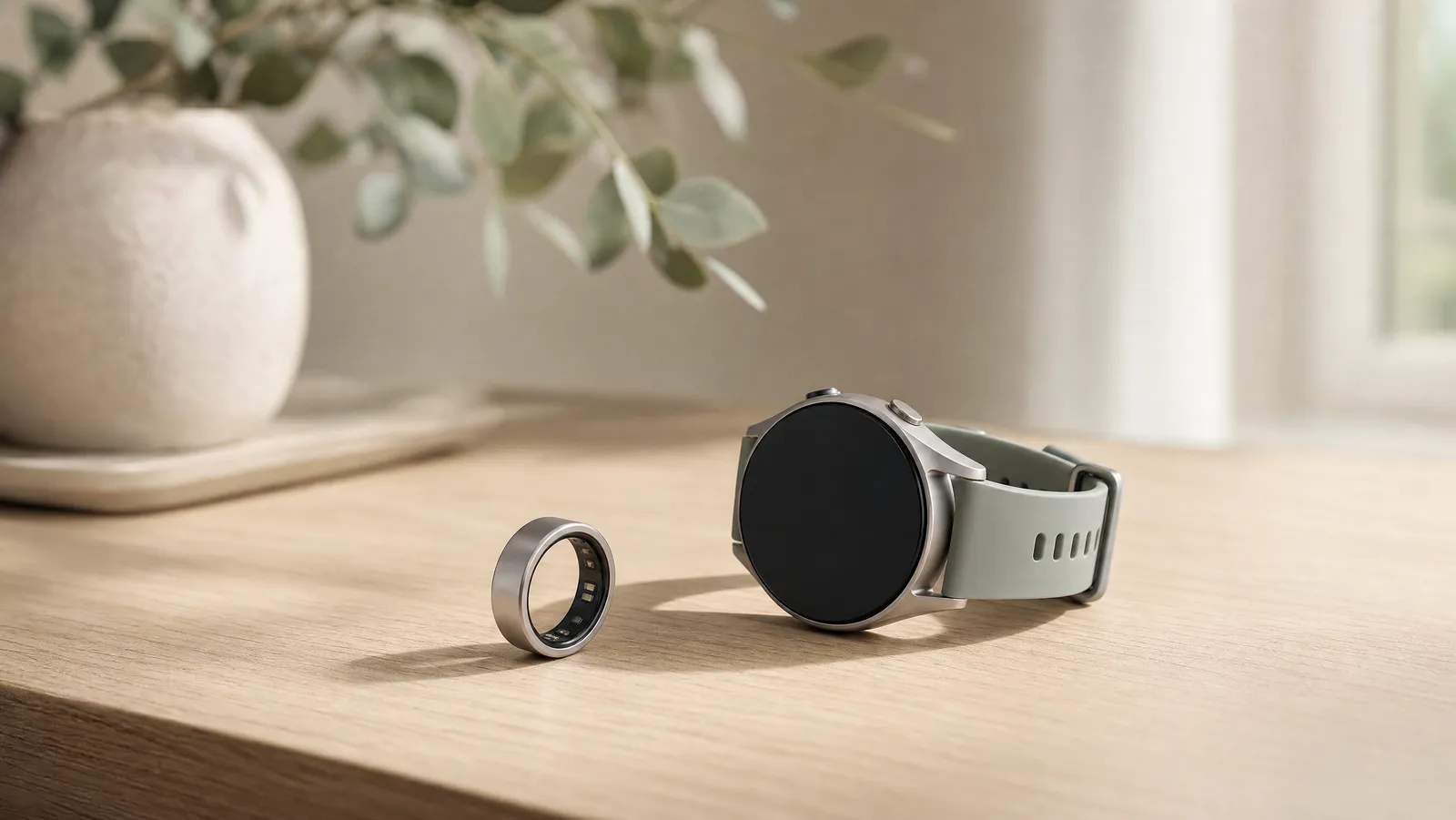
Smart ring vs smartwatch comes down to a single question: do you want a device that monitors you quietly in the background, or one you actively look at? Rings win on comfort, sleep and recovery tracking, and battery life. Watches win on real-time data, screens, GPS, workout modes, and safety features. We may earn a commission from links on this page, at no cost to you.
That is the short version, and for a lot of readers it is the whole answer. But the trade-off runs deeper than the marketing on either side admits, and several of the deciding factors — subscription fees, sizing kits, how long each device actually lasts between charges — rarely show up in a spec comparison. For the wider picture of what belongs in a home setup, see our guide to at-home health monitoring devices.
Rings are no longer a niche, either. According to Fortune Business Insights, the global smart ring market was valued at $416.9 million in 2025 and is projected to reach $518.9 million in 2026, growing at a 29.3% compound annual rate through 2034. That is why the comparison suddenly matters to people who never considered a ring before.
The core trade-off is decided by where you wear it
Form factor is not cosmetic here. It determines what each device can physically measure.
A ring sits on a finger. Ring makers point to the finger's dense capillary bed as an advantage for optical (PPG) sensing when you are still — which describes most of the night — and the resting heart-rate validation data below is consistent with that. But a finger has no room for a screen, a GPS antenna, a speaker, or a large battery, and your hand moves far more independently than your wrist does, which makes exercise readings noisier.
A watch sits on a wrist, where the device has room for everything else: a display, satellite positioning for distance and pace, additional sensors, and a battery big enough to run them. The wrist is also a socially normal place to glance at information, which is why a watch can nudge you mid-day and a ring cannot.
Nearly everything else in this comparison follows from that one difference.
Rings own the overnight hours
The strongest argument for a ring is not sensor physics. It is compliance. People wear rings to bed. Plenty of people take watches off at night — to charge them, or because a slab of metal and glass is unpleasant against a pillow. A device that is not on your body collects nothing.
That matters because the most useful healthy-aging metrics are overnight metrics:
- Resting heart rate, captured during your quietest hours
- Heart rate variability (HRV), a rough proxy for recovery and autonomic balance
- Sleep duration and continuity — how long you slept and how often you surfaced
- Skin temperature trend, useful mainly as a deviation from your own baseline
Read as trends across weeks, those numbers can hint that you are under-recovered, fighting something off, or sleeping worse than you think. Read as single-night verdicts, they mostly manufacture anxiety.
The Oura Ring 5 is the clearest illustration of the category: an all-titanium band tracking more than 50 metrics on 6 to 9 days of battery, at $399 as of August 2026 plus the membership fee we cover below. If sleep data specifically is what you are after, our roundup of the best sleep trackers compares rings, watches, and bedside options side by side.
Watches own the daytime
Everything a ring cannot do, a watch does.
Real-time feedback. A screen shows your heart rate mid-interval, your pace on the last mile, or how far you are from a step goal. Rings report after the fact, in an app.
Built-in GPS. A watch with its own satellite chip records distance, pace, and route with no phone involved. Rings lean on the phone in your pocket, which means no phone, no route.
Structured workouts. Sport-specific modes, laps, intervals, and heart-rate zones. The Garmin vivoactive 5 carries more than 30 built-in indoor and GPS sport apps and asks no subscription for its core features, at $194.99 as of August 2026 (list $299.99) — meaningfully less than the flagship ring.
Safety and rhythm features. Some watches add fall detection, emergency SOS, and an ECG app. These have the clearest case for older adults, but it is worth being precise about what they do. The FDA cleared Apple's ECG app through the De Novo pathway as a Class II device for over-the-counter use, and not for people under 22. Apple's instructions for use state that alerts from the related irregular-rhythm notification feature are "potential findings, not a complete diagnosis of cardiac conditions," and that the feature "is not intended to replace traditional methods of diagnosis or treatment." A wearable can start a conversation with your doctor; it does not replace one. If heart rhythm is your particular concern, dedicated at-home ECG monitors are a more focused tool.
Accuracy: what the research actually supports
This is where marketing outruns evidence in both directions.
According to a living umbrella review that pooled 24 systematic reviews — 249 validation studies and more than 430,000 participants — consumer wearables land roughly here:
- Heart rate: mean bias of about 3% against reference standards. Genuinely good.
- Step count: mean absolute percentage errors from roughly -9% to 12%, with a tendency to undercount.
- Sleep duration: mean absolute percentage error typically above 10%, with a tendency to overestimate how long you slept.
- Blood oxygen: mean absolute difference of up to about 2%.
- Energy expenditure: the weakest metric by a wide margin — errors reported from about -21% to +15% in that review, and other systematic reviews put mean absolute percentage error above 30% for every brand tested.
The authors' own conclusion deserves repeating: a conclusive assessment of wearable accuracy "is impeded by pervasive heterogeneity in research outcomes and methodologies." Treat any single manufacturer's accuracy claim with that in mind.
Two findings speak directly to rings versus watches. A 2025 validation study using a Polar H10 chest-strap ECG as the reference reported the lowest error for nocturnal resting heart rate from Oura's Gen 3 and Gen 4 rings (mean absolute percentage error of 1.67% and 1.94%) compared with 2.71% for the Polar Grit X Pro and 3.00% for WHOOP 4.0, with Oura's two rings again the most accurate for overnight HRV. And in a 35-participant, single-night study run by Brigham and Women's Hospital researchers and published in Sensors — funded by Oura, with a lead author who sits on the company's medical advisory board — the Oura Ring scored highest for four-stage sleep classification against laboratory polysomnography, with a Cohen's kappa of 0.65 versus 0.60 for Apple Watch and 0.55 for Fitbit Sense.
Read that last number carefully. A kappa of 0.65 was the best result in the group, and it still represents meaningful disagreement with the lab standard. No consumer wearable — ring or watch — stages sleep the way a sleep lab does. Total sleep time is the figure these devices get closest to right; deep and REM breakdowns are better treated as trends than measurements. None of them is a diagnostic device, and none should be used to self-diagnose a sleep or heart condition.
The subscription question
This is the most under-discussed cost in the category, and it can flip the math entirely.
The Oura Ring 5 requires an Oura membership. The first month is included for new members; after that it is $5.99 per month, billed against your account rather than the ring. Over three years that is roughly $210 — 35 paid months — on top of a $399 device.
Subscription-free alternatives exist on both sides of the comparison. The RENPHO Lynx is a titanium, 5ATM-rated ring that pairs with a free app syncing to Apple Health and Google Health Connect, at $168.98 as of August 2026 (list $199.00). On the watch side, the vivoactive 5's core features carry no fee either.
The honest caveat: you are not only paying for hardware. A membership funds the algorithms and the validation work, and the peer-reviewed accuracy record described above belongs to the expensive ring, not the inexpensive one. Whether that gap justifies $5.99 a month depends on how much you actually intend to act on the data.
Battery and charging in practice
"Watches need charging every night, rings last a week" is half-true at best.
Rings do last well: the Oura Ring 5 is rated at 6 to 9 days, and the RENPHO Lynx at seven days with a charging case that holds a spare charge. But the vivoactive 5 is rated at up to 11 days in smartwatch mode — longer than either ring — and five days with the display always on.
The cliché really describes one specific kind of watch: the always-on, bright-screen, app-running smartwatch that lasts a day or two. Fitness-first watches routinely outlast rings. If overnight data is your goal, check the rated battery life of the specific model rather than assuming the form factor settles it.
Sizing is the ring's biggest friction point
Rings cannot be resized. That is a larger inconvenience than it sounds.
Both rings here require the manufacturer's own sizing kit before ordering, and Oura's sizing differs not only from standard jewelry sizes but from its own earlier generations. You wait for a kit, wear a plastic dummy ring for a day or two — including overnight, since fingers change size through the day — then order the real thing.
Fingers also swell: in heat, after salty meals, on flights, with certain medications, and with some forms of arthritis. A ring that fits in March can be tight in July. Anyone whose finger size moves a lot, or who works with their hands around machinery, may simply be better served by a wrist device. Watch bands adjust in seconds.
Matching the device to how you actually live
- Sleep and recovery focused. Ring. You will keep wearing it overnight, which is the whole game.
- Workout focused. Watch. Live heart-rate zones, GPS pace, and sport modes are not optional if you train, and hand movement leaves a ring's exercise data approximate.
- Safety focused. Watch. Fall detection, emergency SOS, and rhythm checks live on the wrist. Our guide to the best fitness trackers for seniors goes deeper on which of those features matter most with age.
- Budget focused. Either, but count the subscription. A subscription-free ring or a mid-range watch costs less over three years than a flagship ring plus membership.
- You dislike wearing things. Ring. It is the only wearable most people genuinely stop noticing.
- You want one device for everything. Watch, and accept softer sleep data.
Wearing both, and whether that is worth it
Some people wear a ring at night and a watch by day. It works, and it plays to each device's strengths.
We think that combination earns its keep for a narrow group: people training seriously enough to need on-wrist workout data who also want the best overnight numbers available. For everyone else it means two apps, two charging routines, two purchases, and two sets of numbers that will not quite agree — because given the error ranges above, they cannot.
Start with one. Wear it for three months. If a specific question keeps going unanswered, add the second device then.
The bottom line
Choose based on when you want the data, not on which device has the longer spec sheet. If the answer is "while I sleep, without thinking about it," get a ring. If it is "while I move, and I want to see it," get a watch. Both are reasonable tools for spotting trends against your own baseline over months. Neither is a medical device, and any reading that worries you belongs in a conversation with a clinician rather than a search engine.
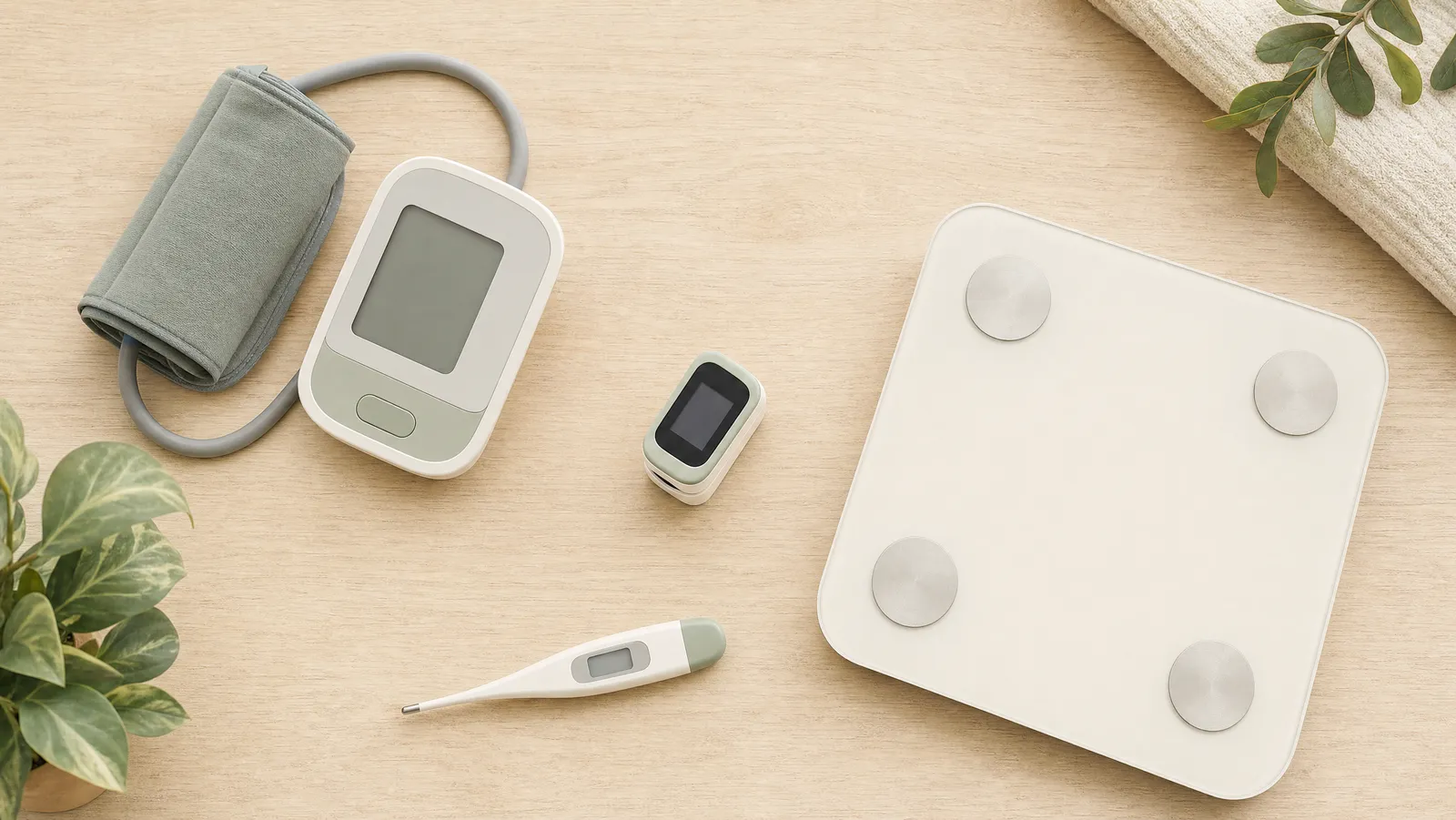
If you are still working out where a wearable fits alongside a blood pressure cuff, a scale, or a pulse oximeter, our home health monitoring guide lays out the full picture.
FAQ
Are smart rings worth it?
For overnight tracking, often yes — largely because you will actually keep wearing one to bed, and resting heart rate, HRV, and sleep duration are where the useful long-term signal lives. They are far less compelling if your main interest is workouts, real-time feedback, or safety features. Before buying, add up the total three-year cost including any subscription, and factor in the sizing-kit wait.
Which is more accurate for health tracking, a ring or a watch?
It depends on the metric and the moment. In the Oura-funded Brigham and Women's Hospital study published in Sensors, a ring outperformed two smartwatches at classifying sleep stages against laboratory polysomnography, and a separate 2025 study found ring-based nocturnal resting heart rate had lower error than several wrist devices measured against a chest-strap ECG. During exercise the picture reverses, since hand movement disturbs a ring's optical signal more than wrist movement disturbs a watch's — and research consistently finds wrist- and finger-worn optical sensors trail a chest strap for workout heart rate.
Can a smart ring or smartwatch detect a health problem?
They can surface patterns worth asking about, such as an unusual resting heart rate trend or an irregular-rhythm notification, but they are not diagnostic tools. Even FDA-cleared features are cleared for narrow, specified uses; Apple's instructions for use describe an irregular-rhythm notification as a potential finding rather than a complete diagnosis, and state that the feature is not intended to replace traditional methods of diagnosis or treatment. Bring the data to a clinician rather than drawing conclusions from it yourself.

Oura Ring 5 Smart Ring - Sleep, Activity, Heart and Metabolic Health Tracking
Oura's fifth-generation ring is 40% smaller than the previous version, with an all-titanium scratch-resistant body the maker describes as the world's smallest smart ring. It tracks over 50 health metrics spanning sleep, activity, stress, heart health, metabolic health, and women's health, and runs 6 to 9 days per charge. It integrates with more than 40 apps including Natural Cycles and Strava, works with Android and iOS, and is HSA/FSA eligible. An Oura membership is required: the first month is included for new members, then $5.99 per month, tied to your account rather than the ring. Sizing is unique to this generation, so the Oura Ring 5 Sizing Kit is required before ordering.
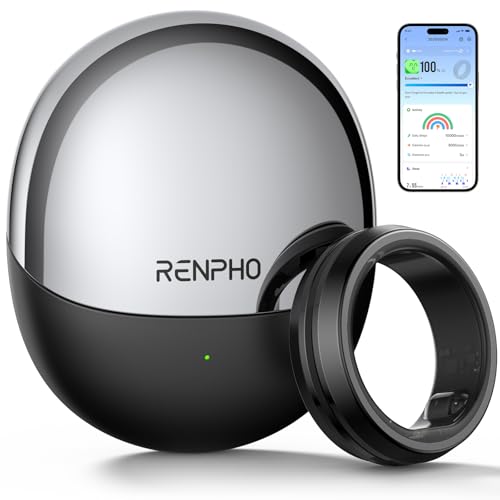
RENPHO Lynx Smart Ring, Subscription-Free App, Black, Size 10
The Lynx is a titanium smart ring with no subscription fees, pairing with the free Renpho Health app that syncs to Apple Health and Google Health Connect. It monitors sleep, blood oxygen, stress, heart rate, steps, distance, and calories burned, and tracks walking and running activities. Battery life is rated at seven days, and it ships with a charging case that holds an extra charge. A 5ATM waterproof rating covers 24/7 wear including swimming, and it is HSA/FSA eligible. Like every ring, it uses unique sizing, so RENPHO's official sizing kit is required before you buy.

Garmin vivoactive 5, Health & Fitness GPS Smartwatch, 42mm, Ivory
The vivoactive 5 pairs a bright AMOLED display with up to 11 days of battery in smartwatch mode, or five days with the display always on. It includes more than 30 built-in indoor and GPS sport apps covering walking, running, cycling, HIIT, swimming, and golf, plus wrist-based heart rate, stress tracking, fitness age, a morning report, and menstrual cycle and pregnancy tracking. Recovery-minded features include Body Battery energy monitoring, HRV status, a sleep score with personalized coaching, and automatic nap detection. A wheelchair mode tracks pushes rather than steps, with push and handcycle activities. Core features need no subscription, and you can download music from Spotify, Amazon Music, or Deezer for phone-free listening.
Keep reading
Which Health Numbers Are Worth Tracking at Home After 50?
The health metrics to track at home after 50 — blood pressure, resting heart rate, weight trend, waist-to-height ratio — and which numbers to skip.
Are Home Health Devices Covered by Medicare, FSA, or HSA?
Are home health monitoring devices covered by Medicare? Usually not. But FSA and HSA dollars cover far more. Here is what each program actually pays for.
How to Choose a Home Health Monitoring Device
How to choose a home health monitoring device: start with the health question you need answered, then buy the validated, correctly sized, readable model.