Best Medical Alert Systems With Fall Detection in 2026
The best medical alert systems with fall detection in 2026: how the sensors work, who answers the call, what Medicare covers, and five honest picks.

Affiliate disclosure: This article contains affiliate links. As an Amazon Associate we earn from qualifying purchases, at no extra cost to you. Learn more.
◆ The verdict
5 reviewed- 1Our PickADT On-The-Go Emergency Medical Alert for Seniors, All-in-One | ADT-Monitored 24/7, LTE/GPS Technology, Optional Integrated Fall Detection, IP57 Water Resistant, Home & On-the-Go SafetyCheck price ▸
- 2Best for At-Home CoverageADT Medical Alert Plus - in-Home Emergency Response System, Fall Detection | ADT-Monitored 24/7, Cellular 4G Coverage, Automatic Fall Detection, Home Temperature MonitoringCheck price ▸
- 3Best Mobile PendantMedical Alert System for Seniors - Fall Detection, GPS 4G LTE Life Necklace | Mini X3 Embedded SIM, 24/7 SOS Monitoring, Mobile App, GPS Location, Call to Activate, Safety for Mom, Dad & SeniorsCheck price ▸
- 4Best Without a Monitoring SubscriptionCOCO BT2-X V2 (October 2026) Medical Alert Smartwatch for Seniors, Fall Detection, SOS Alerts, Caregiver App, Heart Rate & SpO2 Monitor, Bluetooth Calling (Silver)Check price ▸
- 5Budget In-Home Call Button (No Fall Detection)Life Alert System No Monthly Fee, Caregiver Pager Call Button for Elderly at Home, Medical Alert Systems for Seniors with App, Panic Button Alarm System, 2.4GHz WiFi Receiver, Necklace, BraceletCheck price ▸
A medical alert system does not prevent falls. It shortens the time you spend on the floor afterwards. Automatic fall detection is the feature meant to do that when you cannot reach the button, on most systems it is an optional add-on with its own monthly fee, and the makers who describe it honestly admit it misses some falls. We may earn a commission on purchases made through links in this article, which never changes which products we pick.
The question underneath this search is simpler than the marketing: will this get help if I am on the floor and cannot reach a button? The honest answer is probably, not certainly. If you are shopping after a scare, read this alongside our guide to preventing falls after 50, because the intervention with strong evidence behind it is exercise, not electronics.
We are a research desk, not a clinic, and we did not wear these five devices. Our shortlist of the best medical alert systems with fall detection below is editorial judgement drawn from maker documentation, verifiable specifications and the peer-reviewed evidence on how fall detection performs outside a laboratory.
Automatic Fall Detection: What the Sensor Does, and What It Misses
Every device here that detects falls works the same way. An accelerometer samples movement many times a second, an algorithm looks for the signature of a fall (a rapid acceleration spike, a sudden stop, then stillness), and when it thinks it has found one it starts a countdown you can cancel. If you do not cancel, the device places a call: either to a staffed monitoring centre or to a list of contacts' phones.
The real-world accuracy numbers are more modest than the brochures.
- One long-term real-life study of an accelerometer-based fall sensor, published in Gerontology in 2015 (online in 2014), detected 12 of 15 real falls, a sensitivity of 80.0%, across roughly 15,500 hours of monitoring in 16 older people. Its false-alarm rate was 0.049 alarms per usage hour, improvable to 0.025 (about one per 40 hours) with adjusted analysis (PubMed 25138139). That is one device in one small study, not the category average.
- The lab-to-life gap is the real finding. A 2017 validation study noted that an evaluation of 13 threshold-based fall-detection methods against 29 real-world falls found considerably lower sensitivity and specificity than the same methods showed on simulated falls (PMC5498034). Falls staged onto gym mats are not the falls that happen in kitchens.
- The pooled figures carry a warning. A 2021 umbrella review in BMC Public Health by Warrington, Shortis and Whittaker found that three of its included systematic reviews reported average sensitivity of at least 93.1% and average specificity of at least 86.4% for fall detection. The same authors concluded that more high-quality research is needed to confirm accuracy in frail older people in real-world settings. The high number does not travel without that caveat.
- The makers say it too. ADT's own Amazon listing for its On-The-Go device states plainly that fall detection "does not detect 100% of falls."
The failure modes are consistent across the literature. A slow slide down a wall may never produce the acceleration spike the algorithm watches for. A fall broken halfway by catching a worktop can look like ordinary movement. Sitting down hard, or dropping the device on tile, can trigger an alert that is not a fall. And the trade-off is unavoidable: tuning for more sensitivity buys more false alarms, which is why every system gives you a countdown to cancel.
Where you wear it matters less than the marketing suggests. A 2016 study in Sensors by Ozdemir tested six body locations across 2,520 trials and found the waist most suitable, at 99.96% sensitivity with a k-NN classifier, against a best wrist result of 97.37%. The same paper cautions that studies use different datasets and algorithms, so published results cannot rank body locations. Treat placement as a comfort-and-compliance decision first.
The Thing That Matters More Than the Device Is Who Answers
Two devices can both "detect falls" and deliver completely different outcomes, because detection is the cheap part. What you are buying is the other end of the call.
A professionally monitored system connects to a staffed centre. Provider descriptions of the sequence are consistent: the press or the detected fall opens a two-way voice channel, an operator speaks through the speaker to work out what is needed, then dispatches a listed family member or emergency services. ADT says its agents are U.S.-based, sensitivity-trained, available 24/7, and give step-by-step updates to emergency contacts. Vendor-quoted response times are marketing claims, not audited figures, so we would not pick a brand on seconds.
An unmonitored system sends a push notification. That is the whole mechanism, and nobody is on duty. If your son is in a meeting, if the phone is face-down on silent, if the app's notification permission got switched off during an update, the alert lands and nothing happens.
This is where "no monthly fee" hides its catch. Genuine 24/7 professionally monitored fall detection requires a subscription. The no-fee products are one of two things: call buttons with no detection at all, or watches that detect a fall and tell a relative's phone. Both can be the right purchase. But a reader who believes "no monthly fee" means "someone is watching" has been misled.
The cost difference is the service, not the plastic. ADT's listing for Medical Alert Plus states that professional monitoring is billed $43.49 per month with fall detection monitoring and quarterly billing; 321 Alert's listing states monitoring from $34.99 per month, both as of November 2026. The Amazon price on a monitored system is hardware and activation, not the ongoing cost, and subscription pricing changes, so confirm the current rate on the activation call.
The Long Lie Is the Outcome That Actually Matters
Fall detection exists because of what clinicians call the long lie: time stuck on the floor after a fall, because you cannot get up and cannot summon help.
The best data we found on how often this happens is a prospective cohort study of 110 people aged over 90 in Cambridge, published in the BMJ in 2008 by Fleming and Brayne. Over one year, 66 participants (60%) fell at least once, reporting 265 falls. Of those falls, 82% happened when the person was alone and 66% left them unable to get up unaided, and 20 of the 66 fallers (30%) lay on the floor for an hour or more at least once.
The same study contains the most important number in this category, and it flatters nobody. Of the 143 falls in which someone who was alone could not get up, 99% (141 falls) occurred in people who already had an alarm system. In 80% of those 141 falls, the alarm was not used. Of the 38 that ended in a lie of more than an hour despite an installed alarm, 97% involved no alarm activation.
That is the real argument for automatic detection: people who own call buttons very often do not press them. It is also the reminder that a device only helps if it is on the body when it is needed.
What a long lie does afterwards is less settled than the marketing implies. A 2022 scoping review in BMC Geriatrics by Kubitza and colleagues reports that affected people are mainly diagnosed with fluid deficit, electrolyte disturbance, hypothermia, infections and skin damage, that declines in mobility and reduced activities of daily living are observed in the first three days, and that hospitalisation and mortality rates increase in the first year after the incident. The same review rated the acute-therapy studies it found as low quality. A 2022 systematic review in International Emergency Nursing by Blackburn, Ousey, Stephenson and Lui, covering older people who required an ambulance, reports that the long-term physical and clinical impacts of a long lie are poorly understood.
Read those as associations in observational data, not proof that a faster alert changes the outcome. We found no reliable evidence that medical alert systems reduce injuries, hospitalisation or death, and we will not imply there is any. The case for fall detection is a logical one about time on the floor, not a demonstrated clinical benefit.
Seven Things to Check Before You Buy
- In-home base versus mobile cellular. An in-home system covers a radius around a base station and is cheaper and simpler. A mobile device with cellular and GPS covers the pharmacy and the garden centre. Buy for where the person actually spends their days.
- Pendant, wrist or all-in-one. The published placement work mildly favours the trunk over the wrist: the 2021 BMC Public Health umbrella review reported that sensors on the trunk, foot or leg appeared to give the highest accuracy. Compliance still beats placement.
- Battery life and the charging habit. A device charging on the nightstand protects nobody. Ask how many days it runs, and whether the charger is a dock you drop it into or a cable you must line up. 321 Alert states 3 to 5 days for the Mini X3.
- Water resistance. A CDC MMWR report on nonfatal bathroom injuries using 2008 data found that 81.1% of those injuries were caused by falls, with the highest rates in or around the tub or shower. A device you remove to shower is off during some of your highest-risk minutes. Pair it with the hardware in our guide to best grab bars for seniors.
- Range inside and outside the home. ADT lists up to 600 feet for Medical Alert Plus, enough to include a yard. Check whether a quoted range is open-air or through walls, because it is usually the former.
- Cellular versus Wi-Fi versus landline. Cellular works when the home internet is down. Wi-Fi does not, and it depends on the router staying configured, a real failure point in a house where nobody is confident with technology.
- Power and internet outages. Ask how long the base station's backup battery lasts and whether it fails over to cellular, then write the answer somewhere the family can find it.
Our Picks
Five systems covering five genuinely different situations, rather than one ranked list. These are judgements from maker documentation and specifications, not hands-on testing.
ADT On-The-Go Medical Alert
Our pick for most people buying for a parent who still drives, walks the dog or goes to appointments alone. Everything is built into one device, so there is no pendant to lose and no second battery to remember, and ADT's monitoring centre is on the other end of the SOS rather than a relative's phone. The drawback is structural: integrated fall detection is an optional extra added at activation for an additional monthly cost, and ADT's listing states it does not detect 100% of falls.
ADT Medical Alert Plus
The right choice when the person is home nearly all the time. Automatic fall detection is part of the monitored plan, the range reaches up to 600 feet so the yard counts as covered, and the base also watches household temperature, alerting ADT above 105F or below 35F, which quietly catches a failed furnace in February. The limitation is what it is: a home system that does not travel.
321 Alert Mini X3
The best mobile pendant if the all-in-one shape does not suit. The embedded SIM means no card to install, 4G LTE and GPS handle location, and 321 Alert says the chunkier body is easier to hold for seniors including those with arthritis, a more honest design priority than making the device invisible. Its real cost is endurance: the maker states 3 to 5 days of battery depending on features enabled, the shortest cycle here.
COCO BT2-X V2 Smartwatch
For a reader who genuinely does not want a monitoring bill and has people close by who will answer. COCO says it detects certain serious falls and starts a 20-second countdown before alerting the designated contacts if it is not cancelled. Read the limitation before you buy, not after: those alerts go to family, caregivers or neighbours through the app, not to a professional monitoring centre, so if nobody sees the notification, nobody comes. COCO also states the V2 firmware improvements are factory-installed and not available as an upgrade for earlier editions, so an older listing of the same watch is not the same product.
TurboSense Caregiver Pager
This one is here to answer the "no monthly fee" search truthfully. It is a call button, not a detector: press the pendant or wrist button and a plug-in receiver sounds, with an app notification to connected family, over a 433MHz link TurboSense rates at up to 656 feet in open areas. For a couple where one person is usually home it is genuinely useful and cheap. For someone living alone it is the wrong product: no automatic fall detection, no monitoring, and it only pages someone already in or near the house.
Cost, Subscriptions and What Medicare Generally Does Not Cover
Budget for the subscription, not the device. The monitoring fees above, $43.49 a month per ADT's listing and from $34.99 a month per 321 Alert's, both as of November 2026, are the real number, and fall detection is often priced as an add-on to the base plan. These rates change; confirm the current one with the provider before you buy.
On insurance we have to hedge, because we could not find an official CMS or medicare.gov source for any of it. Consumer sources covering this question, including Fortune Well and the National Council on Aging, consistently report that Original Medicare (Parts A and B) does not cover medical alert systems, because the devices do not meet Medicare's definition of durable medical equipment and are treated as mainly preventive; that Medigap does not cover them either; that some Medicare Advantage (Part C) plans may cover them partially or entirely; and that most Medicaid programmes do not, though some states may cover what they call personal emergency response services. Those sources also note that whether the benefit exists at all depends on the individual plan.
So: generally not covered, with a real chance your plan is an exception. Pull up your plan's Evidence of Coverage, or call the carrier, and ask whether personal emergency response systems are covered and under which brands. For the wider picture, see our breakdown of what Medicare, FSA and HSA actually cover.
Four Things Fall Detection Will Not Do
It will not reduce your falls. Not by one. The intervention with high-certainty evidence behind it is exercise: the 2019 Cochrane review of exercise for preventing falls in community-dwelling older people found that balance and functional training lowered the rate of falls by 24% (rate ratio 0.76, 7,920 participants, 39 studies, high-certainty evidence). No device here has anything comparable behind it. Learn how to test your balance at home, then train the weakness you find.
It will not fix the house. Grab bars, lighting, a raised toilet seat and clear floors do work no device can. Our walkthrough of bathroom safety for seniors covers the room where the CDC's injury data concentrates the risk, and a home safety checklist for aging in place is the next step.
It will not work in a drawer. The BMJ cohort above is unambiguous on this: across the 141 falls where a person who was alone could not get up and did have an alarm, the alarm went unused in 80%. Whatever you buy, the purchase decision is really a habit decision. If a watch gets worn and a pendant does not, buy the watch.
It will not monitor your health. These are alert devices. The heart-rate and blood-oxygen readings on a senior smartwatch are consumer-grade estimates, not diagnostics. If tracking is the goal, our reviews of fitness trackers for seniors, smart rings vs smartwatches and home health monitoring devices are better starting points.
And fall detection is not a substitute for medical attention. If a fall involved a head strike, a blood thinner, loss of consciousness, severe pain, an inability to bear weight or new confusion, call a doctor or emergency services regardless of what the device decided. Repeated falls, new dizziness on standing or a sudden change in walking are reasons to ask a doctor for a falls assessment and a medication review.
Common Questions
Short answers to what readers ask us.
How accurate is automatic fall detection?
Accurate enough to be worth having, not accurate enough to rely on alone. A Gerontology real-life study (Kangas and colleagues, 2015) of one accelerometer-based sensor detected 12 of 15 real falls, 80.0% sensitivity, with 0.049 false alarms per usage hour (PubMed 25138139). A 2017 validation paper cites an earlier evaluation in which 13 threshold-based methods performed considerably worse on 29 real-world falls than on simulated ones (PMC5498034). A 2021 BMC Public Health umbrella review reported average sensitivity of at least 93.1% and specificity of at least 86.4% in three included reviews, while concluding more high-quality research is needed on frail older people in real-world settings. ADT's listing says its fall detection does not detect 100% of falls.
Do medical alert watches with no monthly fee really work?
They work as designed, which is not what most buyers assume. A no-fee watch such as the COCO BT2-X V2 detects a fall and notifies the contacts you nominate through its app. There is no monitoring centre and nobody on duty, so the system is exactly as reliable as the person holding the phone. If the family is in another state, pay for monitoring.
Does Medicare pay for a medical alert system?
Generally no, according to consumer sources including Fortune Well and the National Council on Aging: Original Medicare does not cover medical alert systems, because they do not meet Medicare's definition of durable medical equipment, and Medigap does not cover them either. Some Medicare Advantage plans may cover them partially or entirely, and some state Medicaid programmes may cover personal emergency response services. We found no official CMS source for this, so check your plan's summary of benefits.
Our Bottom Line
If someone you love lives alone, buy a monitored system with fall detection switched on and treat the subscription as the price of having a trained person answer. The ADT On-The-Go covers home and away in one device; Medical Alert Plus is better value if the person is almost always home. If a monthly bill is out of reach and there are attentive people nearby, the COCO watch sends automatic alerts to their phones, with the clear understanding that nobody is on duty. If someone else is usually in the house, the TurboSense pager is an honest, cheap way to be heard.
Then do the part that changes the odds rather than the response time: train balance, fix the bathroom, review the medications. Our pillar on fall prevention for seniors is where that starts. The device you buy today is the backstop behind that work, not the plan.

ADT On-The-Go Emergency Medical Alert for Seniors, All-in-One | ADT-Monitored 24/7, LTE/GPS Technology, Optional Integrated Fall Detection, IP57 Water Resistant, Home & On-the-Go Safety
An all-in-one mobile medical alert device with nothing separate to wear: one SOS button connects to ADT's U.S.-based professional monitoring agents 24/7 over nationwide cellular, with built-in GPS, IP57 water resistance per ADT, optional integrated automatic fall detection added at activation for an extra monthly cost, and a required monthly monitoring plan with no long-term contract.

ADT Medical Alert Plus - in-Home Emergency Response System, Fall Detection | ADT-Monitored 24/7, Cellular 4G Coverage, Automatic Fall Detection, Home Temperature Monitoring
An in-home base station on 4G cellular with automatic fall detection and an extended wearable range of up to 600 feet, so the garden and the garage stay inside coverage. ADT says its U.S.-based monitoring agents are sensitivity-trained and give step-by-step updates to emergency contacts, and the base also monitors household temperature, alerting ADT above 105F or below 35F.

Medical Alert System for Seniors - Fall Detection, GPS 4G LTE Life Necklace | Mini X3 Embedded SIM, 24/7 SOS Monitoring, Mobile App, GPS Location, Call to Activate, Safety for Mom, Dad & Seniors
A mobile pendant with an embedded SIM, so there is no card to install: one activation call turns on fall detection and 24/7 emergency monitoring. 321 Alert says a hard impact connects the wearer to a 24/7 emergency response centre even when the button cannot be reached, with 4G LTE and GPS for location, a water-resistant shell, a charging dock, and 3 to 5 days of battery depending on features enabled.
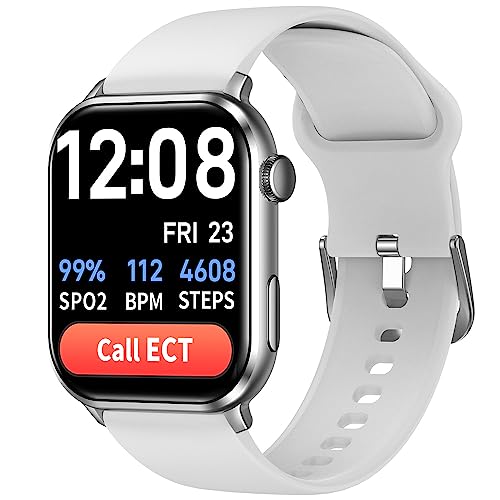
COCO BT2-X V2 (October 2026) Medical Alert Smartwatch for Seniors, Fall Detection, SOS Alerts, Caregiver App, Heart Rate & SpO2 Monitor, Bluetooth Calling (Silver)
A 1.85-inch senior-focused smartwatch that COCO says detects certain serious falls and starts a 20-second countdown before alerting the wearer's designated Emergency Care Team contacts through the CoCo App if it is not cancelled, with manual SOS, Bluetooth calling, medication reminders, and heart rate, blood oxygen, sleep, activity, stress and breathing tracking. The October 2026 V2 edition ships with upgraded factory-installed firmware for fall detection and Bluetooth stability.

Life Alert System No Monthly Fee, Caregiver Pager Call Button for Elderly at Home, Medical Alert Systems for Seniors with App, Panic Button Alarm System, 2.4GHz WiFi Receiver, Necklace, Bracelet
A Wi-Fi caregiver pager with no subscription: pressing the waterproof pendant or the SOS wrist button sounds a plug-in receiver and pushes a notification to connected family through its companion app over 2.4GHz Wi-Fi. TurboSense rates the 433MHz button signal at up to 656 feet in open areas, and the kit includes one call button, one SOS watch button and one receiver. It has no automatic fall detection and no professional monitoring.
Keep reading
Medications That Increase Fall Risk After 50 (and How to Review Yours)
The drug classes most consistently linked to fall risk after 50, what the 2023 Beers Criteria actually says, and how to get a real medication review.
Fall Prevention for Seniors: The Complete Guide for Adults Over 50
A practical fall prevention guide for seniors: how to test your own risk, the exercise that works, the medication trap, and a room-by-room home audit.
Balance Exercises for Seniors: A Progressive Fall-Prevention Program
Balance exercises for seniors, level by level: the Cochrane numbers, the dose trials actually used, and the safety setup before exercise one.